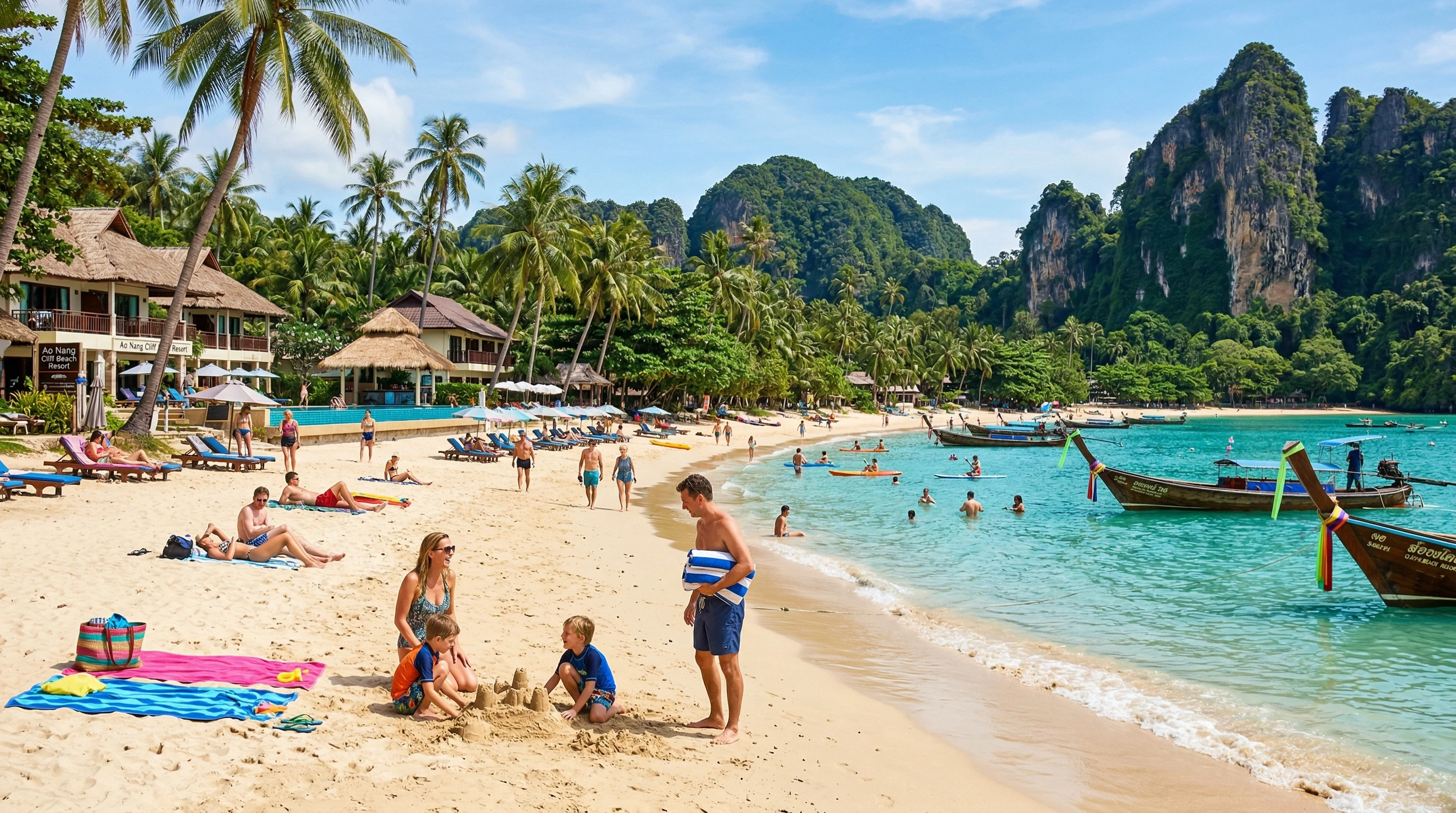
This is an AI generated photo of a beach in Southeast Asia reminiscent of many beaches of Vietnam and Thailand.
Ready for the exotic? Ready for excitement? Ready for the unusual? The best family destinations in Southeast Asia will provide that and a whole lot more!
Exploring Southeast Asia with my family has been routine for us because this is where I got married (North Sumatra). Whether I was traveling with kids, grandparents, or a mix of both, I found there is something for everyone in this diverse part of the world. Family trips here can be as budget friendly or as luxurious as you want, and planning together can lead to experiences that everyone remembers for years. We always visit different countries of Southeast Asia when we return.
Finding the right destination is really important if you want all ages to enjoy the trip. Simple comforts, easy access for strollers or wheelchairs, and a mix of relaxing and adventurous activities can make or break a multigenerational vacation. I’ve included places and tips that worked well for my family and I hope they help you plan your own Southeast Asian adventure. It did help a lot that Faridas’ family knows Indonesia like it was their back yard. Actually, it IS their back yard. Faridas’ family has lived and traveled throughout Indonesia and Malaysia for centuries.
In this guide, I cover some of our favorite family destinations, what makes them great for different budgets, and how to keep every family member happy and engaged. Whether your group loves nature, history, food, or just wants to relax by the pool, there’s a little bit of everything here. From bustling city streets to tranquil villages, Southeast Asia is a region filled with opportunities for discovery and bonding. Traveling as a large or mixed-age group can seem daunting at first, but with some simple planning and an open mind, I’ve found it can be one of the most rewarding ways to see the world together as a family.
I have also found that everyone, from the child to the senior, is welcomed in 99% of the places of Southeast Asia (there are a very few places where only adults are aloud like the bars of Soi Cowboy in Bangkok.) In my wifes’ country, Indonesia, their children are practically worshipped while their seniors are greatly honored as they are throughout Asia.
1. Why Southeast Asia is a Favorite for Multigenerational Travel
When I plan trips for my whole family, Southeast Asia is always a possibility. In fact, when I married Farida, I promised to bring her back for family get togethers every 5 or 6 years. Covid 19 pandemic turned our returns to her family into every 7 year visits. We always visit different countries on the way to Indonesia or on the way back home. Layover cities are easily extended from a few hours to a few days. That makes it easy to visit many Asian countries while having to book far less trips to visit them.
The region offers warm hospitality, exciting cities, and natural beauty ranging from mountains to beaches. English is spoken widely in the most visited spots, and there are plenty of family oriented hotels, restaurants, and attractions. I love having options for all travel styles, from backpacking and guesthouses to five star villas with private pools. Many local tour companies even design activities for mixed-age groups, so everyone finds something to love.
The affordability of Southeast Asia means you can stretch your travel budget much further, allowing for extra excursions or a few comfortable splurges. It’s easy to get around thanks to well established transport networks. My family has always appreciated the friendly local guides and drivers, who often share insights that enrich the adventure for all ages. The diversity of landscapes and cultures lets each family member experience something new. Whether you’re interested in scenic hikes, tasting street food, learning new customs, or simply unwinding by the beach, Southeast Asia is full of possibilities.
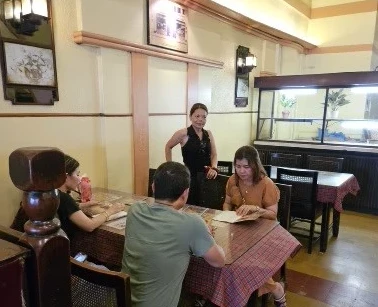
This photo shows Farida (standing) and her family at Tip Top Restaurant in Medan Indonesia (North Sumatra). This is one of the oldest restaurants in Medan.
2. Best Destinations for Families in Southeast Asia
Bali, Indonesia
Bali stands out as one of my top picks for multigenerational trips. Easy access, friendly locals, and a mix of culture, beaches, and nature trails keep all ages satisfied. Seminyak and Nusa Dua offer family resorts with shallow pools and kids’ clubs, while Ubud’s rice terraces, cooking classes, and temples suit grandparents and culture lovers. And one big reason for me to travel as a backpacker to Indonesia are the volcanos. And guess what, children do love climbing; volcanoes!
For a balance between relaxation and adventure, my family loved joining a Balinese dance performance and taking a gentle rafting trip along the Ayung River. There are ecofriendly budget hostels, comfortable three star bungalows, and high end spas with babysitting services, so you can adjust the trip to suit your budget. Adventure parks and animal encounters are also popular and safe for younger kids, while older family members can delve into traditional crafts.
We did have one situation on Bali. We were traveling around the island until we could no longer find any more bemos to bring us back to the town where we staying. It seems that public transportation shuts down after 1700 or 1800 each day. We started walking back to the Jimbaran area where we were staying. Not long after we started walking, a family in an SUV driving by slowed down and asked us if we needed a ride back to our hotel. For US $20, they could take us to any hotel we were staying at. We accepted the offer and rode back to Jimbaran with the husband, wife, and son. In retrospect, I do wonder if this is a common way for the residents to make money.
Our most memorable experience was a walk from our hotel in Jimbaran up to Uluwatu Temple. It was an early morning walk, starting out during the dawn hour before the sun started to rise. The few people we saw on the road were sweeping the roadway in front of their homes or cleaning their property. The temple itself overlooks the ocean. Traditional Kecak dances are held here. There are macaque monkeys here and they will steal your possessions if you are not guarding everything closely. The walk was wonderful and the destination was well worth it. I wish I have photos of our Bali trip but I only had Fuji and Kodak one time use cameras at the time which was the case for all of my earliest trips.
Chiang Mai, Thailand
Chiang Mai impressed me with its gentle pace and family friendly activities. Our days could go from temple hopping and boiling eggs at natural hot springs to shopping at the Sunday Walking Street night market. Many restaurants have play areas for kids, and hotels run onsite cultural workshops, like fruit carving or Thai dancing.
I found guesthouses and three or four star hotels with family suites to be comfortable and affordable. Animal lovers can visit ethical elephant sanctuaries or take a trip up into the sticky waterfall at Bua Thong. The night bazaars and fun tuk tuk rides are always a highlight for the younger crowd. For families seeking a deeper connection to Thai culture, there are interactive markets and hands-on cooking classes to enjoy together.
Chiang Mai is one of our favorites areas in Thailand. We spent a whole day exploring the area between Chiang Mai and Chiang Rai. Just beyond Chiang Rae is the topmost point in Thailand. We did not cross the bridge into Myanmar so we contented ourselves with just taking photos of the bridge, the people in small boats on the river, and the few buildings we could see on the Myanmar side of the bridge. There are many points of interest From Chiang Mai to Chiang Rai so I will just mention my favorite place which is Wat Chiang Man which is not only peacefully beautiful, but is also the oldest temple complex in Chiang Mai (established in 1296 by King Mangrai.) It has a striking elephant Pagoda (or Chedi.)
Singapore
If you want a clean, organized city with activities for every age, Singapore is a winner. Universal Studios, the S.E.A. Aquarium, and Gardens by the Bay kept my whole family entertained. The National Gallery and Chinatown Charms Walk were a hit with the older generation. Everything is well connected by public transport, which made it easy for all of us to traverse the whole city without exhausting us in the least.
Singapore can be expensive, but I found family rooms in boutique hotels and ate plenty of delicious, low cost food at hawker markets. Staying at Sentosa Island (for the theme parks and beach) can be a splurge, but it’s worth it if your group includes thrill seekers. The city’s open green spaces, such as the Botanic Gardens and East Coast Park, also provide quiet spots for downtime. Don’t miss Marina Bay for evening light shows the whole family can enjoy.
Singapore Zoo is considered world class because it combines strong animal care with a highly immersive visitor experience. Instead of traditional cages, it uses open and naturalistic habitats that feel like a tropical rainforest, so visitors can observe animals in settings that resemble their wild environments. One of its biggest distinctions is its open-concept design, which uses moats, glass, and hidden barriers to create close-up viewing without the look of a conventional zoo. It is especially known for its free-ranging orangutan habitat, where orangutans move through the trees above visitors. I made a video here when three otters scampered into the Orangutan area and as they passed a rock where one of the orangutans was sitting, the orangutan whacked one of the otters.
The zoo also offers unusually intimate experiences such as walk-through exhibits, underwater viewing areas, and animal feeding encounters. The zoo’s setting in lush rainforest makes the whole place feel more like a wildlife park than an urban attraction. It has a large collection of animals, with over 4,200 animals listed by Mandai, and more than 300 species mentioned in other sources. This is the only place I have seen a Giant Panda. Visitors also appreciate that the zoo is part of the wider Mandai wildlife area, so it pairs naturally with other experiences like Night Safari and River Wonders for a full-day wildlife visit.
Gardens by the Bay is Singapore’s signature urban garden: a futuristic park that blends large-scale landscape design, indoor conservatories, and striking architecture into one destination. What makes it stand out is the contrast between lush plant life and highly designed structures like the Super-trees, Cloud Forest, and Flower Dome. The Super-tree Grove is the park’s most iconic feature, with towering tree-like structures covered in plants and linked by walkways and viewing points. The Cloud Forest offers a cool indoor escape with a huge waterfall and misty, mountain-like planting that feels almost otherworldly. The Flower Dome showcases themed floral displays and plant collections from around the world, making it especially good for leisurely exploring and photography. Some of the trees that grow in Australia and Madagascar are mind blowing.
Visitors can walk the outdoor gardens, cross elevated walkways for skyline views, and enjoy the nightly Garden Rhapsody light-and-sound show at the Super-trees. Families also have kid-friendly areas like water play and interactive garden spaces, while photographers come for the skyline, glowing structures, and dramatic indoor displays. The attraction works both as a relaxing park and as an immersive sightseeing experience. Gardens by the Bay is distinctive because it does not feel like a normal park; it feels like a landscape built with a strong sense of art, technology, and spectacle. It is also one of the few places where you can move from tropical outdoor gardens to climate-controlled conservatories in the same visit. That mix of nature, design, and city views is what makes it one of Singapore’s most memorable attractions.
Hoi An, Vietnam
For a blend of history, relaxation, and hands-on experiences, Hoi An is my favorite spot in Vietnam. The old town is easy to walk and filled with colorful lanterns, tailors, riverside cafes, and tourists. My sons and I joined a lantern making workshop while my wife and sister learned to cook banh xeo (Vietnamese crepes). There are affordable home-stays in the old quarter, midrange riverside hotels, and villas with pools close to the beach.
If your group is on a tighter budget, local buses can take you to Da Nang’s My Khe Beach. For those looking to spend a bit more, Hoi An has wellness resorts with family yoga and spa packages. Markets and river cruises provide more ways for the family to create memories together. At night, the town’s lantern festival is often a highlight for all ages.
The river through Hoi An gives the town its most recognizable look, especially in the evening when lanterns and shop lights shimmer on the water. By day, it feels peaceful and scenic, with boats drifting by, people walking the banks, and the old town creating a historic backdrop. At sunset, the water turns golden and the whole scene becomes especially photogenic.
Hoi An’s beaches are broad, relaxed, and more open than the riverfront, with soft sand, gentle waves, and a quieter coastal mood. An Bang is the best-known beach, with a social but easygoing atmosphere, while Cua Dai offers wide views and a more spacious shoreline, though parts have been affected by erosion. The best visual impression is usually early morning or late afternoon, when the light is soft and the water looks especially clear.
Together, the river and beach sides of Hoi An give travelers a nice balance of culture and relaxation. You can spend one part of the day walking the lantern-lit riverfront, taking a boat ride, or dining by the water, then head to the coast for swimming, sunbathing, beach cafés, or a slow sunset. That mix is a big part of Hoi An’s appeal: historic charm inland, easygoing seaside scenery nearby.
.
Kota Kinabalu, Malaysian Borneo
Kota Kinabalu is the capital of Sabah in East Malaysia, on the northwest coast of Borneo facing the South China Sea. It sits between the sea and the Crocker Range, with offshore islands close by and Mount Kinabalu inland to the east, making it both a coastal city and a gateway to Sabah’s nature attractions.
Kota Kinabalu offers a strong mix of city comforts and outdoor adventure. Visitors can use it as a base for island-hopping and snorkeling in Tunku Abdul Rahman Marine Park, beach time at Tanjung Aru, and day trips toward Kinabalu Park and Mount Kinabalu. The city also has markets, waterfront areas, museums, cultural villages, and scenic viewpoints like Signal Hill.
What makes Kota Kinabalu especially attractive is that you can move easily from urban life to nature in a short time. The city has hotels, shopping, restaurants, and transport links, while the coast gives access to islands, coral reefs, and sunset beaches. It is also known as a gateway to wider Sabah and Borneo travel, so many visitors use it as their starting point for wildlife, mountains, and marine experiences. There are also an orangutan conservation center and the Labuk Bay Proboscis Sanctuary which are both very good places to visit.
Nature loving families should consider Kota Kinabalu. My visits there included snorkeling trips to Tunku Abdul Rahman Marine Park and visiting the Borneo Sun Bear Conservation Centre. The area also offers accessible boardwalks through rainforest reserves, perfect for grandparents with mobility concerns. Close by are the upside down house which is quite amusing.
I found a wide range of places to stay, from city hostels to beachfront resorts. Street food and seafood markets can help keep meal costs low, but you can also enjoy high end family suites for extra comfort. For adventurous families, the chance to spot orangutans or explore mangrove forests by boat is a huge draw. Kota Kinabalu’s night markets are also festive and welcoming for families looking for a snack or a souvenir. There is a very nice waterfront area with restaurants, markets, shopping malls, and food stalls.
There are nice art galleries in Kota Kinabalu that offer relaxing places to see local and national artworks. is They are the Sabah Art Gallery and the Wisma Budaya Art Gallery. There are also the Sabah State Museum and the Monsopiad-Dusun Cultural Village where cultural shows are held. Kampung Monsopiad is named after the legendary headhunting warrior of the Kadazan-Dusun people named Monsopiad. Their cultural adat laws are based on their traditional Momolianism religion but most are now Catholic, Protestant, and Muslim.
Siem Reap, Cambodia
And now for the place I have not been to yet. I include Siem Reap here because I am researching this area for an upcoming trip.
Siem Reap goes beyond Angkor Wat, although the temples are truly amazing for all ages. I plan for my family to enjoy bicycle tours through villages and puppet making classes. In town, affordable guesthouses welcome travelers, while luxury hotels offer family friendly pools and organized tours that take the hassle out of exploring the temples with children and grandparents. There are many choices so I have not come to a decision yet as to where we will sleep.
I am planning for a week visiting the Angkor Wat area and five days visiting the Siem Reap area. The region between Siem Reap and Angkor Wat is the heart of Cambodia’s Angkor tourism zone: Siem Reap is the lively base city, and Angkor Wat sits just a short drive north within the wider Angkor Archaeological Park. Together, they offer a mix of world-famous temple ruins, Khmer history, local culture, markets, food, and countryside experiences.
For tight budgets, street food stalls near the night markets are fantastic. Many hotels arrange babysitting for parents or grandparents who would like to visit the temples at sunrise or sunset while the kids stay back and rest. My two sons are old enough to relax when and where they choose and we let them do that. The floating villages on Tonle Sap Lake and the Angkor Night Market add even more to do.
3. Planning a Multigenerational Trip: Practical Advice
Choose the Right Season
Weather varies across Southeast Asia, so choosing the right month is really important if you don’t want to be caught in monsoon rains. For most places, dry season runs from November to March. I used to check for school and public holidays in advance since places like Bali or Singapore can get crowded and more expensive during these periods. Now we just visit there the first half of September.
Pace Matters
When I travel with both kids and grandparents, I keep days flexible. Scheduling downtime helps families avoid burnout. I like to plan one main outing each day, leaving mornings or afternoons for pool time or naps. Many hotels offer babysitting or supervised kids’ activities, so adults can have a break. Trying not to squeeze too much in helps everyone enjoy the trip more. I plan one activity and one restaurant visit each day. The rest of the day is open to suggestions.
Pick Accommodations Wisely
Connecting rooms, family suites, and villas with common spaces have saved me from late night noise or feeling cramped. Hotels with onsite restaurants are helpful if anyone is too tired to eat out. I’ve stayed at budget hostels, midrange boutique hotels, and all inclusive resorts. It really just depends on what my family needs that trip. Flexible bookings and clear communication with hotels also help ensure accessibility for grandparents or parents with young kids. I love staying in hotels with very nice restaurants. That helps a lot when we just do not feel like traveling to a restaurant.
Health and Safety
I always pack a travel first aid kit and check if tap water is safe to drink. Local pharmacies are usually well stocked, but having child safe medications and snacks from home is handy, especially for long travel days. Booking travel insurance that includes medical coverage is really important for my peace of mind. I will get travel insurance for the longer, two week trips. Keeping updated with local health advice, even about simple things like mosquito risks, makes a big difference.
Transportation Tips
Southeast Asia’s train, ferry, and bus networks are reliable and affordable. For families, I prefer booking private car transfers, especially for airport pickups, since it saves hassle and can be more comfortable for grandparents or little ones. Low cost airlines like AirAsia or Scoot connect major cities for longer hops. In crowded cities, using taxi apps or hotel shuttles has kept our group moving without stress.
I use the Transit app which is very reliable. I use it locally all the time and it is very handy internationally too.
4. Activities That Bring Every Generation Together
Cultural Workshops and Cooking Classes
Shared experiences make family travel special. I’ve found that taking a group cooking class, joining a traditional dance workshop, or participating in art and crafts sessions can bring everyone together, regardless of age. These hands on activities also make local culture more memorable for the kids and grandparents alike.
Visiting local villages or schools, trailing through markets together, and sharing meals prepared as a group all create lasting bonds. Activities like making batik, pottery lessons, or simply joining in a folk music performance add fun and cultural richness to your days. We all have fun learning how to dance in traditional ways so we can join in cultural dancing events.
Nature and Wildlife Excursions
Short jungle hikes, visiting elephant sanctuaries, snorkeling spots with calm waters, and botanical gardens are great options for those who want a bit of adventure without pushing past anyone’s limit. Boardwalks, tram rides, and organized boat tours often provide access for all mobility levels. Stargazing, wildlife watching, and guided night walks are just a few quiet nature activities suitable for most ages. And of course, I will always climb a volcano with my children when we get the chance.
Family Friendly City Explorations
Walking tours, tuk tuk rides, hop on hop off buses, and river cruises can turn city exploration into a fun experience for every age. In Singapore or Bangkok, I often use local apps to book taxis or ride hailing services for short trips between attractions. The ferry and river taxis on the Chao Phraya are also very handy (and also really cool.) Many cities have family passes for museums or attractions, saving money and simplifying entry.
Pools, Beaches, and Relaxation
When my family starts to feel travel fatigue, heading to a pool or quiet beach solves everything. Some resorts have splash pads, lazy rivers, water slides, or shaded lounges so everyone can enjoy themselves. Simple beach days with sandcastles and snacks can be just as special as packed sightseeing itineraries. The best memories sometimes come from a slow afternoon at the pool or a sunrise walk on the sand.
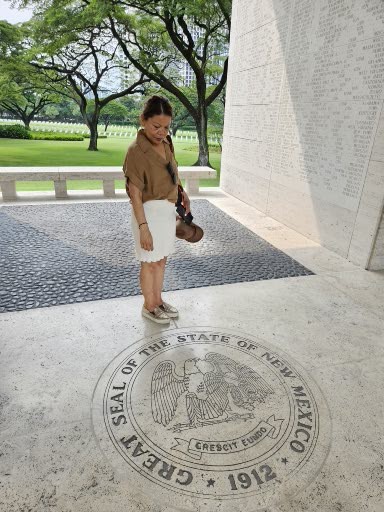
The following photo shows Farida looking at the seal of the State of New Mexico. Every state of USA has their seal here at one of the largest USA veteran memorials in the world. We are in Manila Philippines at the Manila American Cemetery and Memorial.
5. Budgeting for a Multigenerational Family Trip
Low Budget Options
Street food, local markets, and public transport help stretch your budget. Homestays and family run guesthouses often offer homier surroundings and the chance to meet locals. Many museums, parks, and temples have family tickets or free entrance for young kids and seniors. Biking and self guided walking tours are also affordable ways to see the sights.
Midrange Choices
Private rooms in boutique hotels, guided small group tours, and comfortable private transport can add convenience without costing a fortune. I find that booking directly with the hotel or through comparison sites can save money, especially when traveling with larger groups or during the shoulder seasons. Arranging a private minivan for the family has been both practical and not much more expensive than standard taxis, especially for longer trips.
Luxury Experiences
Tailored private tours, villa rentals with chefs, and all inclusive resorts offer privacy and comfort. Some luxury properties provide thoughtful extras like interconnecting rooms, butlers, grandparents’ spa discounts, and kids’ club activities included in the room price. I’ve found these splurges can add value by reducing the everyday stress of managing a big family group. Although we almost always plan for mid-range family vacations (and budget trips when I am alone), the occasional all inclusive resort is a wonderful treat for everyone. Chartering a private boat for a day or reserving a family suite with ocean views have been memorable highlights on past trips.
6. What to Pack and Prepare
I’ve learned to pack light but smart when traveling with family. A good mix of comfortable clothes, swimwear, rain jackets, sunscreen, and mosquito repellent covers most needs. I always take a basic first aid kit (including plasters, antiseptic, and motion sickness tablets), reusable water bottles, and snacks for the kids. Electronic devices loaded with games or movies come in handy for long journeys. Don’t forget extra batteries or power banks, especially if you rely on phones for translations or maps.
It helps to have copies of everyone’s travel documents, hotel reservations, and insurance details on my phone and a backup paper copy. I have an envelop that I keep in my money pouch that has copies of all of our documents. Charging cables and adaptors are must haves in most Southeast Asian countries since plug types vary. We have a pouch with adaptors for all regions of the world. I never unpack it. Layered clothing for different climates and a lightweight stroller for younger children have been essential on past trips. Always keep some local currency for small payments, as many markets or street vendors remain cash only.
7. Local Customs and Etiquette for Families
Respecting local culture helps everyone have a smoother trip. In most countries here, dressing modestly when visiting temples or rural villages is expected. Taking off shoes before entering homes or sacred sites is common, so easy to remove footwear is practical for all ages.
I remind the kids to be polite and patient, especially in busy places. Public displays of affection are often discouraged in certain areas. Asking before taking photos of people, especially monks or local children, is a good habit.
Patience goes a long way, especially when traveling with mixed-age groups in busy cities or on public transport. Having some basic greetings in the local language always earns a smile and can make services friendlier and smoother to navigate. Additionally, being aware of local meals or festival times can help you avoid crowds and make outings more enjoyable for everyone. One of the first things I research for an international trip is where to eat the traditional foods of the country we are visiting.
8. Making the Most of Your Family Trip: My Personal Favorites and Tips
My multigenerational family trips have been shaped by flexible planning, setting clear expectations, and making sure there’s downtime built in. I believe in choosing just a few key attractions each day, rotating who picks the outing, and celebrating small achievements (like a grandparent climbing temple steps or a first snorkeling trip for my sons (and myself for that matter).
I find that bringing a few comforts from home, like favorite snacks, a child’s pillow, or a playlist everyone likes, can bring a little bit of familiar coziness to new places. Photos, scrapbooks, or videos made together help keep the memory of the trip alive beyond the flight home. Encourage everyone to share their favorite moments at dinner each night—it builds stronger family connections. For younger travelers, sharing a simple story or fact about each new place keeps them engaged and curious. I used to have my sons write about their experiences just like I always did. I still have all of their travel writings, no matter how simplistic they were the first years. They make for great nostalgic reading.
Your Southeast Asia Family Adventure Awaits
I hope this guide makes it easier for you to plan your own Southeast Asia multigenerational family trip. The region offers a wealth of options for every budget, interest, and age. With a bit of planning, flexibility, and a sense of adventure, you’re set to create incredible memories together.
Have your own favorite family spot in Southeast Asia? Got questions about traveling with kids or older relatives? I’d love to hear about your experiences and share more detailed stories from my trips. Feel free to share your thoughts, tips, or questions with me. Your next family adventure is just around the corner.
Here is a link to Booking.com just in case anyone just got the sudden uncontrollable urge to book those tickets to SOUTHEAST ASIA:
http://www.awin1.com/awclick.php?mid=6776&idhttps://=2ee50e8b
Anthony, I love the name of your blog site. I read your backstory, and I see you have your wife to thank for all these excursions and adventures. It’s great that you guys could share that together. Visiting 20 dynamic countries and calling five new nations home is certainly a journeying opportunity, and it’s great you chose to share this with your blog visitors. Your posts are fascinating, especially to those of us who haven’t traveled a lot. Thanks for this beautiful read. – Shirley
Hello Shirley, thank you for the great comment. I am so happy to hear that my article was an enjoyable read and yes, I probably SHOULD thank my wife once in awhile.????
Oh, and those question marks are supposed to be a smily face.
I really enjoyed reading this post because it highlights how well Southeast Asia works for multigenerational travel, especially when you want a mix of comfort, culture, and activities that suit different ages in one trip. The way you included destinations like Thailand, Bali, and Vietnam really shows how diverse the region is, from relaxing beaches to cultural cities and nature experiences. I also liked the focus on slowing the pace down, which feels so important when traveling with both kids and older family members. It makes the whole idea feel realistic and not overwhelming, which is often the biggest challenge for big family trips.
Do you think some destinations in Southeast Asia are better suited for first-time multigenerational travelers compared to others, especially in terms of transport ease and medical or practical safety?
Hello Hanna, thank you for this great comment. And, yes, I did not even have to think for more than two seconds about this- hands down for sure the answer to your question is SINGAPORE. My own experiences (7 two-three month visits to Southeast Asia) confirm that Singapore is the easiest place to get around, and that includes the whole.island, not just the city. Singapore is very clean, easy to get around, and the tourist infrastructure is top of the line.
Singapore also has a very advanced medical infrastructure. There is easy access and English is spoken widely. So, Singapore is definitely very safe for multigenerational families, in all respects. Those traveling with children and seniors, have your travel insurance to assure access to all aspects of Singapores medical expertise.
Also close to these qualifications of Singapore are Taipei in Taiwan and the Japanese cities of Tokyo and Osaka. Well, thank you again for the great comment. Ciao. MAC