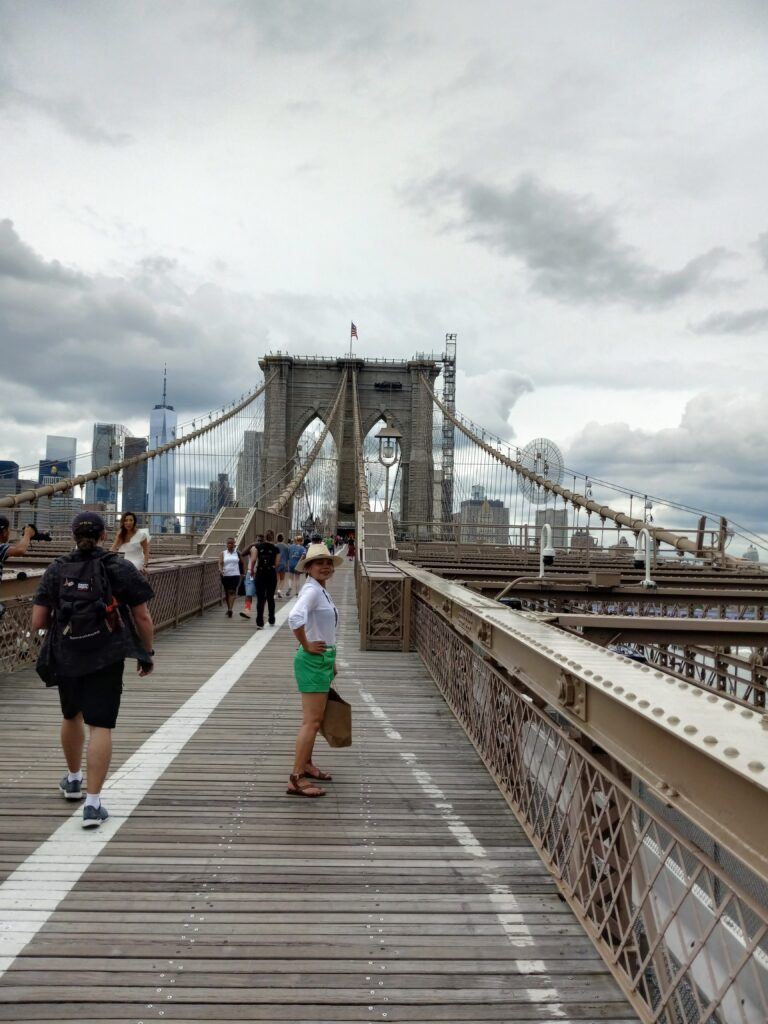
This photo was taken on the Brooklyn Bridge with Manhatten in front of us and Queens behind us.
Stories have power, especially when they’re crafted from years of personal adventures and heartwarming connections. We’re setting out on an exciting journey through my travel backstories, covering vibrant experiences from 1987 all the way to 2025. These stories aren’t just about the places I’ve been, but the people I’ve met and the moments that left a mark. I almost got married in a couple of different countries and I did finally get married in Sumatra Indonesia. This Introduction article will give you the background of my backstories.
Thinking about my collection of memories, I realized how indispensable it is to share not just glimpses but in-depth narratives of distinct excursions. This is what sets these upcoming tales apart from any quick travel blog you might have skimmed through before. Longer than usual, yes, but it’s in the details that the real magic happens. Anybody with the time, I hope you do choose to read some of these memories.
Every adventure needs a purpose, and for me, the significance of these stories goes beyond just ticking off places on a map. From exploring hidden gems to connecting deeply with diverse cultures, there’s an underlying theme about understanding the world—and myself—a little better. I’ve always been intrigued by cultural differences throughout the world and I thought to travel to experience them.
I’ve been fortunate to touch down in over 20 dynamic countries and called five new nations home at different points in my life. This isn’t just about visiting; it’s about living and breathing the essence of a place. Here, you’ll find the kind of knowledge and consciousness that only comes from personal encounters and heartfelt exploration. Come along on this ride, and you might just find a sliver of inspiration for your own adventures.
The Marriage Connection: Love Travels Beyond Borders
Marrying someone from a different cultural background opens a whole new world of discovery, both emotionally and geographically. My connection to Southeast Asia, particularly Indonesia and Malaysia, began when I met and fell in love with my wife, whose roots are deeply embedded in this rich and vibrant region. I promised to bring her back to visit her family every 5 or 6 years so that is why a lot of my backstory has a Southeast Asia setting.
Visiting Indonesia and Malaysia isn’t just about checking places there off our travel list; it’s about reconnecting with family, traditions, and embracing the warmth of my extended family. We’ve made this journey six times, each visit painting a canvas filled with beautiful memories and experiences that tie our lives together.
These trips aren’t just vacations, they’re essential returns to a place that feels like home. They offer us a chance to reconnect with loved ones and participate in family gatherings, providing a lens into the intricate tapestry of life in Southeast Asia and showcasing the profound importance of maintaining family ties across the miles. It is not easy visiting her family though, because we have to travel throughout North Sumatra to visit several family households. The roads are not always easy to navigate.
From bustling city markets to quiet family dinners, every encounter enriches my understanding of this part of the world and deepens our connection. Sharing meals and stories with family has taught me more about culture and traditions than any book could. It’s a testament to the idea that travel is as much about the people you meet as the destinations you visit. Dinners with her family are massive affairs with many foods I never get anywhere else and true banquets in every household we visit. The hospitality is impressive and the family aims to make sure everyone is satisfied.
Integrating personal relationships into travel experiences has given our journeys unique depth and purpose. I’ve learned that love isn’t just about being with someone—it’s about embracing their world fully. For anyone seeking deeper experiences in their travels, I highly recommend exploring the familial and cultural dimensions their journeys might offer. Oh and you do not have to marry into a family to do this. Once I got stuck on a beach near Huatabampo Mexico and the family who helped me get out of the sand invited me to their home. I lived with them for 2 months.
Globetrotting Chronicles: Exploring Over 20 Countries
Travel isn’t just about hopping from one country to another. It’s about immersing yourself in the vibrant stories each place has to offer. Visiting over 20 countries has been more than just collecting passport stamps; it’s been about unraveling the unique tapestries of life found in every corner of the globe. You can not collect passport stamps anyway like you could in the past. I received no passport stamp when I entered the Cayman Islands. I received no passport stamps when entering more than one country in Europe. It is a bit upsetting to me because collecting passport stamps was a big deal for me. Anyway, to get back on topic:
Each destination brought its own set of powerful lessons and unforgettable memories. From wandering through the bustling streets of Thailand, where ancient meets modern in the most beautiful clash, to experiencing the serene beauty of Canadas’ landscapes, every place left an imprint on my soul.
I’ve always believed that the best way to experience a country is by connecting with its people, tasting local flavors, and embracing its traditions. Whether it’s attending a performance of wayang golek in Jakarta or enjoying a large family style Italian dinner at a Napoli guesthouse, these interactions help me understand cultural nuances and forge genuine connections.
Even within a single trip, the unexpected moments become the most cherished memories. Getting lost in unfamiliar cities, striking up conversations with strangers, or simply taking a wrong turn that leads to a hidden gem can turn an ordinary journey into an extraordinary one. One time, when I was visiting Gwalior India with a couple of ISKCON devotes, I got separated from them. We were staying at a Vaisnava temple someplace north of the neighborhood where I was lost. I walked north. I walked, threw a sandal at a young man who started to approach me, continued to walk down a different road (still heading north), It was getting dark, a police man asked where I was going, (“I am looking for a Vaisnava temple north of here”) he put me up in a motel, next day I continued to walk north, picked up by a young couple who brought me to their home, fed and given mighty fine syrupy water drinks, described the temple to them, and forthwith brought straight to the temple. Unexpected moments; engrained in my mind my whole life.
For aspiring travelers or anyone curious about the world, my advice is simple: venture beyond the tourist spots. Seek experiences that challenge your perspectives and broaden your understanding. Each global trek has taught me that in the heart of every journey lies the opportunity to grow and transform. Embrace it all with open arms, because every trip is an adventure waiting to unfold.
Living Tales: The Impact of Residency in Five Countries
Living in five different countries has been fraught with eye-opening experiences throughout my life. It’s one thing to visit a place, and another altogether to settle down, even for a short while, and soak up the day-to-day rhythm. This kind of immersion helps shape a more nuanced understanding of what truly makes each place unique.
Residency taught me more about adapting to new environments than any trip ever could. It’s where I learned to redefine my sense of home, adjusting to different customs, languages, and lifestyles. It’s been a journey of learning how to blend in, all while staying true to who I am. The skills I gained (like resilience, cultural empathy, and adaptability) became invaluable life tools. Waiting to fetch water with two buckets, at a faucet on a building wall in Gwalior is truly a lesson in resilience.
Each country offered its own set of challenges and rewards. From mastering public transport systems in sprawling metros to adjusting dietary habits or facing the realities of different climates, every challenge was an opportunity for growth. Like the time I navigated the labyrinth of bureaucracy for visas and permits—it’s these everyday tasks that taught me patience and perseverance.
The beauty of living abroad is the friendships forged along the way. Sharing moments with locals and other expatriates adds a layer of richness to the experience. These bonds often transcend cultural boundaries, forming a global family scattered across continents.The first year I brought my wife back to visit her family, I was a bit upset because I had to follow them all around North Sumatra to visit all of the villages where her family lives. I am thinking volcanoes and wayang kulit and they are thinking family reunions. During subsequent visits to Faridas’ homeland, we would do the exact same thing except that I noticed they would bring us to at least one different scenic place each trip. I came to realize that they did this for me. I now completely enjoy with full contentment every return to Sumatra, letting the family take me where their plans dictate. If I can say I am an expert about any another place besides Colorado or New Mexico, it would be North Sumatra Indonesia.
If you ever get the chance to live somewhere new, I say grab it. The experience will challenge and reward you in ways you can’t predict, helping you grow both personally and professionally. More than just educational, it’s life-changing. Dive into the local life and let the winds of the new place guide you to exciting, uncharted paths.
Here is a list of my backstories:
Saying I Do In North Sumatra; What It Took describes how I got married in Sumatra Indonesia and my main backstory describes the experience.
I traveled to Paris two times.
I traveled between Vancouver Washington and Vancouver Canada two times.
I traveled to India one time.
I traveled to Danmark / Sweden one time.
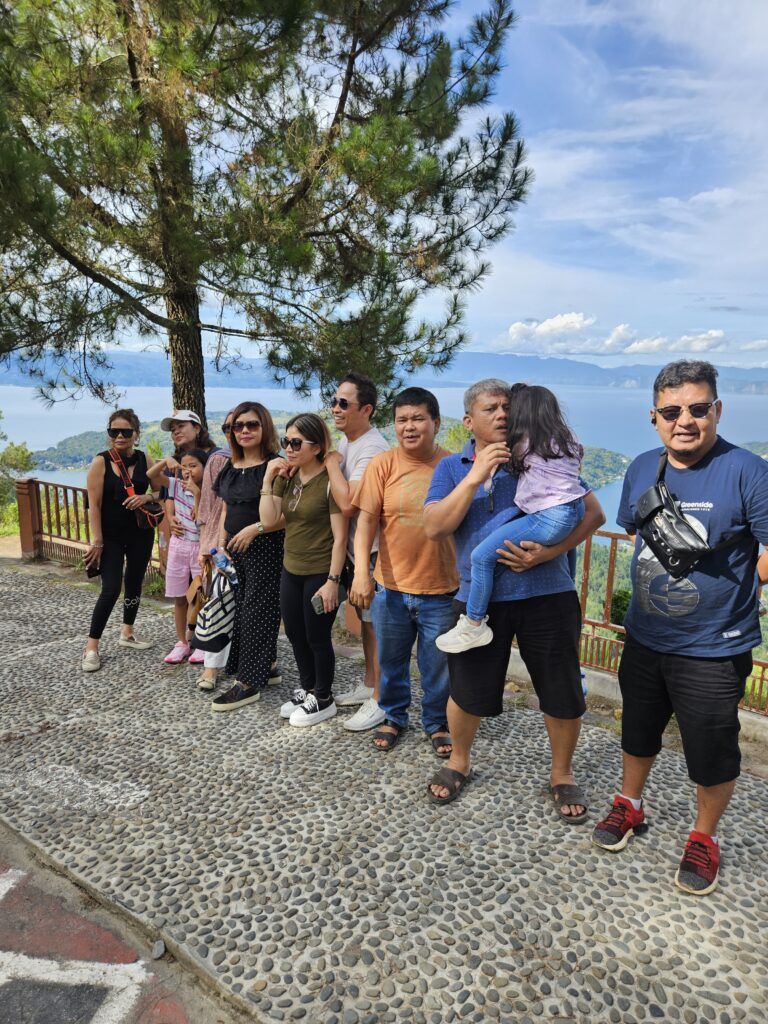
I traveled to North Sumatra five or six times.
I traveled to NYC one time.
I traveled across the USA innumerable times.
Ernest Hemingway said:
“Never travel with anyone you do not love. “
Here is a FAQ section for anyone interested in a more focused treatment of story writing for digital nomads:
Writing backstories for a digital nomad website means creating short, engaging origin stories that explain how you (or your brand, or featured nomads) came to live and work remotely, and why this lifestyle is important for thousands of travelers. Backstories give context, personality, and emotional depth to our travel and work content, helping readers connect with us on a human level.
What is a backstory?
- A backstory is the “before” narrative that explains someone’s journey, motivations, and key turning points leading up to their current digital nomad life.
- For a digital nomad site, it usually covers how traditional work or life felt, what sparked the change, and how that evolved into remote, location‑independent living
- The backstories build trust and relatability by showing real struggles, doubts, and decisions behind the glossy travel photos.
- They differentiate your brand from other nomad sites by highlighting your unique path, skills, values, and worldview.
- Backstories should include a clear “before” phase (job, lifestyle, pain points), the catalyst (event, insight, crisis), and the “after” (how you now work and travel).
- Concrete details such as first remote gigs, early destinations, mistakes, and small wins that made the nomad lifestyle feel possible.
- They appear on “About” pages, author bios, service pages, and in intros to blog posts or email sequences to frame your expertise and journey. In my case, I have a whole category of backstories introduced by this article because I would like to use them as examples of how I am qualified to call myself a travel blogger. I am not so in name only. I HAVE traveled and still do.
- Shortened versions can be reused in social media, media kits, guest posts, and pitches to brands or tourism boards to position your story as an asset.
- How is this different from regular blog posts?
- Regular posts focus on tips, guides, or destination info, while backstories focus on personal narrative and emotional context.
- A strong backstory supports your how‑to and destination content by explaining why you’re qualified to give that advice and why your perspective is worth following.
- What is the characteristic of a compelling digital nomad backstory?
- Compelling digital nomad origin stories focus on a clear turning point, honest struggle, and the values that now drive how you travel and work.
Make it vivid and sensory
- Show, don’t tell: instead of saying you felt “free,” describe the first morning you opened your laptop in a café in Lisbon or Chiang Mai and realized work still happening.
- Use a few sensory details (the fluorescent office lights, the airport at 5 a.m., the smell of a street food stall) to make scenes feel real.
Nail the core story arc
- Start with life “before” nomadism: job, routine, frustrations, and the feeling that something was off. Keep it concise but specific.
- Identify one catalyst moment (burnout, trip, layoff, chance client) and then show how that led to concrete changes in how you live and earn.
Lean into honesty and vulnerability
- Include one or two real obstacles: money fears, visa confusion, loneliness, or client droughts, so readers see the cost as well as the reward.
- Share a key internal shift (e.g., redefining success, changing views on stability) rather than pretending everything was effortless.
Connect your story to the reader
- Frame your origin in terms of a problem your audience shares (hating the 9–5, wanting more freedom, wanting to travel with kids), then show how you tackled it.
- Explicitly link your journey to what you offer now: guides, coaching, templates, or inspiration that help readers solve the same problem faster
Keep it tight, human, and on-brand
Trim timelines and side plots; focus on 3–5 key moments that best express your values and positioning as a nomad creator.- Write in a conversational tone, with a touch of humor or self‑deprecation where it feels natural, so your voice sounds like a real person, not a press release.
My conclusion:
So, I can only hope I can connect with people with my website.
No, I am not a professional travel blogger with official sponsorships.
I do have a few affiliate marketing links on some of my articles here which is why I need disclosure statements in my footer sections and included on some articles.
I am now working on the explanation as to how I chose to become an unprofessional travel blogger and Travel planning blogger but it has been taking me a long time to create the article because I have to include all of the most pertinent experiences and leave out what I love but may be superfluous. The article has to do with how I first decided to chronicle my travel experiences because of all the vicissitudes of meeting a girl and getting married in another country. I am getting close to posting the article but it will be a little longer before I place it on the menu.
The following photo is of me and Farida in front of San Agustin Church in Manila Philippines

In the meantime, I added a FAQ section here for anybody who is interested in reading about the concept oif backstories from the perspective of those who actually search Google or Bing about this topic:
What is a backstory?
A backstory is the history or background that explains how a person, character, or brand came to be who or what they are today. It includes past experiences, values, key events, and motivations that shape present behavior or identity. The backstory I have on my website is called; “Saying ‘I do’ in North Sumatra, what it took.” It is the first installment of several chapters to my back story.
Why are backstories important?
Backstories add depth and believability. In storytelling, they make characters more realistic and emotionally engaging. In branding or content creation, they build authenticity and help audiences connect with your message on a personal level. Mine might be too long but I hope some readers can read it in sections if not all at once.
How do you create a compelling backstory?
Start by identifying crucial life events, decisions, or challenges that shaped the subject. Include emotional turning points and lessons learned, but keep only the details that serve the current story or goal.
Should all details of a backstory be revealed?
Not necessarily. The strongest backstories inform motivation and tone without overwhelming the audience with unnecessary details—hint at the past instead of reciting it.
What’s the difference between backstory and character history?
Backstory refers to the relevant elements of a character’s or brand’s past that influence the narrative now. Character history is broader, including everything that has ever happened, even if it doesn’t affect the current story. A Backstory is the set of past details that matter to the current narrative, while character history is a broader record of everything that has happened.
Can backstories change over time?
Yes. As new events unfold or perspectives shift, aspects of a backstory can evolve—just like real people reinterpret their own pasts based on new experiences. I doubt my backstory can change because it is purely an account of what I went through and experienced after I met Farida. The subsequent chapters tell of our life together as world travelers.
Do real people or businesses need backstories too?
Absolutely. Every person and brand has a story that explains their “why.” Sharing it helps build trust, relatability, and emotional engagement with an audience. Real individuals, projects, and brands all have backstories, and sharing them helps others understand where they come from, what they value, and why they do what they do.
How early should you reveal a backstory?
Reveal it gradually. Let curiosity build so that when parts of the backstory are shared, they feel rewarding and meaningful rather than like an info-dump.
Here is a rather long link to booking. com just in case you have the urge to book flights and hotels any place in the world besides where you are now.. Oh, and if I received any commissions from any bookings made through this link, I promise that those making the bookings never paid a cent more than the original price of the bookings. Anyway, you can go ahead and click and have fun.
Well, that’s it for now. Thank you for reading this article. I hope it is not too long or confusing. Ciao for now.
Thank you again; MAC.
Absolutely loved reading this! Your blend of rich cultural immersion and personal storytelling makes each segment feel like a heart-to-heart chat rather than just a travel blog. I especially appreciate how you’ve highlighted the deeper, often overlooked aspects of travel like family connections and adapting to local rhythms. Your journey from visitor to honorary local in North Sumatra is inspiring. How did your perspective on “home” evolve over the years as you lived across five countries?
Hello thank you for the very nice comment. I really appreciate it because it boosted my confidence. I would say my perspective of “Home” has come to include several places in the world where I can live for the rest of my life. My wife and I are always considering whether we stay in USA or live the rest of our lives elsewhere. We have options where we know we are welcome including a house in Medan Indonesia. So our home here in NM can easily become our sons’ home the day we decide to leave. Anyway thank you for the confidence boosting comment. MAC.
Thank you for sharing such a rich and personal reflection on living in multiple countries! Your stories really highlight how deep immersion transforms not just our understanding of places but also ourselves—building resilience, cultural empathy, and adaptability in ways travel alone can’t. The way you describe learning to embrace local rhythms, from fetching water in Gwalior to navigating family visits in North Sumatra, shows how much growth happens in those everyday moments.
How have these diverse cultural experiences influenced your perspective on life and relationships, and in what ways do you think living abroad has shaped your personal or professional goals moving forward? Are there particular lessons or insights from these different countries that continue to guide you today?
Hello, thank you for the very nice comment. Your questions have me thinking for a moment. Besides just helping me realize that I actually COULD pull off the complex affairs of courting a girl in an asian country (that could be an article all in itself), getting married to her, and traveling for days every time I bring her back to her family, I thought I could write a book about it.
It is because of my first trip overseas that I realized that backpacking through a country like India, I should be able to tell my stories to any one who is interested. I first thought to become a travel book author (there was no internet at that time) and then, by the time I printed out my first manuscript for a book, I was able to get a smartphone I then decided to try and become a travel blogger. Now I have a website and I hope to become a digital nomad although I can afford only 2 trips every year.
Anyway, to conclude (I hope this is not too long), I have learned lessons through my travels. Not only did my confidence get a boost with the success in arranging all paperwork and finances for getting married, buying a house in Medan, and passport and visa arrangements, I also had deep lessons in patience and this does guide my life now. I am much more patient than I used to be. Traveling in countries like Mexico, Guatemala, or India taught me a lot about slowing down and allowing everything to play itself out in its own time. Being present in the moment and enjoying life no matter what chaos is happening around you is essential. I also came to appreciate the fact that communication is possible with others no matter where you go. A couple of beers broke down language barriers in Mexico. A duo language Indonesian / English dictionary got me successfully courting Farida. Anyway, I better quit now. I could go on forever talking about this but I am sure you are very busy. You did give me the idea for another article answering your questions better. Thank you. MAC.