
Exploring others’ travel and life experiences often opens a window into different perspectives, cultures, and personal growth journeys. In a recent article titled “My Travel and Life Experiences,” two insightful comments stood out—each offering a unique reflection on how travel shapes one’s outlook on life. These responses not only highlight the diverse ways people connect through shared adventures but also reveal the deeper emotional and cultural value of storytelling in the travel community.
Examining these comments provides valuable insight into audience perception and the broader impact of travel narratives in digital media:

This comment on Travel and Life Experiences was by Iris:
The 7-step guide is surprisingly grounded for something labeled “transformational.” I like that it doesn’t drift into vague inspiration but stays practical—especially the idea of choosing experiences over destinations. The examples you gave (from Kripalu to Monteverde to Villa Lena) made the concept tangible rather than aspirational fluff. Have you noticed that people resist this approach at first because it feels less concrete than naming a country or city? (My answers to these comments on Travel and Life Experiences will come at the end of each submitted comment).
The journaling section really resonated too. Twenty-one or twenty-two journals is incredible, and the fact that you turned some into a manuscript—even without knowing if it will be published—speaks to travel as an internal archive, not just external proof. Do you ever revisit those journals and notice patterns in who you were becoming over time?
What I found most compelling, though, was how your story ultimately circles back to relationship and home—following Farida instead of continuing on to Bali. It’s a powerful reminder that the most “off-itinerary” moments often shape life the most. In hindsight, do you feel that choice aligned with the same intuition you talk about using before smartphones, just applied to life rather than navigation?
Overall, this feels less like a travel blog post and more like an invitation into a way of moving through the world—slower, more attentive, more human. I’m curious how readers who are newer to travel respond to this. Do they find it freeing, or does it challenge the way they’ve been taught to plan trips?
This really reads like a life lived on the road rather than a checklist of trips, and that’s what stood out to me first. I like how you frame travel as something that trains you—almost like an apprenticeship in adaptability—rather than something purely recreational. The Google Maps stories in Grand Cayman and Paris were especially relatable; I’ve definitely had moments where technology narrowed my awareness instead of expanding it. It made me wonder: do you think losing our old-school navigation skills has subtly changed how deeply we experience places?
I also appreciate how clearly your travel phases are mapped—solo backpacker, family traveler, now moving into a more reflective, purpose-driven chapter. It feels honest rather than idealized. The India section, in particular, captured that sensory overwhelm so well that I could almost feel the dust and confusion myself. That “mental fog” you describe after arrival is something people rarely admit to, yet it’s such a real part of culture shock. Do you think that initial disorientation is actually a necessary part of transformation?
Your “asi es” philosophy around airport security made me smile. It feels like a distilled travel lesson that applies far beyond airports. I’m curious—was that mindset something you consciously developed over time, or did it arrive suddenly after enough frustrating experiences?
My answer to Iris:
Yes, I do think the erosion of old-school navigation skills has subtly changed how deeply we experience place. Studies on habitual GPS use show that people who rely heavily on it form weaker spatial memories, pay less attention to landmarks, and struggle more to build mental maps without it. That lines up with your observation about Google Maps narrowing awareness: I have often felt I am loosing my natural instincts for navigating new and strange places.
Instead of navigating a city by noticing corner cafés, smells, and street angles, we follow turn-by-turn prompts like a circle of stimulus–response One way to reclaim depth (and still keep the safety net) is to use GPS more like a paper map: check it at intervals, then walk the route by feel, noticing what your body and memory latch onto between checks. That is a closer way to travel compared to how we all traveled before smartphones and apps.
The “mental fog” on arrival is uncomfortable, but there’s good reason to see it as part of a transformative experience rather than a failure. Culture shock is literally defined as a state of disorientation when you’re immersed in an unfamiliar way of life. We just have to work through that disorientation and that will increase openness, comfort, and emotional stability.
When people have support and reflection tools, that disorientation becomes raw material for growth rather than just stress. Your instinct to just accept that fog honestly is important: if we pretend it isn’t there, we lose a big part of the transformation. We have to let that disorientation become a means towards transformation. (Wow, I never thought travel experiences could be so philosophical. I may have to do an article just about your comment here. It is really making me think.)
My airport mantra, “así es” is most likely from repeated exposures to the same frustrating stressors—like bureaucracies or airport security. So I am sure this airport mantra is the distillation of many small, earlier frictions rather than one lightning-bolt moment. I kind of remember thinking that I will never escape these procedures so I better “just start taking it one step at a time and be patient because; “así es”.
What’s powerful in your reading of it is that it’s portable: once you learn “this is how the system is; my work is to move through it,” It is helpful with visa delays, and complications (like getting a visa to China which frustrated me up the yin yang) or even life transitions. It’s like a micro-practice in non-resistance.
You’re right that “choose experiences over destinations” can feel less concrete to many travelers at first. The dominant travel culture teaches people to name countries and bucket-list sights, not emotional states or learning goals. But there’s a growing emphasis on designing trips around traits and inner outcomes like being more eco-friendly, engaged, awake, resilient, thankful then picking activities and places that support those.
That can feel abstract until you ground it the way you noted: “I want to practice creative risk-taking” becomes “I’ll choose a residency like Villa Lena or a workshop-style retreat like Kripalu,” which suddenly feels very tangible. Once people see how much more aligned and memorable those trips are, many don’t want to go back to pure bucket lists.
Travel journaling is exactly what you called it: an internal archive. Even brief, regular entries help people process emotion, reduce stress, and extract meaning from difficult moments. Revisiting old entries not only makes me feel nostalgic, but also gives me impetus to begin another manuscript. I am considering a volume 1 and a volume 2 for a book, if it ever comes to pass.
Your question about following Farida instead of continuing to Bali points to my willingness to accept a complete change in my itinerary for the chance to meet a possible change in my whole life.. Intuitive choices often look, in the moment, like “bad itinerary design”—they break the plan, cost money, or confuse other people. But many people later identify those same off-plan decisions as the most meaningful turning points in their lives.
I think when people reframe unexpected changes as part of the story rather than deviations from it, they report more meaning and less regret. So yes, you can absolutely see that relationship choice as the same inner navigation system you used with paper maps—only now it’s guiding toward a life path instead of a street corner.
And about the newer travelers, I am sure they will probably split into a couple of main reactions, and both are useful:
Some will feel freed by this perspective because it gives them permission to travel slower, journal more, and care about who they’re becoming instead of how many stamps they collect. But others may feel challenged because it pushes against the productivity narrative of travel (see as much as possible, optimize every day, then prove it online). That tension often softens after their first “perfectly planned” trip still leaves them hungry for something deeper. I was never satisfied until I sought a “deeper” form of travel.
Here is a comment by Slavisa:
Travel has been one of the most transformative forces in my life, especially solo travel. A few years ago, I spent several months moving through Southeast Asia on my own, and the clarity and confidence I gained from those experiences still influence me today. There’s something deeply grounding about stepping into the unknown and learning to trust your instincts day after day. I found that the real growth often came not from the places themselves, but from the stillness in between the quiet train rides, the long walks through unfamiliar cities, the shared smiles with strangers. These are the moments that stay with you and subtly reshape how you see the world and yourself.
My answer to Slavisa:
Your comment here brings back scenes for my travels before I got married. I do get the chance for solo travel every few years and, as much as I love traveling with my wife, the solo trips let me do it my way100%. Thank you for the comment. MAC.
Travel smarter, wander deeply.

Relaxing at our favorite hotel in Singapore. We will probably stay at this hotel every time we visit Singapore. It is the Oasia Hotel which is surrounded by Tras Street, Gopeng Street, and Peck Seah Street. Travel smarter, wander deeply.
Here is a FAQ section that I wanted to add because some people, much like me are actually afraid to offer comments on websites because they are afraid their comments will not be relevant or they may be too simplistic. Well, here is a bit of a guide on that topic:
1. Why are comments important on websites?
A good comment section encourages discussion, builds a sense of community, and adds valuable perspectives for both readers and content creators. It can also signal engagement and credibility to search engines. Now, if only some of my FAQ sections can generate engagement for MY websites.😀
2. What defines a “good” comment?
A good comment adds insight, asks thoughtful questions, or constructively contributes to the topic. It’s respectful, relevant, and written with clear grammar and tone.
3. Should I express disagreement in comments?
Yes—if done respectfully. A well-crafted disagreement explains why you see things differently without attacking others. Back your point with reasoning or examples instead of emotion or sarcasm. Don’t disagree with me though because I might cry. (Just joking).
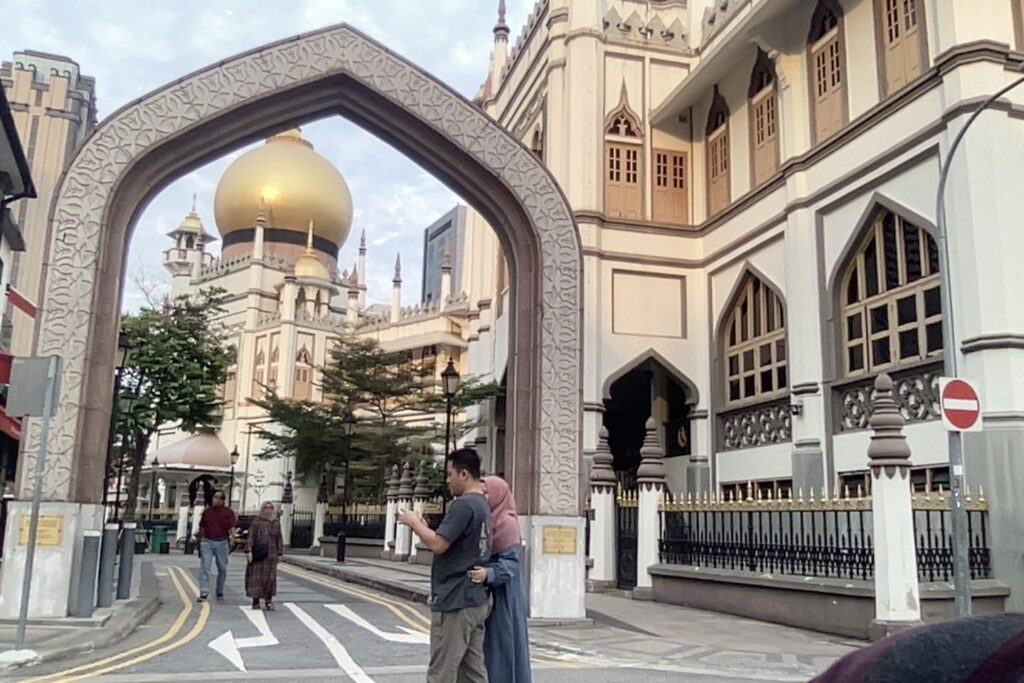
The above photo is almost a repeat of a photo I have on another article of mine here at www.roamreverie.com but this photo has a couple taking selfies in front of the Muscat Street Arch and the other photo is without any tourists around.
4. How long should a comment be?
Keep it concise yet meaningful. Two to four sentences are often enough to make a solid point, though a longer comment works if you’re sharing detailed insight or experience.
5. Can I include links in my comment?
Include links only if they genuinely add value and are relevant to the discussion. Avoid self-promotion or unrelated links, as these can appear spammy
6. What tone should I use when commenting?
Aim for friendly, conversational, and professional. Even casual websites appreciate comments that sound thoughtful and polite rather than blunt or overly personal.
7. How can I make my comment stand out?
Be specific. Reference something from the article, share a short real-life example, or ask a meaningful follow-up question. Comments that demonstrate you actually read and thought about the content get noticed.
8. Are emojis or humor okay in comments?
Light humor and emojis are fine when used appropriately. They can make your tone more friendly, but avoid overdoing them or using sarcasm that could be misinterpreted.
9. What should I avoid when commenting?
Avoid spam, unrelated self-promotion, offensive language, or all-caps shouting. Also skip generic posts like “Nice article!” without elaboration—they don’t add value. I do use all caps when I want to emphasis a word but I think that should be all right if it is just one word. At least, that is my opinion.
10. Do good comments really impact SEO or engagement?
Indirectly, yes. Quality comments can keep visitors on the page longer, encourage repeat visits, and show search engines that real people interact with the content—signals that support overall engagement and trust. So come to my website and give me lots of comments so I can respond to them and then Google and Bing will think I am smart and give my website a good ranking.
Well that is it for now. Thank you for reading my article here and I hope in was interesting enough so you can give me a comment. Ciao for now.
MAC,.