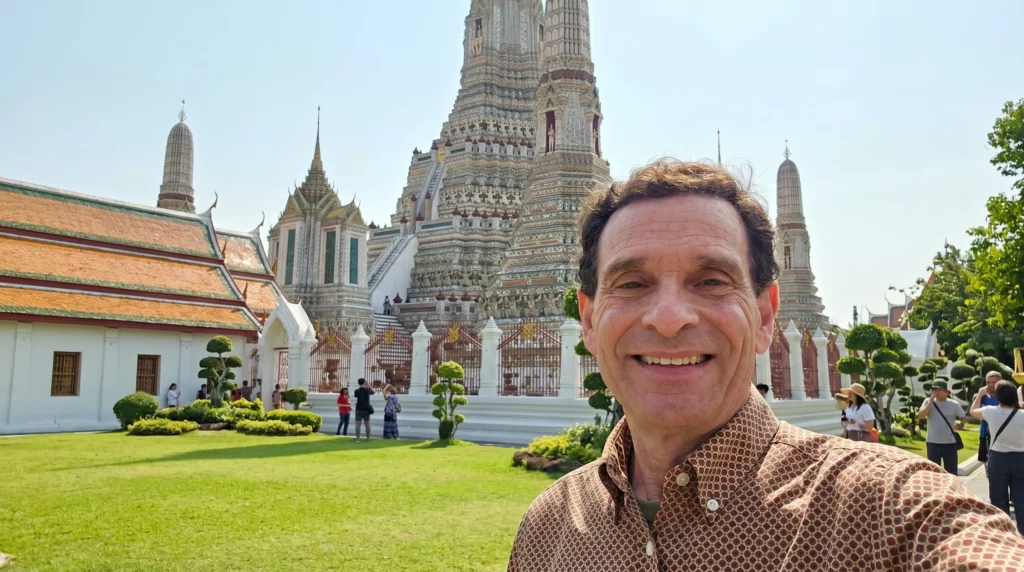
About this image:
Here is an AI image of me at Wat Arun in Bangkok. I have no photos of my visit to Thailand because I was using only one time processing Fuji and Kodak throw away cameras during that trip. Therefore, the images I have on this article will be generated with Image Studio on the Wealthy Affiliate website building platform. Every image will show a place I really visited.
Thailand has been gearing up to be the destination of choice for long-term visitors for a few years now. When it comes to blending ancient traditions with dynamic modernity, Thailand’s got it all. Whether lounging on pristine beaches or exploring bustling cities, this unique country offers something for everyone. Speaking of long term stays in Thailand, there are many American and European expatriates living there.
My stay was not that long. My long-term stay in Thailand was actually only three weeks with a quick excursion to Penang Malaysia for a couple of days. Then, I returned to Thailand for another week, After this third week in Thailand, I returned to Sumatra for one month. So my long time stay was actually a long time stay in Southeast Asia. But I already have an article on my website about my stay in Sumatra (I actually met the girl who I eventually got married to in Parlilitan Sumatra. Click on this link to see my article about this experience.) So this article focuses on Thailand.
What did I find when I arrived in Thailand? Imagine this; golden temples standing tall amidst a backdrop of glitzy urban skylines. This fusion of old and new is what Thailand does best. And if 2026 is on your calendar for a long-term stay, you’ll experience an era of newfound vibrancy as the country hosts global events and embraces technological advancements.
It’s not just about the sights. Thailand offers a tapestry of experiences that goes beyond its beautiful scenery. From vibrant street markets to tranquil Buddhist retreats, the depth of culture here invites you to immerse yourself completely. I climbed a few karsts that have temples. These are towers of limestone with caves and cliffs, covered with plant life and yes, sometimes temples are on them.
I’ll be sharing tips and insights to help you navigate a long visit here in Thailand, ensuring your stay is not merely a visit, but a profound journey worth remembering. I will mix my experiences with some facts concerning life in Thailand. I learned some stuff, with the traveling I did and visiting with expatriates who I spent quite a bit of time with. I even stayed with a few families and made a bit of money with them.
Discover Thailand: Geography and Climate Insights
Thailand’s geography is a breathtaking blend of islands, jungles, and mountains. The north east border of Thailand has the Mekong river meandering between it and Laos. At this point, the Mekong River is flowing wide and slow. Imagine the diversity you can experience, from the iconic beaches of Phuket to the cool mountainous regions up north. It’s like getting a bit of everything all in one place. No wonder it’s a hit among travelers!
The country’s climate varies across its regions, giving you a chance to pick your preferred weather. The central plains are known for their fertile lands and rice fields. Meanwhile, the north offers cooler temperatures and a scenic landscape that’s quite the retreat from the city’s hustle. On the other side, the south has your go-to places for tropical vibes, with its islands serving as a paradise for beach lovers. Phuket, Koh Samui, and Koh Phangan are examples of fully developed tourist destinations offering a party atmosphere. (Koh means island.)
Long-term visitors should take note of the seasonal changes. From November to February, the cooler, dry season makes exploring pleasant, especially if you’re not a fan of the heat. However, if you’re visiting during the monsoon season from May to October, don’t worry; it’s a chance to see lush greenery and fewer crowds. On the west coast, monsoons peak in September. The Gulf of Thailand on the east coast has its peak monsoon around November. From Bangkok to the north regions, the heaviest rain storms are around late August and early September. So, you can plan accordingly.
With everything within reach and a variety of climates to enjoy, it’s a perfect playground for explorers and nature enthusiasts alike. Trust me, discovering Thailand’s landscapes is about as thrilling as anything you can imagine. Oh, and visiting during the “green season” when rainfall is heaviest has its perks because a lot of things will be less expensive because it is low tourist season. Waterfalls will be more impressive and the mornings will usually be bright and calm. You can do your outdoor things in the mornings and your indoor things in the evenings.
Insights into Thailand’s Vibrant Population
Thailand’s cultural heart beats with a warm and diverse population. Here, you’ll find a melting pot of ethnicities, languages, and traditions, all blending harmoniously. Imagine a place where vibrant festivals offer a lively glimpse into the country’s rich heritage and community spirit. I have seen traditional dancing while walking through business areas in front of banks.
The Thai people are known for their hospitality and friendliness, which you’ll notice right away as they welcome you with a smile. Learning a few basic Thai phrases will not only help you get by but also earn you a nod of appreciation from the locals. I was asked to visit homes several times while traveling between cities. I had no hotel bookings while I stayed in Thailand so it was easy for me to accept such invitations and I did several times. I was also fed very well while staying with families or at temples.
Thailand’s population is predominantly Buddhist, with the religion influencing many aspects of daily life. It shapes everything from food to festivals, offering a fascinating cultural experience for long-term visitors. Participating in local events or festivals like Songkran (the water festival) or Loi Krathong (the festival of lights) is a perfect way to immerse yourself in this vibrant culture.
Bangkok, the bustling capital, boasts a cosmopolitan mix of residents and expatriates, adding another layer to the demographic landscape. The population there is about 12 million people. Then, as you move to smaller towns or rural areas, you’ll find communities deeply rooted in traditions, offering a more slow-paced way of life.
In Bangkok, I was able to find rooms in guesthouses or home-stays easily, with no advanced bookings. I was also asked to stay at the ISKCON temple near the General Post Office on Khwaeng Bang Rak and Khet Bang Rak. I found the Bang Rak neighborhood to be quiet and pleasant for leisurely walks.
Now, I must make a note here that the ISKCON temple has since moved to a larger building (click on this link to see my article on my long-term stay in North and Central India.) It has moved from the Bang Rak area to the Thon Buri neighborhood which is just to the west of Bang Rak across the Chao Phraya. You can reach it via Soi Krung Thonbury 6, then up Krung Thonbury 6. The new ISKCON temple is much larger and sophisticated than the original location. The temple I lived in was a small, wood structure with a wood floor. The floor was made of thin planks that were not tightly fitted together so mosquitos were constantly entering the temple from underneath.
Long-term stayers should be ready to embrace the busy city vibe while also appreciating the laid-back countryside charm. Either way, Thailand offers a myriad of cultural experiences that make everyday living feel like an adventure worth your time. The way I spent most of my days in Bangkok was walking to the Chao Phraya and hopping on the larger ferry that plies the river. It is a city commute but it is also an enjoyable scenic boat excursion. It is a VERY cheap way to see the temples and city skyline (at least that which can be seen from the river). There are faster, speed boat ferries but they cost more and did not fit my needs because I was never in a hurry to get to any specific place.
Navigating Thailand: Your Guide to Seamless Transportation
Getting around Thailand is a breeze once you get the hang of its public transport system. From the bustling vibes of Bangkok to the serene countryside, the country offers various options to suit your travel needs:
In Bangkok, the BTS Skytrain and MRT underground are your best friends for zipping across the city. They’re efficient, air-conditioned, and perfect for dodging traffic jams. Grab a Rabbit Card for easy payment and quick access to these services. The BTS Skytrain will cost from 16 Bhat to 60 Bhat, depending on how far you will be riding it, from 0600 to midnight. The MRT underground cost will be from 17 Bhat to 45 Bhat, again, depending on the distance rode. Both take the Rabbit Card.which is rechargeable. It will cost 200 Bhat but that will include the first 100 Bhat of transportation value. You will have 2 years to use any value.
For those looking to go beyond the city, Thailand’s bus and train systems connect you to every corner of the country. Buses range from luxury coaches with full recliners to budget-friendly options. The State Railway of Thailand offers a scenic way to travel long distances, letting you soak in the passing landscapes. I have used plenty of both, the bus system and the train system. I never used any guided tour services so I cannot attest to the value of using tour operators throughout Thailand.
Anyone who is interested in that experience can check out such reputable operators like Firebird Tours, Discover Thailand Co, or Sun Leisure World. I know of these companies because they have been around for at least 10 years and I saw their offices in Bangkok. Of course, there are many others and you can go to TripAdvisor or Get Your Guide for other tour operators if that is your interest.
Don’t forget the country’s tuk-tuks and motorbike taxis for short distances. They might give you a literal jolt of adventure and are quite handy when you’re in a hurry. They are really cheap too. I did use them a few times, but mostly only because I was moving about Bangkok with a resident who had specific places to bring me. When I was alone, I always walked to Chao Phraya and hopped on the ferry.
Car rentals are another option to explore at your own pace. Just remember they drive on the left side of the road here! I never drive when I am in other countries besides where I live so I can not attest to what the car rental experience is in Thailand. I did spend time with an expat who would occasionally rent a car. He would pay about 20 Bhat for one day of use. He told me that you must be 21 years old to rent a car. Avis at the airport and throughout the city and Budget Rental cars at the airport and throughout the city are American Companies available. There are also Thai Rent a Car with 35 locations and Drive Rent a Car with 41 locations.
Whether you’re daily commuting or planning week long getaways, Thailand makes it easy for you to explore its urban jungles and serene towns without any stress at all. So, now we can venture beyond Bangkok with facts about the country and some of my experiences that should give a sense of what you can expect to see there if you plan a two – four week trip there:
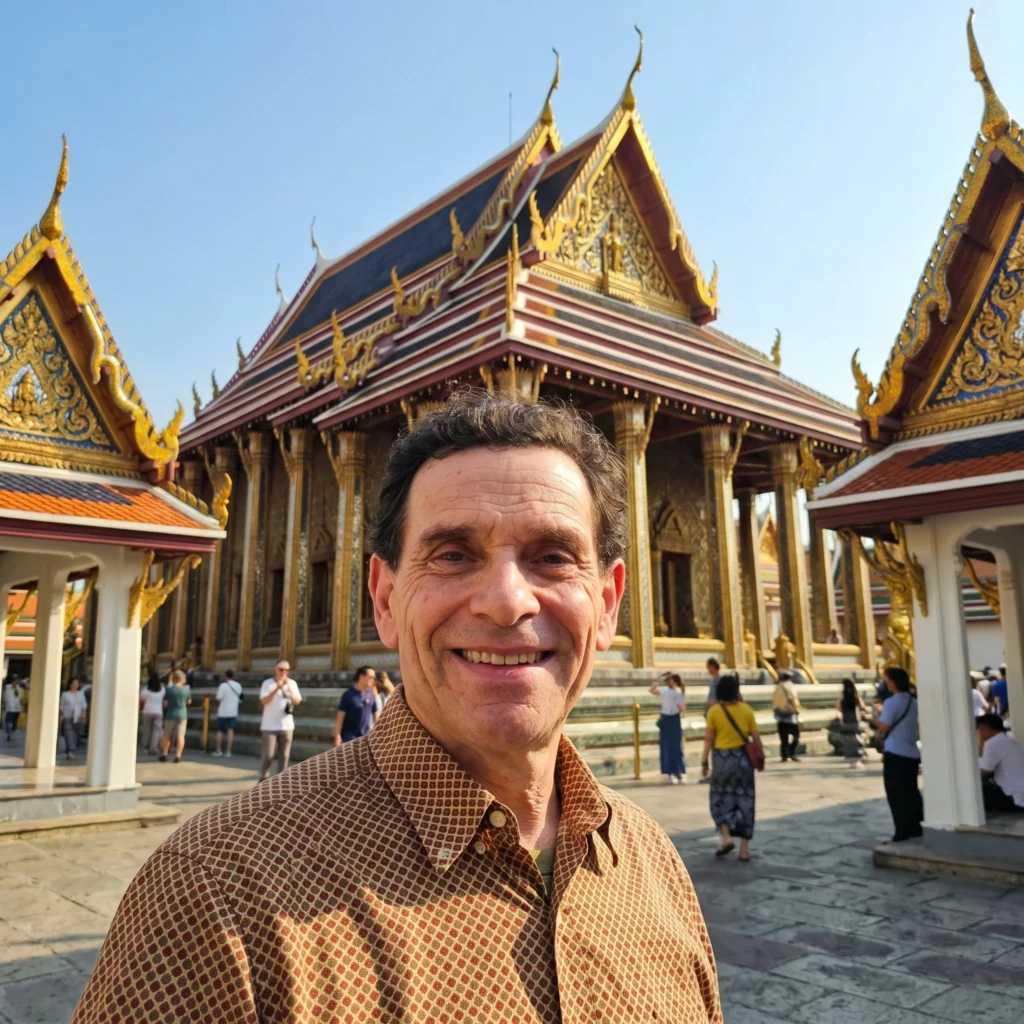
The above image is another AI generated image created with Image Studio at Wealthy Affiliate. This image has the main temple of Wat Po behind me.
The Cities of Thailand: Vibrant Hubs and Hidden Gems
The North Central cities:
Bangkok is Thailand’s vibrant heart, pulsating with energy and an endless array of things to do. If city life excites you, its buzzing street markets and upscale malls are just the tip of the iceberg. Rooftop bars offer stunning city views, perfect for soaking in evening vibes. I spent lots of time in markets and temples. I lived in the ISKCON temple for about 1 week and spent time with monks in temples like Wat Arun and Wat King Kaeo.
Wat Kaeo is actually the very first place I visited in Thailand. It is not exactly in Bangkok. It is actually across King Kaeo Road from the Suvarnabhumi International Airport which is about 30 miles east of Bangkok. I was a bit tired from the long plane ride from USA so I just walked out of the airport, down a flight of steps that took me to street level, crossed the street, and walked to Wat Kaeo. I saw a lovely, calm place with Buddha and trees so I was drawn there. I spent about four hours there relaxing and talking to monks who spoke some english. There are actually english classes given in some temples.
Chiang Mai, up north, offers a stark contrast with its tranquil atmosphere and cultural treasures. Amidst ancient temples and artistic communities, you’re invited to unwind and connect with the local crafts scene. Chiang Mai was the capital of the Lanna Kingdom in 1296. It still has historic city walls and it has several wonderful temples. It is rather cosmopolitan but in a calmer fashion than Bangkok. I remember walking up many steps to reach Wat Phra That Doi Suthep. There are a few beautiful temples here as well as markets, wonderful cafes, and great hiking in the surrounding forests.
Phetchaburi brings a splash of history and nature to the table. Known for its historic sites and nearby national parks, this city is ideal for history buffs and nature lovers alike. I must admit though, Its characteristics I just mentioned are not what brought me there. I was actually lost! When I bought the bus ticket there, I was meaning to buy a ticket to Kanchanaburi to see the Bridge over the River Kwai and to visit a cave temple which is on the other side of the river from the town.
When I got off the bus I was looking for a hotel near the bridge. Of course, I did not find such a hotel because the bridge was nowhere to be found. I had traveled two and a half hours south from Bangkok instead of three and a half hours north west of Bangkok! I did have fun here though. I stayed for two nights. I met a young lady who insisted on being my guide for my stay there. She brought me to street stalls where we ate some great food (of course I paid). She also brought me to Khao Wang which is a summer palace with a temple complex. Khao Wang means “hill with palace” and it does overlook the city very dramatically. King Mongkut commissioned this summer palace in 1860.
Kanchanaburi has an infamous history. This is where the Bridge over the River Kwai is located. This bridge is part of the “Death Railway” network. I really loved the movie “The Bridge Over the River Kwai” so I wanted to visit there. After realizing that I was in the wrong city when I arrived in Phetchaburi I bought a bus ticket back to Bangkok. The ticket was for two days later because I decided to explore Phetchaburi before returning to Bangkok. When I arrived back in Bangkok, I purchased a ticket to Kanchanaburi for the next day. I wanted to stay in Bangkok one night to revisit the ISKCON temple. The next day, I was really on my way to Kanchanaburi this time.
This is a really beautiful area. The River Kwai is a slow moving medium-wide river with lush forests on both sides of it. I rented a bike when I stayed there so I could ride down quiet country roads to various sites like cave temples and national parks. There are some elephants on the far end of the infamous bridge but I did not stop there. I imagine that they are there for tourist to ride. I was not interested in that so I rode the bike to waterfalls (Erawan National Park), Wat Ban Tham, Tiger Cave Temple, and more waterfalls (Sai Yok National Park). Oh, the lovely time I had riding that bike along quiet country roads through the forests in the area. I rented the bike at the guesthouse where I was staying. They should cost about 50 Bhat per day.
Thailand’s northernmost point holds a special allure, offering scenic landscapes that captivate the eye. It’s a perfect retreat for anyone seeking a break from the usual tourist destinations. I spent three nights in the Chiang Mai and Chiang Rai area. I did take photos of the border of Thailand and Myanmar but they are blurry. I had only those one time use Fuji and Kodak throw away cameras so I cannot include any of my own photos here.
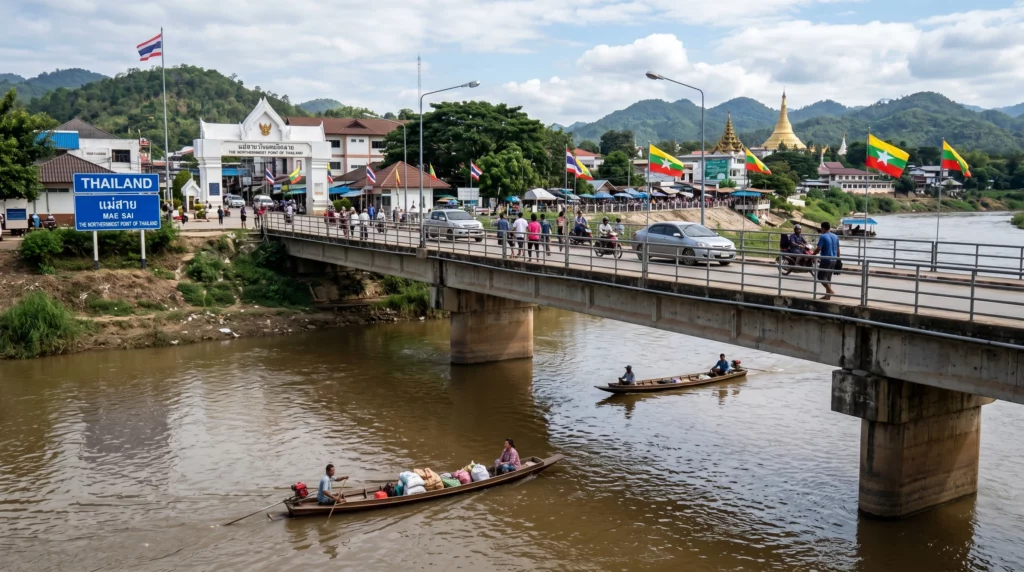
Nong Khai, sitting along the Mekong River, serves as a cultural melting pot and a gateway to Lao traditions. The riverside promenades and markets highlight life by the river. I traveled up to Nong Khai just to relax and consider a possible crossing into Laos. I was actually feeling a bit worn out when I was there so I just stayed in Nong Khai for a few days. The Thai-Lao Friendship Bridge is here. I did check out the area around the bridge but I did not pass through the Nong Khai Border Checkpoint. There are many restaurants and hotels around Thep Thani village. Vientiane Laos is just across the Mekong River.
Buri Ram beckons with its ancient Khmer ruins and sporting culture. When not exploring its archaeological sites, enjoy a football match at its renowned stadium, home to one of the country’s top teams. It was really rough going when I visited here. This next paragraph is more of a lesson in NOT doing what I did:
I went to Buri Ram specifically to visit the above mentioned ruins. I went to the train station in Bangkok and found the line for the train to Buri Ram. I asked for the next train and paid for third class tickets because there were no more seats in second class. Boy was that a MISTAKE. I did not think that if there are no tickets in second class then there may be no tickets in third class either. When I got on the train, it was standing room only. Not only that but I had to stand between train cars in a tight crowd of passengers. While I was busy guarding my possessions from possible pick pockets, I was also trying to keep warm.
I WAS NOT WARM. It was an over night train to Buri Ram and it gets cold at night in East Central Thailand! When we finally reached the city, I was shivering like the dickens and I could not stop shivering. When I found a motel to stay at, I was still shivering. When I got to my room, I continued to shiver and finally I found a way to warm up which took about half an hour. Afterwards I went out and got some good, hot soup to eat. I felt whole again, then returned to the hotel and slept.
Early the next day, I walked over to the Khmer ruins. On the way there I decided to check out the King Rama I Monument first. It is a massive rectangle pedestal with an elephant standing on it. I think the elephant is supposed to be walking. The king is on the elephant as well as the mahout and somebody behind the king.
After visiting the monument I went to the ruins of Prasat Phanom Rung. I had a lot of fun there. I climbed steps and sat on high walls watching asian tourists talking and taking photos. It is located on an extinct volcano which I found fascinating. It was Hindu (dedicated to Shiva) at first then it became Buddhist. The Buildings were built around 1050 to around 1250 CE.
The cities in the south:
Down south in Hat Yai, you find a bustling intersection of commerce and culture. Experience a blend of cuisines and vibrant shopping scenes that reflect the multicultural tapestry of the region. There are lots of inexpensive hotels to stay in and I had a hard time deciding where to stay. I just walked around the neighborhood near the train station until I chose a hotel. I mostly stayed and ate in the area between the train station and the Lee Garden Night Market. There are like 100 or so hotels, motels, and home-stays in this area costing from US $17 to $70.
The main thing I did in Hat Yai, besides just walking around on my early morning photo walks, was to visit the Lee Garden Night Market which is a nightly held market that often has live music. There is a lot of Halal food here because Hat Yai is just around 75 miles (82 kilometers) from Malaysia. There is also the Khlong Hae Floating Market and Wat Hat Yai Nai Temple. This temple has a reclining Buddha which is 105 feet (35 meters) long.
Yala is the other place I visited while I was in Hat Yai. There is a karst east of Hat Yai. There is a temple on top of that karst. I wanted to visit there. Yala is the provincial capital of southern Thailand about two hours southeast of Hat Yai. I took the bus to Yala then paid for a motorcycle taxi to the karst temple. Yala is very interesting with Thai Buddhist, Chinese Buddhist, and Malay Muslim communities. I had fun eating foods from all of these traditions but I was there to visit that karst temple.
After we arrived, I lingered a bit with the motorcycle driver and talked with him and a few others who were there. I found that everywhere I went throughout Thailand, there was always somebody who wanted to talk to me. This was the case whether on a bus, in a train, at a hotel, or a place we are visiting. Anyway, they wanted to make sure I would have one of them still there after I was finished with the temple. I told them that I would need a ride back to Yala, then to another temple the next day.
The steps were made of wood. They were not exactly evenly placed but they were easy enough to climb. I would climb and climb until I came to a platform. A platform may or may not have somebody meditating there. I would rest a bit then continue climbing the steps again. This went on for quite awhile. It was wonderful, climbing the wooden steps, coming to the next platform where there could be someone meditating and where I would relax. I spent about one hour at the temple platform with Buddha and some monks before I went back down.
The next day I visited two other temples. These are cave temples. They are fairly famous; Wat Kuhaphimuk and Tham Sin Khuha Phimuk. They are both cave temples in the same mountain.
With all this variety, Thailand’s cities offer distinct experiences, whether you’re an urban explorer or someone seeking the quiet charm of smaller towns. It is really easy to get from the northernmost point to the southernmost point in just a couple of days but the variety of activities and amazing places in between is extraordinary. So it is also really easy to spend a whole month in Thailand.
Spiritual Journeys: Thailand’s Iconic Temples Wat Po and Wat Arun
Thailand’s temples stand as majestic symbols of history and spirituality, with Wat Po and Wat Arun being among the most revered. Their architectural grandeur and serene ambiance offer a glimpse into the nation’s cultural soul.
Wat Po is famed for its enormous reclining Buddha, a stunning sight that captivates visitors. It’s also home to the country’s leading school of traditional Thai medicine and massage, making it a perfect spot to unwind and learn about ancient Thai healing practices. It is next to the Grand Palace. King Rama I had it built during the Ayutthaya period, calling it Wat Photaram (Podharam).
There is a medicine pavilion where anyone can get a traditional Thai massage. I did not get a massage myself but I was able to stand outside the pavilion and watch someone get massaged. The pavilions have open sides. Thai massage instruction here is at the first official school of Thai medicine. It is officially called Nuad Thai and it is included in the UNESCO list of Intangible Cultural Heritage. Hmm, maybe I should have gotten a massage there. I will for sure the next time I visit.
Now, earlier I mentioned that I made a bit of money while visiting Bangkok. This is where I made money. I also mentioned that I would travel around Bangkok in tuk tuks or buses with one of the ISKCON devotees. To make money from book distribution outside of Wat Po and outside of the Grand Palace was one reason we made our daily excursions. We would distribute books for donations and bring about 80% of the money back to the ISKCON TEMPLE. We kept about 20% of the money for our own use.
Just a short ferry ride across the Chao Phraya River, Wat Arun stands tall with its iconic spires, beautifully adorned with colorful glass and Chinese porcelain. Known as the Temple of Dawn, it’s best visited at sunset when the temple glows softly in the fading light, creating an unforgettable experience.
Nonetheless, I visited in the morning and spent the whole morning climbing the stairwell that spirals up the outside of the central Prang or spire. Wikipedia describes it as …”a stupa-like pagoda encrusted with coloured faience.” I haven’t looked up the word faience but I assume it refers to the many colored glass, shells, and porcelain that covers the spires. There are four smaller spires that surround the large central spire.
Exploring these temples isn’t just about sightseeing – it’s an opportunity to immerse yourself in Thai spirituality and history. Dress respectfully, enjoy the peaceful environment, and take a moment to absorb the tranquility that surrounds these landmarks. I spent all morning climbing up and down the stairs that lead up that central Prang of Wat Arun. Afterwards, I relaxed at the grassy area for another hour or two just visiting with curious locals.
So, as you can see, I believe these visits are more than a tick off the tourist checklist; they are encounters with the heart of Thailand’s cultural and spiritual heritage. Visits to all of Thailands’ temples go far beyond simple sightseeing. The temples reflect centuries of tradition, artistry, and deeply rooted spiritual beliefs that always shape daily life in the country.
Conclusion: Embrace the Adventure, Experience Thailand; What a Long-term Stay in Thailand can give:
Thailand in 2026 and beyond, offers an enticing blend of experiences waiting to be uncovered. From the vibrant chaos of Bangkok to the serene mountains of Chiang Mai, and from the historical splendor of Ayutthaya to the tranquil southern beaches, as well as the area called Isan. The country is a canvas of endless adventures.
Isan is enchanting. It is one of my favorite places to spend quiet days. Villages overlooking the Mekong River, lively local markets, and a general atmosphere of warm, culturally rich charm. There are Laos influences here also because Vientiane Laos is just on the other side of the river. Rice fields ripple beneath the sun and the Mekongs’ quiet presence shapes the rhythm of life. Across the river, is Vientiane, inviting travelers into a world of warm smiles, sacred temples, and vibrant markets with deep rooted traditions.
The warmth of the people, the flavors of the cuisine, and the richness of the culture create a living tapestry that invites you to become a part of its vibrant story. Whether you spend your days exploring ancient temples, unraveling the mysteries of hidden cities, or simply indulging in local street food, Thailand provides a sense of discovery that fuels the soul. Throughout the country, beauty abounds and the people are wonderfully welcoming.
As you plan your long-term stay, take every moment as an opportunity to engage deeply with the place and its people. Embrace the chance to step out of your comfort zone, meet new friends, and create memories that will last a lifetime.
Thailand is more than a destination; it’s an invitation to experience a world where tradition meets modernity, and where every day brings a new adventure. So pack your bags, open your heart, and let Thailand become a part of your journey and story.
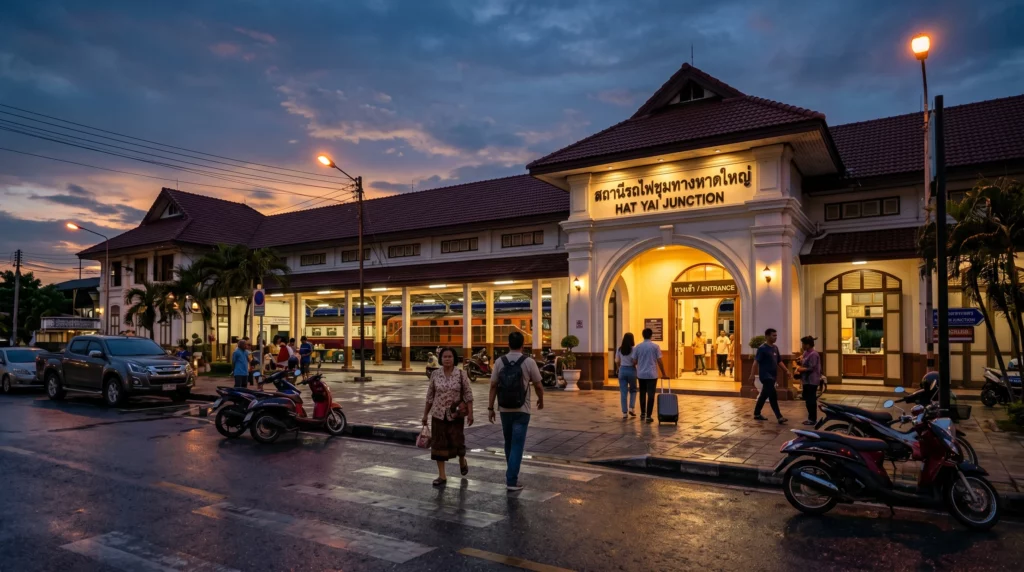
The above AI generated Image Studio depiction of Hat Yai train station at dusk represents the place I
traveled through more that anywhere else in Thailand. I stopped in Hat Yai every time I traveled between Bangkok and Penang Malaysia. And I always used the train for the long haul between Bangkok and Hat Yai.
Thank you for sharing such a rich and engaging account of your travels through Thailand. You captured beautifully how the country offers far more than tourism blending history, spirituality, culture, and genuine human connection in ways that leave a lasting impact. I especially appreciate the practical insights woven through your personal experiences, which make the journey feel both authentic and informative. Your reflections remind readers that meaningful travel is not just about places visited, but about the people, lessons, and memories gathered along the way.
Hello Kavitha, thank you very much for the nice comment. Your comment is very encouraging. I will click on your name to see if I can check out your website too. Thank you.
MAC
Hi Roam,
Really enjoyable read—it felt more like a real journey than a typical travel article. I like that you were upfront about using AI images; your personal stories are what truly bring everything to life.
The mix of practical tips and experiences works really well, especially moments like accidentally ending up in the wrong city—that’s often where the best memories come from. The ferry rides, staying with locals, and even the cold overnight train added a lot of authenticity.
I also appreciated the focus on lesser-known places, not just the usual tourist spots—it makes Thailand feel much more diverse.
Maybe just break up a few longer sections to make it easier to read, but overall this was engaging and inspiring. It definitely made me think about doing a longer trip in Southeast Asia.
Thank you for the great comment. I will go there right now and cut down the length of paragraphs.
Thailand looks like an amazing place to stay and it seems that there is so much to see and do there, which makes it an ideal place for a digital nomad to visit. I unfortunately don’t have this luxury as I am a dance instructor but not online, however you have inspired me to look at visiting this wonderful country in the near future.
Hello Michel, Thank you for the very nice comment. Dance instructor is cool. I was just watching (this morning) a couple of YouTube videos by a Dance instructor in Korea. She teaches Line-dancing. I love watching her do line-dancing Anyway, thank you again for the sweet comment.
MAC-