
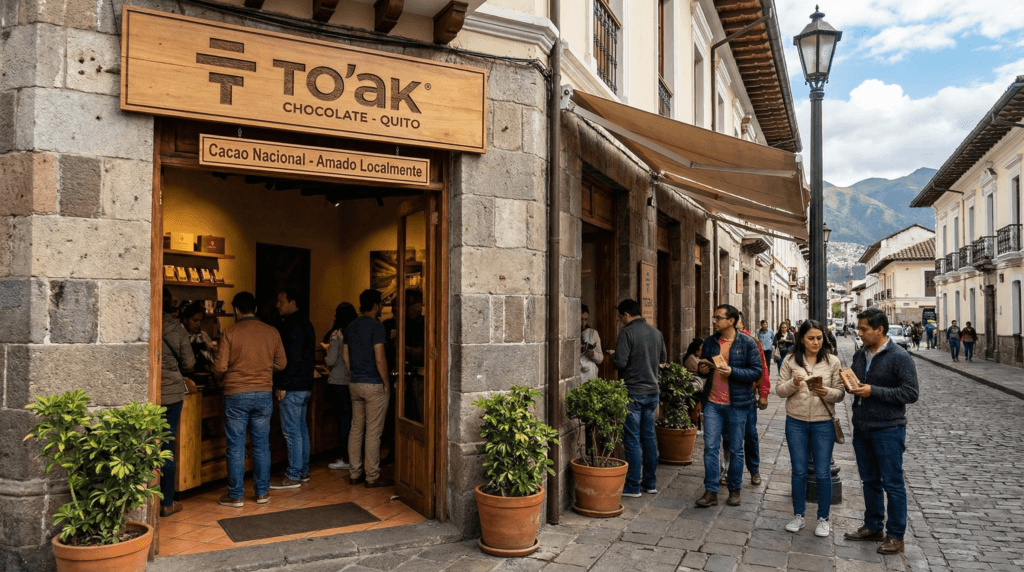
Nature gave us cacao – pure, earthy, and complex- but industry turned it into sweet and silky chocolate far removed from its roots. So, absolutely, there are real differences between Theobroma Cacao, or Ecuador chocolate, and regular chocolate.
The world of chocolate starts with a tree known as Theobroma Cacao. It’s not just any tree. It’s the revered provider of that beloved indulgence that often finds its way into our lives. This tree has a rich history, steeped in cultural and spiritual significance, especially in regions like Central and South America, where it has been cultivated for centuries.
In Ecuador, one of the hotspots for growing this exquisite cacao, the traditional methods of harvesting remain an art form passed down through generations. The pods are often harvested by hand, using tools and techniques that have been honed over time. This dedication to tradition helps preserve the quality and flavor of the cacao beans.
Theobroma Cacao isn’t just a plant; it’s a bridge linking us to ancient civilizations that once used cacao in religious and social rituals. It’s fascinating to think about how this plant has woven itself into the fabric of culture and history, from being used as currency among the Aztec and Maya peoples to its role in traditional medicine.
When it comes to harvesting this Ecuador cacao, patience and skill are key. Unlike the mass-produced varieties, which might sacrifice quality for quantity, the beans from Theobroma Cacao are chosen with care, often requiring a trained eye to discern the perfect moment for picking. This attention to detail is part of what makes chocolate derived from this tree stand out.
Understanding the journey from tree to treat is essential in appreciating its depth. It’s about recognizing the heritage and traditions that linger in every bite, a legacy that many people around the world continue to honor with every bar produced. Ecuador chocolate is not as sweet as many chocolates but it is unique and well worth a try.
The Art of Harvesting: From Tree to Treat
The journey of chocolate from the cacao tree to a delicious treat is truly a delicate art, one that starts right in the lush landscapes of Ecuador. Here, each cacao pod’s journey begins with careful selection. The climate and terrain provide just the right conditions for cultivating some of the world’s most sought-after cacao.
In this part of the world, the expertise required to harvest cacao beans has been cultivated over generations. It’s not just about picking a pod; it’s about understanding when the beans inside are just right for harvesting. Timing is everything because even a slight misstep can affect the quality of the chocolate.
Once the pods are gathered, they go through a meticulous process. Artisanal producers often favor hands-on methods. They know each step contributes to the bean’s final flavor profile. This contrasts with commercial producers, where speed often takes priority over careful selection.
There’s something about knowing that every step respects tradition that adds to the anticipation of that first taste. It’s these little nuances and attention to detail that distinguish fine chocolates from more mainstream varieties. For those looking to appreciate chocolate on a whole new level, understanding this process is a bit like finding the story behind a masterpiece.
Lastly, supporting this kind of chocolate production is not just about taste. It’s also a way of supporting sustainable practices and ethical farming. Choosing chocolate from sources that value these principles ensures more quality products and also contributes to preserving the environment and improving local communities’ livelihoods.
To’ak Chocolate: A Case Study in Excellence
To’ak Chocolate stands as a shining example of what dedication and craftsmanship can achieve in the world of cacao. Founded with the mission to elevate chocolate to its highest form, To’ak isn’t just about making a delightful treat. It’s about cultivating an experience rooted in art and history.
This company goes to great lengths to ensure their chocolate respects the traditional cultivation techniques while pushing the boundaries of contemporary production. To’ak works closely with indigenous farmers, ensuring that the cacao beans are not only of the finest quality but also sourced sustainably. This partnership is crucial for maintaining the biodiversity of the land and enriching the community’s economic well-being.
Each bar of To’ak chocolate is a narrative crafted from the rich tapestry of Ecuadorian heritage. Their meticulous process begins with selecting rare cacao varieties, some of which were almost lost to time. After harvesting, the beans undergo a unique fermentation process that brings out complex flavors, highlighting the natural qualities of the cacao itself.
To’ak’s dedication hasn’t gone unnoticed. Their chocolates have gained worldwide recognition, earning numerous awards that praise both the quality and the innovation within each bar. These accolades serve as a testament to their commitment to excellence.
Choosing To’ak is more than about taste. It’s about supporting a model of chocolate production that prioritizes ethical sourcing and respects the environment. For connoisseurs or the curious, exploring To’ak’s lineup is an invitation to discover a new dimension of chocolate where history, culture, and flavor converge beautifully.
Exploring The Power of Composition: Comparing Cacao and Commercial Chocolates
In the realm of chocolates, the differences go beyond packaging and price. The composition is a key factor that sets Theobroma Cacao chocolate apart from its commercial counterparts. This high-quality cacao boasts a richness in organic compounds that contribute significantly to its nutritional profile.
Theobroma Cacao contains a higher concentration of cocoa solids, which translates into a more potent dose of the beneficial antioxidants cacao is famous for. These antioxidants are linked to various health benefits, including improved heart health and enhanced mental clarity.
When comparing nutritional aspects, Theobroma Cacao chocolates often steer clear of excessive sugars and fillers you find in more commercial brands. Instead, they offer a more authentic cacao experience where the natural flavors of the bean are allowed to shine without artificial interference.
Regular chocolates, on the other hand, often add extra fats and sweeteners to appeal to broader tastes, sometimes at the cost of nutritional density. This can diminish the natural goodness that comes from pure cacao, making them less beneficial from a health perspective.
Understanding the composition and nutrition differences encourages a shift in how we view chocolate—not just as a sweet treat, but as a product that offers a host of natural benefits. So next time you’re selecting a chocolate bar, consider these differences. Opting for real, high-quality Theobroma Cacao chocolate can be a step towards enjoying chocolate in a healthier, more mindful way.
Savoring the Difference: Flavor and Sensory Profiles
The taste of Theobroma Cacao chocolate is an exploration of flavors that captivates the senses. It doesn’t just taste chocolatey—it’s an experience bursting with a spectrum of flavors that range from fruity and floral to earthy and nutty. Each bite can reveal a cascade of nuances that change and evolve as it melts on your tongue.
Unlike typical chocolates, which often rely on sugar or milk to drive their taste, fine cacao chocolates put the cacao bean front and center. The flavor profile is meticulously crafted by the bean’s origin, fermentation, roasting, and even the unique terroir of where it was grown.
Consumers often describe this chocolate as a journey where each tasting is akin to sampling a fine wine. There’s complexity here, a layered medley that invites you to pause and truly savor.
Commercial chocolate, though enjoyable in its own right, generally lacks this depth. Its flavors can be more uniform, tailored to provide a universally sweet and creamy experience, which often masks the cacao’s inherent characteristics.
Exploring these finer chocolates can redefine what people expect from chocolate. It encourages a more mindful tasting, where flavors are considered and appreciated, much like a good brew or an aged cheese. For those eager to train their palate, sampling diverse origins and brands of Theobroma Cacao chocolate offers an exciting culinary adventure.
Navigating Chocolate Legality: Market Classifications
Understanding how Theobroma Cacao chocolate is classified legally can reveal much about its authenticity and quality. These chocolates often fall under the category of ‘fine cacao’ or ‘premium chocolate,’ and with good reason. The standards they adhere to are rigorous, focusing heavily on the purity and origin of the cacao used.
These distinctions affect how they’re marketed and sold. Fine cacao must meet specific criteria related to origin, bean variety, and taste quality. This classification not only guarantees a top-tier chocolate but often also assures the consumer of ethical sourcing and sustainable agricultural practices.
In contrast, commercial chocolates might be labeled under broader terms without stringent guidelines. This lack of specificity often leads to variations in quality and sourcing, with the market preference skewing heavily towards mass production.
Regulatory standards for Theobroma Cacao often define how much real cacao must be present, limiting the use of artificial flavors and preservatives. Such requirements help maintain the chocolate’s integrity and quality.
The way these chocolates are classified influences not just the consumer’s buying decision but also plays a role in global market trends. Fine chocolates often command a premium price due to their refined standards, attracting connoisseurs and fine-dining purveyors alike.
Choosing chocolates based on these classifications can guide one toward more ethical and environmentally responsible options. It’s about being informed and choosing quality over convenience, supporting producers who prioritize genuine flavor and sustainable practices.
A Taste Exploration: Embarking on a Cacao Journey
The world of chocolate crafted from Theobroma Cacao is an open invitation to explore taste, history, and culture. These chocolates offer more than just a sweet experience—they present a rich, flavorful tradition that’s been carried from the ancient civilizations to our present-day kitchens. I tried six of the chocolate bars that To’ak creates. My two favorite bars are the Galápagos Orange & Salt flavor and the Amazonian Ants flavor. The latter is made with lemon ants and it has a very lemony flavor. The other flavors I tried, like Caramelized Pop Amaranth were quite unique and delicious.
For those who haven’t yet ventured beyond the typical supermarket selection, diving into the realm of fine cacao chocolates is a rewarding pursuit. The rich narratives embedded within each bar promise discoveries that are as delightful as they are educational.
One way to start this journey is by exploring small-scale producers like To’ak, whose focus on sustainability and quality leaves a remarkably positive impact on both taste and the environment. They provide a window into the possibilities of what chocolate can be when handled with care and precision.
Sampling different regions, flavors, and bean varieties not only refines your palate but also fosters an appreciation for the craftsmanship involved in each step from bean to bar. It’s an adventure for the senses that emphasizes slow, mindful tasting rather than mere consumption.
Engaging with chocolate communities, attending tastings, or supporting artisan chocolatiers can be the stepping stones to deeper involvement with this age-old delight. It’s about enriching the chocolate experience and connecting it with stories of heritage and tradition.
The key differences between chocolate made directly from Theobroma cacao beans and commercial chocolate are origin, processing, ingredient quality, and cacao content, which all affect flavor, nutrition, and ethics. The FAQ below is included here for more focused reading:
Q: What is Theobroma cacao chocolate, exactly?
A: It is chocolate made primarily from the seeds (beans) of the Theobroma cacao tree, a small evergreen whose pods contain the raw material for cocoa solids and cocoa butter. After fermentation, drying, roasting, and grinding, these beans become the base for dark, milk, or white chocolate.
Q: How is that different from “commercial” chocolate?
A: Commercial chocolate is usually mass‑produced with lower cocoa content, more sugar, cheaper fats, and flavorings, prioritizing uniform taste, long shelf life, and low cost. Tree‑focused or craft chocolate starts from higher‑quality beans and simpler recipes, emphasizing origin, flavor complexity, and ethical sourcing.
Ingredients and Processing
Q: Do cacao‑tree or “bean‑to‑bar” chocolates use different ingredients?
A: Craft and origin‑driven bars often contain just cacao (or cocoa mass), cocoa butter, and sugar, sometimes a small amount of emulsifier, and nothing else. Industrial bars frequently add milk solids, higher sugar levels, and may replace part of the cocoa butter with cheaper vegetable fats and multiple additives.
Q: Is the processing really different from commercial chocolate?
A: With tree‑to‑bar or bean‑to‑bar producers, fermentation, roasting, and grinding are tuned for each bean origin to highlight natural fruit, floral, nutty, or spicy notes. Large‑scale factories optimize for consistency, often roasting and blending beans to produce a standard “chocolatey” flavor rather than expressing terroir.
Flavor and Texture
Q: Why do cacao‑focused chocolates taste so different from supermarket bars?
A: Fine or origin bars can show distinct flavors such as red fruit, citrus, nuts, spice, or even rum‑like notes, depending on the variety and fermentation. Many commercial bars taste more uniform because blends, heavy sugar, and added flavors mute those subtle differences.
Q: Is cacao‑tree chocolate always more bitter?
A: Not necessarily; bitterness depends on bean genetics, fermentation, roast, and cacao percentage, not just “being dark.” Well‑made high‑cacao bars can taste balanced and complex rather than harsh, while poorly processed or low‑quality cacao can taste very bitter even at similar percentages.
Nutrition and Health
Q: Is chocolate closer to the cacao tree healthier than regular chocolate?
A: Dark chocolate with a higher cacao content (often 50–90%) typically contains more antioxidants (flavonoids) and minerals and less added sugar than standard milk chocolate. Because craft bars often keep cacao levels high and ingredient lists short, they tend to deliver more of cacao’s natural benefits per bite.
Q: How do dark and commercial milk chocolate compare nutritionally?
A: Per 100 g, 70–85% dark chocolate provides about 11 g of fiber and 24 g of sugar, while typical milk chocolate has only about 3 g of fiber and around 52 g of sugar. Both are calorie‑dense, but dark chocolate usually offers more fiber, iron, magnesium, and other minerals thanks to its higher cacao content.
Ethics, Sustainability, and Cost
Q: Are tree‑to‑bar or craft chocolates more ethical or sustainable?
A: Many craft makers source smaller lots of cacao, pay higher prices for quality beans, and emphasize transparent, often more sustainable supply chains. Mass‑market chocolate frequently relies on commodity cacao, where pricing pressure can encourage low wages and less environmentally friendly practices, though there are exceptions.
Q: Why is chocolate made from high‑quality cacao beans more expensive?
A: The cost reflects careful harvesting, fermentation, and drying at origin, selective sourcing, small‑batch production, and higher cacao content per bar. Commercial brands dilute expensive cocoa with more sugar, cheaper fats, and huge production volumes, which keeps prices lower but often at the expense of flavor and bean quality. So when you find chocolate bars sold by To’ak that cost USA $300, do not be surprised.
MAC
Really enjoyed this read, thanks for sharing! I love learning more about where chocolate actually comes from, especially when it’s tied back to the Theobroma cacao tree and all the culture and history behind it. I personally like darker chocolate with less sugar, so hearing how high-quality cacao bars can have more real flavor and nutrients was pretty cool. Thanks again for breaking this down, it definitely makes me want to explore more artisan chocolate next time I’m shopping.
Hello Kevin, thank you for the nice comment. I agree that dark chocolate is the way to go when it comes to choosing what chocolate to buy in the regular stores. I love the dark chocolate peanut butter cups at Trader Joe’s. Anyway, thankyouagainfortheverynicecomment. MAC.