
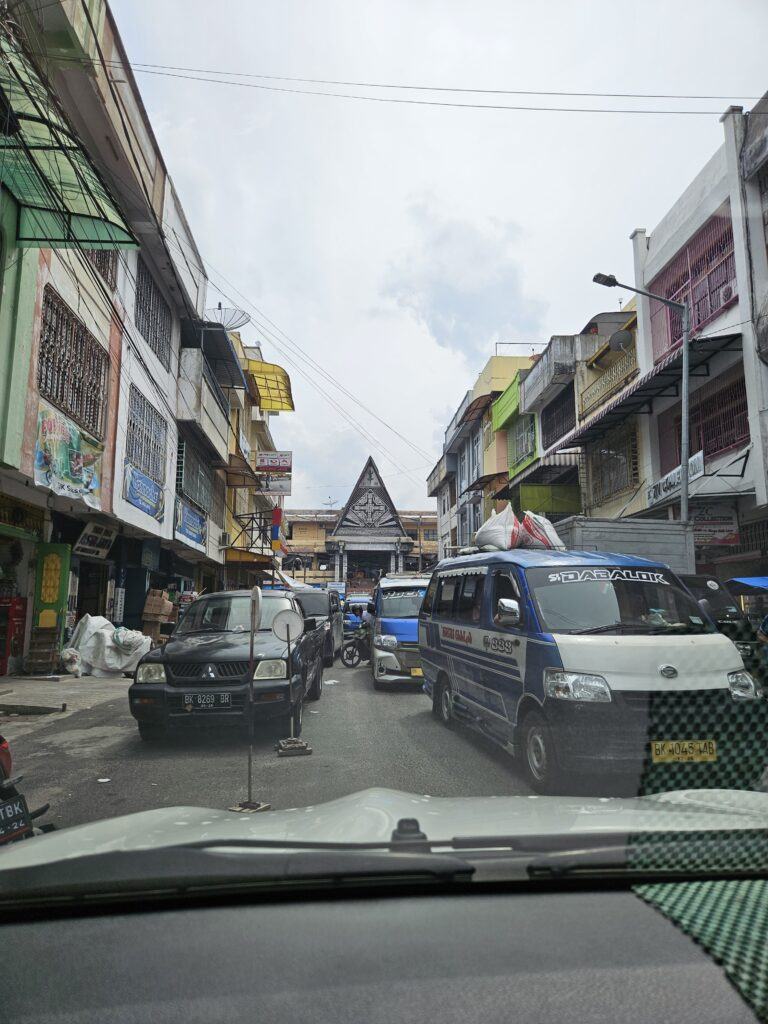
When I first arrived in Sumatra, I stopped in Medan to relax a few days before moving on to Parapat. This photo shows what I saw as I searched for motels and restaurants.
How I met Farida.
Planning a wedding in North Sumatra can be both an exhilarating and sometimes overwhelming experience, particularly when you’re a foreigner trying to navigate the nuances of local customs. Understanding how to blend personal traditions with those of your partner’s community requires patience and a willingness to learn. Before diving into preparations, it’s wise to engage in dialogue with your partner about expectations, cultural ceremonies, and any specific family traditions that can lead to saying “I do” in North Sumatra.
Cultural sensitivity is more than just politeness; it’s about embracing and appreciating the differences that make your partnership special. It’s crucial to show respect and enthusiasm for your partner’s heritage, especially when you’re stepping into a community with rich traditions. Educating yourself about the cultural dynamics in North Sumatra helps in fostering a positive relationship with your future in-laws and community.
How do I know all this? Because I did it but not all of what I just mentioned was explained to me before I made the commitment to court Farida for one year. That is why I decided to create this backstory. Since the circumstances would be quite similar for anyone planning a marriage in a different country, this article would help many people who find themselves to be victims of cupid while traveling.
I was on a public bus out of Medan. I ended up not staying in Parapat as I had planned because I met Rikson on the bus and he invited me to visit his family home in Simuara. Simuara is a no traffic light town high up on a hill that over looks the town of Muara which is right on Lake Toba. I agreed and stayed at their home for 8 or 9 days. We did visit Parapat a few times during that stay so I did get to see that area.
When it was time for Rikson to continue on to Jakarta, I agreed to travel with him because that is on the way to Bali which was my final destination. But then we arrived in Taratung where we found the share taxi to Jakarta. The share taxi was actually a Mercedes passenger van. Farida was also waiting to board the same share taxi.
When I first met Farida at a bus / taxi stand in Taratung, I did not consider any of the necessities or logistics of marriage. I was just thinking that I have to try and speak to her as well as I could. I did not speak her language well and she spoke no English. I studied Bahasa Indonesia for about one year and I had my English/Indonesian dictionary. We sat next to each other in the share taxi and spoke to each other as much as possible. I was entranced with her and she knew it. Before we reached Padang Sidempuan, she had given me her address there. I decided to stay there so I could visit her.
Although I had paid the share taxi to go all the way to Jakarta, I decided to stop in Padang Sidempuan so I could visit Farida. I saw Farida talking to someone when I left the share taxi. She had friends pick her up there. She was telling them about me . I know this because they were looking at me as I left the van. I said hello to them and told them that I will visit the address after a day or two. I then went to explore Padang Sidempuan.
There is no real tourist infrastructure in Padang Sidempuan besides two or three spots visited by Indonesian travelers. They have:
1. Tor Simarsayang which is a lovers’ viewpoint that has a big heart that lovers can sit within and take photos with the city down below. There are also a couple of hiking trails and cafes there.
2. Tugu Salak which is a tall tower with a salak fruit on the top. Salak is one of the largest economic income sources in the region of Padang Sidempuan.
3. The markets. There are a couple of markets that are pretty much similar to markets through out Sumatra.
And that is about all there is in Padang Sidempuan. I heard there is a Teletubbies park in the area but I did not see it. I suspect that it was built after my 2 stays in the city. Anyway, the yearly temperature has an average of about 80 degrees Fahrenheit or 30 degrees Centigrate.
I walked around the town to look for hotels and restaurants. Then I looked for a place to take a nap. I decided not to book a room until the next day since I had not decided on a place to stay yet so late in the evening. I came across an open, park like area (not man made) which had lots of bushes. I laid down there to take a nap. It was already dawn by the time I woke up. Now, THAT was a good sleep.
That morning, I immediately went to a large hotel discovered the previous day and booked a room there. I chose that hotel because it had a large area with no furniture. It did not even have carpet on the floor yet. It was not finished. I decided that it would be perfect for my Tai Chi Chuan practice. I was able to practice my Tai Chi every morning during my 2 month stay there.
It was time to start visiting Farida. I took out the piece of paper with the address on it. After eating breakfast, I went to one of the bejak drivers outside the hotel and showed him the address. He waved me into the bejak and brought me straight to the address. I paid him and stood outside of the house. It was a fairly large, white house about 20 meters from the street. Farida came out and greeted me; “Kamu datang” (you came.)
I did arrive and I arrived every day for two or three weeks. That was my routine every day. Tai Chi, breakfast, tea and conversation at the house where Farida was staying. She learned a little English and I was getting better with Bahasa Indonesia. The conversations were not only with Farida but also with her host and roommates. She was living in a house owned by an aunt with a few other boarders who were working in Padang Sidempuan. I had to answer questions from two, three, or four people every day. And then THE BIG QUESTION came:
“Kamu serius? Kamu mau melakukan ini?”
I thought about that for a moment. One of Faridas’ roommates was asking if I was serious about doing this. I just looked at them for a moment. Faridas’ aunt came out and sat with us. She explained to me that my visiting Farida every day was what boys do in this country when they are courting a girl for possible marriage. I did not expect that. Still, I decided that it must have been a possible outcome all along. So I answered; “Tentu saya mau.” (I want to for sure.)
But I decided to slow things down a bit. I wanted to go to Bukitinggi and decided to go there at that time. I told everyone that I would like to court Farida but I wanted to go visit Bukitinggi for a week. This would give all of us a chance to deeply consider what we were about to do. I told them that I would return with some small souvenirs and went on my way, paying for a seat on a regional bus.
Now Bukitinggi IS a bit of a tourist destination. Whereas Padang Sidempuan has about 225,000 people, Bukitinggi has only about 122,000. Unlike Padang Sidempuan though, Bukitinggi does have an important tourist economy. I loved walking around Bukittingi. It is a lovely town. It is a central hub of the Minangkabau people and their culture. I stayed for one week, took photos of the Jam Gadang which is the distinctive clock tower in the center of town. The Dutch built it in 1926. I also visited a museum and a most extraordinary lookout at the Sianok Valley Viewpoint. Sianok Canyon has a couple of tunnels created by the Japanese during WWII. Bukittingi also has a couple of volcanoes, Gunung Merapi and Gunung Singgalang.
One of Indonesias’ founding fathers, Mohammad Hatta, is from here and his family home is now the museum, Rumah Kelahiran Bung Hatta. The name means Birth home of Mr. Hatta. On the other side of Sianok Canyon is a town of silversmiths. It is Gadung Koto with cafes, museums where a couple of other Indonesian leaders lived, and many homes displaying very fine silver works from jewelry to structures made of fine silver. I went over there and bought a necklace for Farida. I also bought a lot of small wood carvings for the children in the neighborhood where Farida was staying. After a week, I was ready to return to Padang Sidempuan.
Again, I used a public bus to return to Padang Sidempuan. The bus broke down so my return was delayed. I just sat on a bench and waited for the bus to get repaired. I was not worried or frustrated at all. I just relaxed and enjoyed being on the adventure in the middle of Sumatra. Public busses in Sumatra are about as rickety as you can imagine. Luckily, there are repair shops all over the place. As run down and worn out the public busses are in Sumatra, I imagine repair shop owners here are probably millionaires.
Anyway, I did eventually return to the same hotel I was staying in and I did resume my daily visits with Farida the day after my return to Padang Sidempuan. The conversations were more focused now:
My return to USA to save money for the wedding.
My research into what paper work would be necessary before my return.
What kind of home will we have.
Will any of my family members be arriving for the wedding?
We also started going out on dates. She must have brought me to all the most romantic spots around Padang Sidempuan. One really memorable place was a large grassy area with dining tables and a performance stage. She knew the manager and he joined us for awhile. The music was Indonesian pop music which is pretty good. The food was great so there must be a professional kitchen there.
Then the day came when she told me that her parents agreed to meet me. We would have to travel back to Taratung , where we first met, then get on a bemo that would take us to Parlilitan. We would then have to walk about half an hour to her family home.
It takes only two or three minutes to pass through the village of Parlilitan. There are no traffic lights. It is just a square grid of about ten blocks that has the one road leading through the village from the east to the west (or vise a versa.) The stretch of road that leads out of town towards the east is where we had to walk towards the home of Faridas’ family.
I spent about one month with Farida and her family. Nobody spoke very much English in her family so I was relying a lot on my English/Indonesian dictionary to help me communicate with everyone. I did get pretty good at understanding everyone after some time. We came to the agreement that I would go back to USA to take care of all necessary paperwork and build up as much money as possible.
To kickstart the wedding preparations, you’ll first want to get a handle on the legal and ceremonial requirements. Each country has its own set of rules and customs, so make sure you’re familiar with what goes into legally binding a marriage in Indonesia, which is distinct from other parts of the world. Start early and allocate time for each step, as things may progress at a different pace than what you might be accustomed to. We did talk about these things and I returned to the USA with a pretty good idea of what I was getting myself into.
Having conversations with locals or expatriates who have gone through the process can be incredibly informative. They can offer insights into the do’s and don’ts and help you anticipate any surprises that may pop up along the way. Reaching out to people with firsthand experience is invaluable, giving you a real-world perspective that’s hard to get from a guidebook or online research. The fact that Faridas’ father worked for the government helped me a lot. He brought me and Farida to the offices we had to go to and did all the talking for us.
All About the Paperwork: Registering with the Indonesian Government
Registering your marriage with the Indonesian government is a crucial step that requires careful attention to detail. This process is fundamentally important to ensure your marriage is legally recognized and helps avoid any future bureaucratic challenges. First up, you’ll need a comprehensive set of documents.
Gathering the necessary documents might seem daunting, but breaking it down step-by-step can make it manageable. You’ll need your passport, a valid visa, and both your birth certificates. It’s important to have official translations of these documents if they are not in Bahasa Indonesia. Additionally, they often require proof of income, which confirms your financial capability as a couple.
Given the importance of documentation, double-check everything. Make copies of each document, as several departments may require them, and having extras can save time. Checking in with your local embassy or consulate can provide updated guidance on document requirements specific to your nationality.
Navigating the bureaucracy can be tricky, so patience is key. Utilizing the services of a local legal advisor or a wedding planner with experience in international marriages can help streamline the process. They offer local insights and can help bridge the gap between what’s needed and what’s required from a non-local perspective.
The Indonesian government processes might move slower than in other countries, so starting early and staying organized is essential. It’s all about anticipating potential delays and keeping calm when things don’t go exactly as planned. The right preparation will keep things on track and maintain your peace of mind. Having extra money to pay officials for extra fast services is also a help if you want to go that route.
A Different Kind of Dowry: Negotiations and Financial Arrangements
Understanding the customs surrounding dowries in North Sumatra can be a real eye-opener. Traditionally, the dowry represents a gesture of respect and commitment to your partner’s family. In our case, we agreed on a dowry of $4,000, a common practice among many families in the region. While it might seem like a transaction, it’s culturally significant and reflects trust and responsibility.
In addition to the agreed amount, I decided to purchase a house in Medan as part of the dowry package. This decision wasn’t taken lightly. Real estate is a sound investment, and it also allowed me to demonstrate my dedication to my new family. By opting for property, I didn’t just fulfill a financial obligation but also offered something tangible and lasting.
When negotiating these financial matters, open communication is essential. Have candid discussions with your partner and her family about expectations and possibilities. It’s vital to approach this with sensitivity, understanding its symbolic importance rather than viewing it purely as a financial transaction.
Keep in mind that every family is different. Some may adhere closely to traditional practices, while others might be more flexible. Being adaptable and respectful of these differences can help smooth negotiations and foster a stronger bond between families.
It’s crucial to understand that these negotiations play a significant role in establishing trust and mutual respect. Showing appreciation for such customs not only eases the process but also wins the hearts of your new family, making your integration into the community smoother.
Securing the Union: The Kantor Catatan Sipil Marriage License
Securing a marriage license at the Kantor Catatan Sipil is a pivotal step in making your marriage official in Indonesia. This office handles civil registrations and recognizing your union legally requires following their procedures closely. The process might seem intricate, but with the right approach, you can navigate it smoothly.
Start by preparing all the essential documents mentioned earlier; organization and patience is key. You’ll need to visit the Kantor Catatan Sipil with your partner and ensure you bring along everything that’s required: passports, visas, official translations, and any additional forms filled out as directed.
Timing also matters here. The office might have specific working hours and local holidays, so planning your visit in advance can save you unnecessary trips. Scheduling your appointment and understanding how time-sensitive the paperwork is can prevent last-minute stress.
Engaging a local assistant or a knowledgeable local friend who understands the system can be a tremendous help. They can guide you through the administrative nuances and language barriers, ensuring everything flows without a hitch.
Make sure your documents are in order and verified by the necessary authorities to avoid delays. Having every page checked and stamped before your visit can speed up the process significantly. Remember, patience and a bit of persistence go a long way in dealing with bureaucratic procedures, especially in a country like Indonesia.
Legal recognition isn’t just a formality—it’s an assurance of your rights and status as a married couple in Indonesia. This step is about securing your future, legally and socially, making it an invaluable part of your journey together.
Celebrating Love: The Traditional Batak Wedding
Experiencing a traditional Batak wedding is truly a remarkable journey. These ceremonies are rich in symbolism and cultural heritage. Each tradition has its own unique significance, helping to tie your personal story into a broader cultural tapestry.
A central element of the celebration is the symbolic goldfish ritual. In this act, feeding each other a piece of goldfish represents a shared journey, with goldfish being a cultural symbol of prosperity and happiness. Participating in such meaningful ceremonies can bring you closer to your partner and their heritage.
The ‘ulang tahun’ offering is another key tradition. This involves presenting offerings to signify gratitude and the value of the blessings that have been received throughout the years. Being part of these rituals allows you to understand and embrace the deep-rooted values that are integral to family life in North Sumatra.
These traditions, while deeply symbolic, also foster a profound sense of community. The involvement of family and friends amplifies the celebratory spirit, creating an environment of warmth and togetherness that envelops everyone present.
Getting actively involved in these customs helps in building connections and understanding the emotional fabric of your new family. It shows your respect for their heritage, helping in forging deeper ties and a smoother integration into the family circle.
After the Vows: Life in Medan and Family Dynamics
Transitioning into married life in North Sumatra with my new family brought its own set of joys and challenges. Adjusting to a different pace of life in Medan required openness and flexibility, as the local customs and traditions were integral parts of daily life.
Integrating into a new community meant immersing myself in the culture. This involved everything from learning the local language to understanding social norms and participating in community events. Such efforts were crucial in bridging any cultural gaps and strengthening my bond with my partner’s family.
Building a home in Medan not only provided a strong foundation for our marriage, but it also became a centerpiece of family gatherings. Having a space that reflects both local influences and personal touches helped in creating a warm and welcoming environment for everyone. The house cost US $7,500 and was big enough for the whole family until Faridas’ brothers and sisters got older and started getting married also. But then they moved out and got their own homes.
Strengthening ties with my wife’s family was an ongoing process. Regular visits to Medan, living with the family, and letting them take us around Sumatra, and showing a genuine interest in their lives made a significant difference. It was important to let them know that I was wholeheartedly invested in the family dynamic and willing to contribute whenever needed.
Adapting to life in a new country, with its distinctive cultural and familial structures, was an experience I had to follow up with for some time. I really kept busy walking up and down an active town. We visited cultural events, locally loved restaurants, and museums together. I loved living in Medan but eventually, Farida and I decided we could make more money in USA and still live with her family on a regular basis.
A good result of my buying a house in Medan was that we would be living in the city when it was time to get paperwork done for Faridas’ passport and visa. We would be visiting lots of offices in Medan. We agreed that we could work in USA and live in Medan for a month or two every few years. It took us a couple of years to pull off this lifestyle but we did it. And, of course, I had to get Rayhend’s’ Passport from the US counsolete in Medan to him (my first son) to USA also.
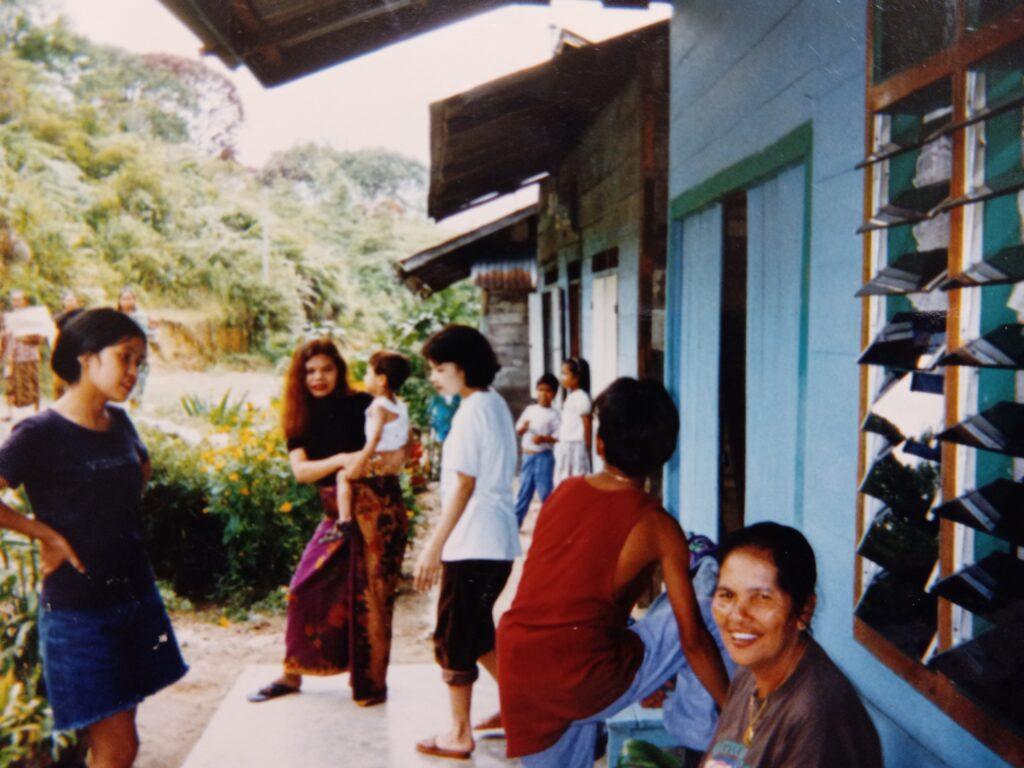
Here is a more focused discussion about getting married in Sumatra Indonesia according to what people have asked about the issue:
General requirements
Q1. Can foreigners legally get married in Sumatra, Indonesia?
Yes, foreigners can legally marry in Sumatra as long as the marriage follows Indonesian marriage law, includes a recognized religious ceremony, and is properly registered with the relevant religious office and/or Civil Registry. My wifes’ household is Christian so we got married in the village Gereja Batak Protestan just down the road from their home.
Q2. Do we need to be of the same religion?
Yes. Indonesian marriage law requires both partners to share the same religion; if not, one partner must formally convert before the marriage can be registered.
Q3. What are the minimum age and consent rules?
Both partners must generally be at least 19 years old; those under 21 typically need written parental consent, and younger couples may need a court dispensation.
Legal process in Sumatra
Q4. What is the basic legal process to marry in Sumatra?
You must hold a religious ceremony (Islamic or another recognized faith) and then, for non‑Muslim couples, register the marriage at the local Civil Registry (Kantor Catatan Sipil) in the city or regency where the wedding takes place. Muslim marriages are conducted and registered at the Office of Religious Affairs (Kantor Urusan Agama, KUA) and are legal once the marriage book is issued.
Q5. How do Islamic (Muslim) weddings work legally?
For Muslim couples, the nikah is held at the local KUA office or another approved venue with KUA officials present; at the end, the couple receives a marriage book (Buku Nikah), which serves as legal proof of marriage without additional civil registration.
Q6. How do non‑Muslim weddings work legally?
Non‑Muslim couples first hold a religious ceremony (for example, in a church or temple) and then must register the marriage at the Civil Registry within the specified timeframe—often within 30 days—to receive a civil marriage certificate (Akte Perkawinan).
Documents and paperwork
Q7. What documents do foreign citizens usually need?
Typical requirements include valid passports, birth certificates (often translated into Indonesian), a Certificate or Letter of No Impediment to Marriage from your embassy, and documents proving the end of any previous marriage (divorce decree or death certificate). I was also asked for proof of financial stability but I do not remember if that was for the marriage proper or for her visa to bring here to USA.
Q8. Are there extra documents for Indonesian citizens?
Indonesian partners usually need their national ID card (KTP), family card (KK), a certificate of single status or marital history from local authorities, and parental consent if under 21.
Q9. Do we need photographs and witnesses?
Local offices typically request multiple 4 x 6 cm passport‑style photos of the couple together and at least two adult witnesses with valid ID to sign the registration documents
Timing, planning, and practicalities
Q10. How far in advance should we start the process?
Begin collecting documents and contacting local offices or a wedding planner several months in advance, as translations, embassy appointments, and local registrations can take weeks.
Q11. Is there a waiting period before registration?
Many Civil Registry offices apply a waiting period—often around ten days—after submitting complete documents before the marriage can be formally recorded
Q12. Do we need a local wedding planner or organizer in Sumatra?
While not mandatory, many foreign couples hire a local wedding planner or legal facilitator because procedures are in Indonesian and requirements can vary slightly by district. We had Faridas’ dad who was very knowledgable concerning government procedures because he worked for the government. And we had Faridas’ mom and older sister who managed the wedding itself.
Cultural and destination aspects
Q13. What cultural wedding styles are popular in Sumatra?
Sumatra offers diverse traditions, including Batak ceremonies in North Sumatra that emphasize clan rituals and gift exchanges, and Minangkabau customs (from nearby West Sumatra) featuring rich textiles and matrilineal symbolism that some couples incorporate into their celebrations. It was great to have a Batak style wedding because not only did I eat goldfish for the first time but, also, I walked out of there with a pile of traditionally crafted ulos.
Q14. Can we have a destination or nature wedding in Sumatra?
Yes, many couples choose settings such as Lake Toba, jungle lodges, coastal resorts, or traditional villages, but the legal ceremony still needs to involve local religious and/or civil authorities to be valid.
Q15. What should guests wear to a Sumatran wedding?
Dress codes depend on whether the ceremony is traditional, religious, or modern; modest, smart clothing is expected, and guests may be invited to wear traditional fabrics or colors that match the local custom. The bride and groom will often be wearing very elaborate traditional cloths. My wife borrowed a western style white wedding dress and I borrowed a western style suit from one of her brothers. After the church ceremony, we started the 2 day celebration in the home when my wife was wearing a traditional Batak dress with sash and I was wearing an ulos folded lengthwise over my shoulder with the same suit.
International validity and follow‑up
Q16. Will our Sumatran marriage be recognized in our home country?
In most cases, marriages valid under Indonesian law are recognized abroad once properly documented, but many countries require you to report or register the foreign marriage with local authorities when you return.
Q17. Do we need translated or legalized certificates after the wedding?
Couples often obtain certified copies and sworn translations of their Indonesian marriage book or certificate, and may need additional legalization (apostille or consular stamp) depending on their home country’s rules. All of our copies do have that stamp.
Q18. What happens if the religious ceremony is not registered?
An unregistered ceremony, such as an informal nikah siri, usually has no full legal standing for civil matters like immigration, inheritance, or child legitimacy, so proper registration is strongly recommended.
That is it for now. If I remember anything else that may be useful, I will add it here. Thank you for reading my account here. MAC.
This was such a rich and absorbing story to read. I really appreciated how you wove together the personal, the practical, and the cultural without romanticizing or oversimplifying any part of the journey. From the chance meeting in the shared taxi to the slow realization that daily visits carried deep meaning in Farida’s culture, it felt very grounded and honest. I also loved the small human details—studying Bahasa with a dictionary, practicing Tai Chi in an unfinished hotel space, napping in a bushy open area—which made the experience feel lived-in rather than just narrated. It gave a real sense of what it’s like to let life unfold while traveling, rather than trying to control every outcome.
I’m curious—looking back now, was there a moment when you realized this was no longer just an adventure, but a life decision you were fully committed to? And for someone reading this who might be considering a cross-cultural relationship or marriage abroad, what’s the one thing you wish you had understood earlier that would have made the process emotionally easier, even if not simpler?
Hello Iris, thank you for the very nice comment. I guess, the moment I felt the commitment of choosing to really go through with the life changing decision was when I was in Bukitinggi and getting ready to buy my bus ticket. I could have bought a ticket to Jakarta rather back to Padang Sidempuan. I did not. It was that decision to buy my ticket back to Padang Sidempuan that sealed the deal. It was then that I knew I had to go all the way with it.
For readers considering a similar decision, I would suggest making sure yor have enough patience and money to get everything accomplished with no delays with paperwork, passport, and visa. I did have the patience since the whole process was the result of a completely unexpected meeting. So it was easy for me to take everything in stride. The money part was an issue though, because, although I did have enough money for the paperwork and Faridas’ passport, I did not have enough money to pay the officials what they wanted in order to get Passport and USA Visa that month. Because of that, Farida had to wait several months to get her Passport while I returned home. I then had to return the next year, bring Farida to Jakarta, get her visa there (ikut swami visa which means follow husband), then return to Parlilitan where her family lives then finally get her and our first son ( Farida got pregnant on our honeymoon) ready for their move to USA.
MAC
Thank you for sharing such a rich and detailed account. What stands out immediately is how well you contextualized the emotional, cultural, and logistical layers involved in cross-cultural marriage especially for foreigners navigating unfamiliar customs and administrative systems. Your narrative blends personal storytelling with practical information, which is an effective communication strategy for making complex processes relatable and useful to others.
Hello Kavitha, thank you very this very nice comment. I really hope, most of all, that my articles can be helpful to people. I do love sharing my experiences and I really want to help people with them too if it is possible. Thank you again for the great comment. MAC