
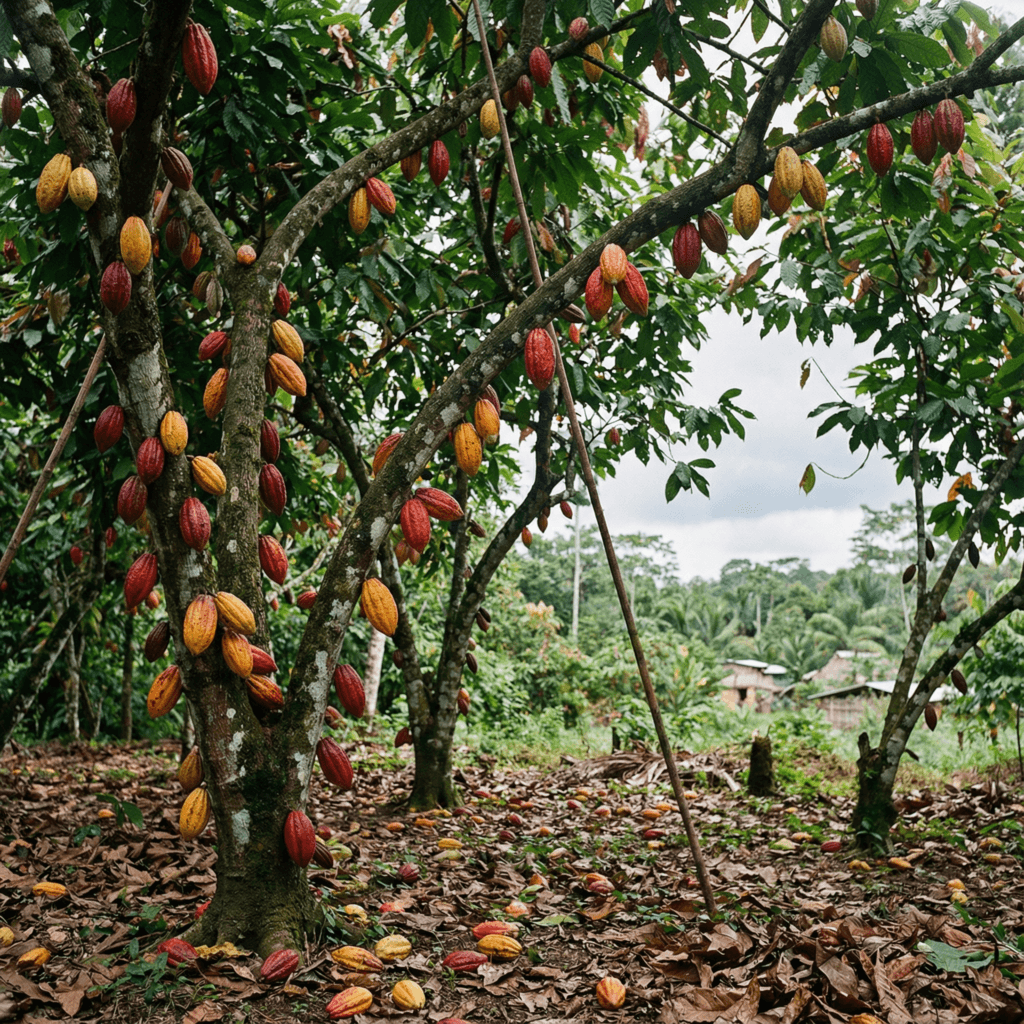
Theobroma is one beautiful tree.
Imagine walking through a forest where your lucky stars led you to find the world’s oldest chocolate trees. Here, Theobroma cacao isn’t just another tree; it’s practically a monument. It’s the wise old sage nestled in the lush heart of Ecuador. Well, we did not quite walk into the forest, but we did walk into a shop. And we did eat some chocolate made from those trees.
The worlds’ oldest chocolate trees belong to the genus Theobroma, which translates to ‘food of the gods.’ And let me tell you, these aren’t just your average garden-variety flora. We’re talking about a species so ancient that even dinosaurs might’ve nibbled on their forebears’ leaves.
Unearthing facts about these grand trees is like hitting a botanical jackpot. Each tree tells a story, a living relic of chocolate history that’s been feeding sweet tooths and inspiring the art of fine chocolate making for centuries. And there are a few direct desendants of the ancient stock still alive. These are more than trees—they’re the chocolate gods’ legacy, and they stand tall, proud, and a tad smug, knowing they’re the crème de la crème of the cacao world.
Ecuador: A Sanctuary for Sentient Beans
In Ecuador, where the air feels like a warm hug and the earth hums with ancient wisdom, the ancient cacao trees have found a perfect home. Here, the older the trees, the more they seem to whisper secrets of the jungle. These trees are coddled like royalty, ensuring their legacy stretches far into the future. I’ve noticed that the guides in Ecuador do love to share knowledge of their natural foliage and environment.
The region of Ecuador that’s host to these legends isn’t just dirt and roots. It’s a lively community deeply connected to the very beans that redefine luxury. Farmers treat these cacao trees almost like family, fussing over them daily to make sure they remain content and flourishing. The result? Kilos of cacao that can command prestige on the palate. I know MY palate loved the chocolate made from these pods.
Those who tend to the worlds’ oldest chocolate trees are more than just farmers. They’re custodians of a rich heritage, nurturing a link to a storied past with every care-filled ritual. And while these cacao caretakers might not wear royal garb, their expertise shines through in every piece of chocolate their craft sustains. Whether by luck or lineage, this part of Ecuador seems to breathe life into a history that never quite settled into yesteryear. Does all this sound like a overly embellished novella? I am sorry about that but I get nostalgic about my experiences in Ecuador.
To’ak: More Than Just Barrels and Bars
To’ak is where chocolate ambition meets mesmerizing artistry. This isn’t some run-of-the-mill choco factory. It’s a symphony of flavors composed from the most treasured cacao beans. To’ak believes in more than just making delicious bars; they create fine masterpieces that you can eat. They have some often seen flavors as well as a few very unique flavors. I bought several bars including the flavor with ants, or lemon 🐜 flavor. People of the Amazon region often use “Lemon ants” in much of their cuisine.
Another bar I bought is called Galápagos Orange & Salt flavor. It is presently my favorite flavor. The salt crystals used are collected in the Galápagos Islands. The orange peel used is cooked with sugar, diced, then covered with cacao butter.
Anyway, the process of creating chocolate by To’ak can be called tree-to-bar chocolate. That’s To’aks’ forte right there. It’s where luxury meets dedication, and each step, from bean selection to wrapping the final product, shows a reverence for the craft of chocolate making. It’s like they turned a simple cacao bean into an exotic perfume, a culinary concerto. An expensive culinary concerto with some bars costing $300.
This company doesn’t just make chocolates; they craft experiences that whisk you away to a richer, more indulgent world. Every bar tells a tale, offers a taste of Ecuador’s vibrant land, and invites you to savor the beauty in every bite. And the folks behind To’ak? They’re like modern-day alchemists, turning cacao into black gold with every meticulous step. The chocolate bars have the nick-name “Alchemy Grande” or the Alchemy Collection.
Quito: Chaos Meets Elegance in Glass Towers
The financial district of Quito isn’t for the faint-hearted. It’s a bustling hotspot where modern architecture scrapes the clouds. This vibrant stretch of the city is like a game of Tetris played with high-rise buildings. I stayed in this neighborhood at the Hotel NH Collection Quito Royal. It is right next to the World Trade Center.
Walking through the streets, the energy feels electric. Sharp-suited business folks dart between gleaming offices, and the air buzzes with ambition. It’s a place where ideas and coffee flow as freely as the traffic jams below. There is a really cute pastry shop on the ground floor of the World Trade Center. I spent plenty of time relaxing and trying various pastries there.
Quito’s World Trade Center stands in the financial district of La Floresta neighborhood. It is a beacon of commercial prowess. It’s more than just concrete and glass; it’s a symbol of the city’s growing influence in global business. Within these walls, deals are made, futures are shaped, and everyone that’s anyone stops by to catch a breather between boardroom brawls. Besides the pastry shop, surrounding the hotel and World Trade Center, there are many cute restaurants and shops to visit.
This district isn’t just about making green though. Among the skyscrapers, you’ll spot a kaleidoscope of cultures reflecting Quito’s multifaceted identity. It’s a place where tradition and innovation shake hands, creating a lively mix that seems almost too vibrant to capture in a postcard.
The Royal Treatment: Hotel NH Collection Quito Royal
This elegant abode knows how to pamper its guests. From top-notch room service to spa indulgences, this hotel is a respite amidst your urban escapades. It is in the Floresta neighborhood. It’s like a regal retreat that keeps you guessing what surprise comfort comes next. Normally, I would not book a room in a business hotel in a business district of a city but I saw a good deal on a hotel room and booked it immediately.
I thought I was booking the room directly from the hotels’ website but it was a sneaky ad placement by a platform called www.super.com which finds discounted rooms for travelers. I immediately researched super.com and found them to be legit. They even have fairly good customer support. They did me right with this booking.
And, speaking about the culinary treats, the hotel really does sit in a quarter that’s a foodie’s paradise. The dining scene here would tempt even the most jaded palate. Think vibrant flavors, stylish settings, and the kind of gastronomic flair worth bragging about.
The hotel restaurant is excellent and their breakfast buffet has things that I never heard of before. I discovered them, I tried them, and loved them. They have delicately cooked figs that are out of this world (almost). They also have traditional soups that I could not stop eating. I had to keep getting more and more.
Every meal is a delightful adventure. Whether you’re having a casual bite or a fancy multi-course feast, this hotel and its surrounding eateries understand that good food is as much about the flavor as it is about crafting moments to savor.
UNESCO’s Darling: Quito’s Heritage in Chocolate
Quito’s old town has a timeless charm earning its rightful place as a UNESCO World Heritage Site. With its cobblestone streets and colonial splendor, it’s a living tapestry of the city’s rich past and lively present. We spent most of our time in Quito exploring the several big squares that make up the UNESCO area. My Instagram and Pinterest accounts will be loaded with images from this area.
The architecture is a feast for the eyes, with each building telling stories of bygone eras. It’s a place where you can almost hear echoes of history every time you turn a corner. The buildings make up one of the most well preserved UNESCO sites in the world. And it is also the oldest. So Ecuador has the oldest chocolate trees AND the oldest UNESCO World Heritage site in the world.
For chocolate lovers, this area is nothing short of paradise. Quaint chocolate shops dot the landscape, each offering a unique take on Ecuador’s cocoa treasures. It’s like stumbling into a secret chocolate wonderland, where every bite whispers sweet nothings to your taste buds. And we bought chocolate. The shops really are cute.
The shops here aren’t just about selling chocolate. They’re about curating experiences, blending traditional recipes with a touch of local flair. Walking into one of these stores feels like entering an artisan’s workshop, with all the scents, textures, and colors weaving together an irresistible tapestry.
You are walking down old, cobblestone streets that are not built for vehicles and you will see very few vehicles on them. It is a paradise for history buffs and food lovers alike. The chocolate shops are surrounded by cozy markets and wonderful restaurants. We ate traditional meals here such as Quy or Cuy which is guinea pig. We also found Canelazo which is a traditional drink made with cinnamon and sugar, with or without alcohol.
Cobblestone streets wind through the old soul of Quito, where time lingers in golden domes and painted balconies overflowing with geraniums. The scent of freshly fried empanadas mingles with the faint sweetness of canelazo, its cinnamon warmth wrapping around the cool mountain air. Along narrow alleys, laughter spills from cafés as musicians pluck notes that echo against centuries-old stone. I sip rich chocolate thickened with spices, taste roasted corn kissed by smoke, and feel the rhythm of a city that feeds both body and spirit—each bite, each step, a small prayer to its living history. We decided that we may try to live there someday, at least for one month.
Back to the topic of this article, purchasing chocolate here is never just about a sweet treat. It’s a chance to take home a slice of Ecuadorian culture enriched by history, craft, and a love for cacao. You are eating and drinking what the Mayan and Aztec people loved, not to mention the Spanish who were enthralled by their new discovery.
Chocolate Emperors: To’ak and Republica de Cacao
In the realm of fine chocolate, To’ak and Republica de Cacao are like the emperors of indulgence. These brands elevate chocolate from simple indulgence to eloquent storytelling.
To’ak’s approach is like an art form. They take the rare and exotic, adding their secret touch to craft bars that are much more than chocolate. Each piece is a journey that pays homage to Ecuador’s brilliant beans, allowing you to savor something extraordinary.
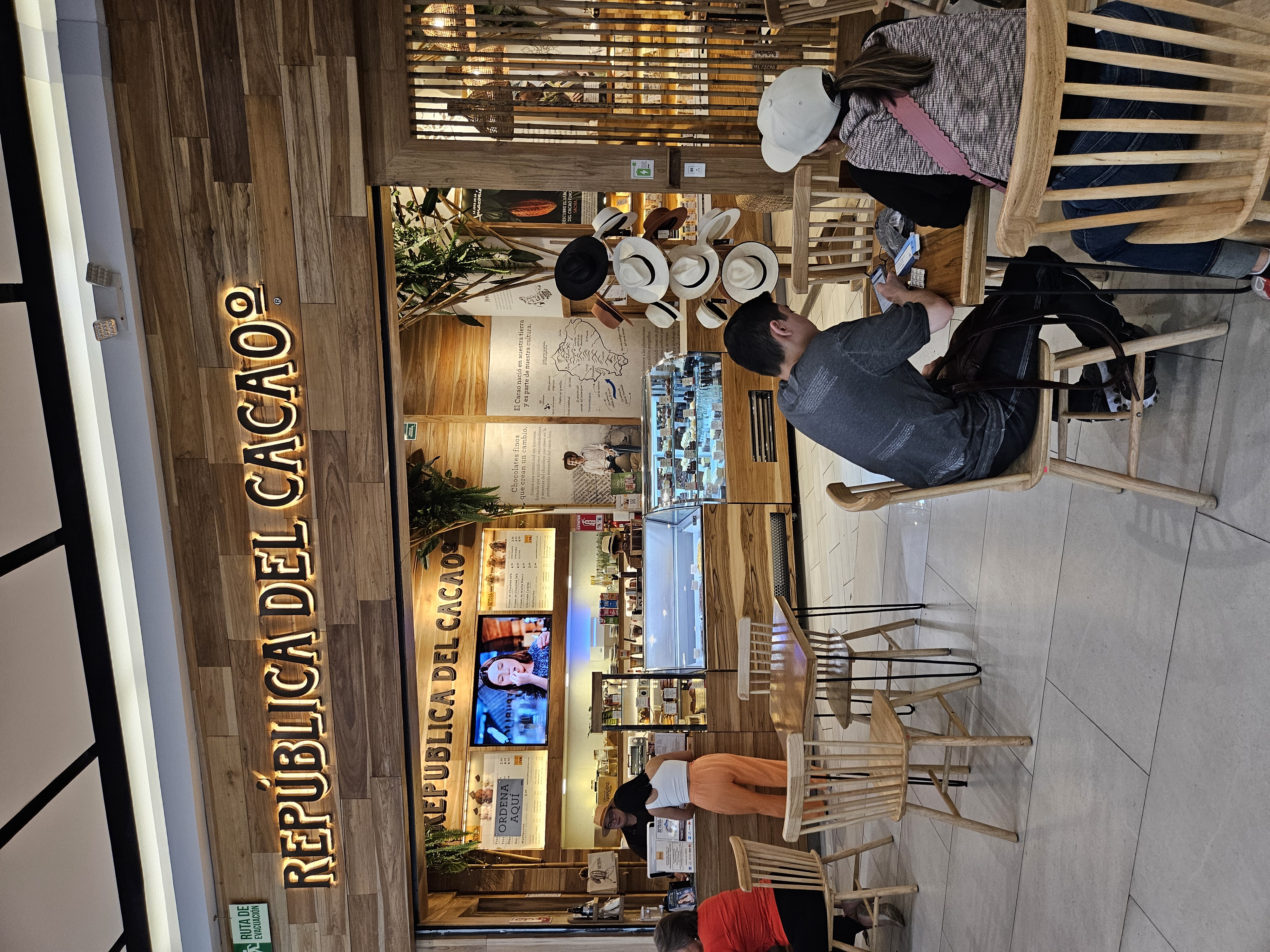
Then there’s Republica de Cacao. While they share To’ak’s reverence for cacao, their style differs like a symphony does from a solo piece. Their mission? It’s about celebrating authentic Ecuadorian flavors on a larger scale, with products that appeal to palates everywhere.
Both brands share a commitment to quality that stands uncompromised—a high-wire act between tradition and innovation. To’ak focuses on exclusive limited editions that urge patience and deliberate tasting. Meanwhile, Republica de Cacao offers something for everyone, making the Ecuadorian chocolate experience more accessible.
Their dedication, in both cases, doesn’t stop at your taste buds; it spills into supporting local cacao farmers and sustainable practices. These companies are about more than crafting chocolate; they’re about making a difference one bite at a time. In every bar, you can taste their passion, their craftsmanship, and their pledge to quality.
Below, I am taking a photo of My wife and Reno at Republica de Cacao in a Quito shopping center. Below the photo, there are some questions answered that should be able to shed more light on Ecuadorian chocolate.
Here are some Frequently Asked Questions for you.
What makes Ecuador’s cacao trees some of the oldest in the world?
Ecuador is home to Nacional cacao, a variety believed to descend from some of the earliest cacao trees cultivated by humans. Archaeological evidence suggests cacao was used in the region over 5,000 years ago, making these trees part of chocolate’s deepest known roots.
Are these trees still growing today?
Yes. While many ancient cacao varieties disappeared due to disease and hybridization, some heritage Nacional trees and their direct descendants are still grown in Ecuador, often on small farms that preserve traditional cultivation methods.
How does chocolate made from these trees taste different?
Chocolate made from heritage Ecuadorian cacao is known for its complex, floral, and fruity flavor profile. Unlike mass-produced chocolate, it often has natural notes of jasmine, citrus, nuts, or honey, without needing added flavorings.
Is this chocolate different from regular dark chocolate?
Yes. While it may look similar, the difference lies in the genetics of the cacao and how it’s grown and processed. Chocolate from ancient or heirloom cacao tends to be less bitter, more aromatic, and more nuanced than standard commercial chocolate.
Why is Ecuador so important to chocolate history?
Ecuador is considered one of the birthplaces of cacao cultivation. Long before chocolate reached Europe, Indigenous cultures in the region were growing and using cacao for food, drink, and rituals, shaping the foundation of modern chocolate. The Maya and Aztec peoples were well known for their love of chocolate.
Is chocolate made from these trees rare?
It can be. Chocolate sourced from old-growth or heritage cacao trees is often produced in small batches, making it rarer and more expensive than mass-market chocolate. Availability depends on harvest size and preservation efforts.
Does buying this chocolate support sustainability?
Often, yes. Many producers working with ancient or heritage cacao focus on sustainable farming, biodiversity, and fair compensation for farmers, helping protect both the environment and cultural traditions.
How can consumers identify chocolate made from Ecuador’s ancient cacao?
Look for labels that mention Ecuadorian Nacional cacao, Arriba cacao, or heirloom cacao, and for transparency about origin and sourcing. Single-origin or bean-to-bar chocolate makers are more likely to use these beans.
Hello Michael!
This was such a fun and tasty read — I had no idea chocolate trees were that old! I always think of chocolate as just a treat, so learning about its history and how ancient these trees are really made me appreciate every bite a little more.
Angela M :)I’m curious — have you ever tasted chocolate from regions where these oldest trees grow, and is there a noticeable difference in flavor compared to what we usually get in stores? Also, do you think these ancient varieties will ever become more common, or are they likely to stay rare and special?
Thanks for giving such a sweet piece of history — I’ll definitely think of this next time I enjoy a square of chocolate!
Angela M 🙂
Hello Angela M. Thank you for the nice comment. I did not actually visit the area near the the equator where the trees are grown so I relied on the To’ak suppliers and their shop. They are the ones who breed the Theobroma cacoa trees and harvest the seed pods. And yes, there is some difference in the chocolate from Theobroma Cacoa and other chocolate producing trees. The chocolate seems to have a nuttier taste to it. I really enjoyed the various bars that I bought but not everybody liked them as much as I did. Some varieties are rather earthy. My favorite were the fruity flavored bars. Lemon ants have a very strong lemon flavor so those chocolate bars were really unique. Anyway, thank you so much for the nice comment. MAC.
This was a joy to read. You didn’t just talk about chocolate — you told a story, and it really shows how deeply Ecuador, its history, and its cacao left an impression on you. I love how you wove together travel, culture, food, and personal experience instead of turning this into a dry “facts only” piece.
The way you described the chocolate, especially the To’ak bars and those unique flavors, made it feel less like a product and more like an experience rooted in place and history. It’s also refreshing to see respect given to the farmers and traditions behind the cacao, not just the luxury end result.
Honestly, this reads like something that makes you slow down and savor — just like good chocolate should. It left me with a real appreciation for how much history and craftsmanship can live inside something so simple on the surface.
Hello Jason, thank you so much for this really nice comment. I really appreciate such an in depth review of my article here. Now I want to eat some more chocolate from Ecuador but I ate it all. Anyway, thAnk you again for the great comment. MAC