The following image is AI generated. I decided to use it here because it is a beautiful representation of how beautiful the first UNESCO WORLD HERITAGE SITE in the world really is. All the other photos on this article are my own. So continue reading and viewing my 10 personal photos of favorite places in Ecuador:
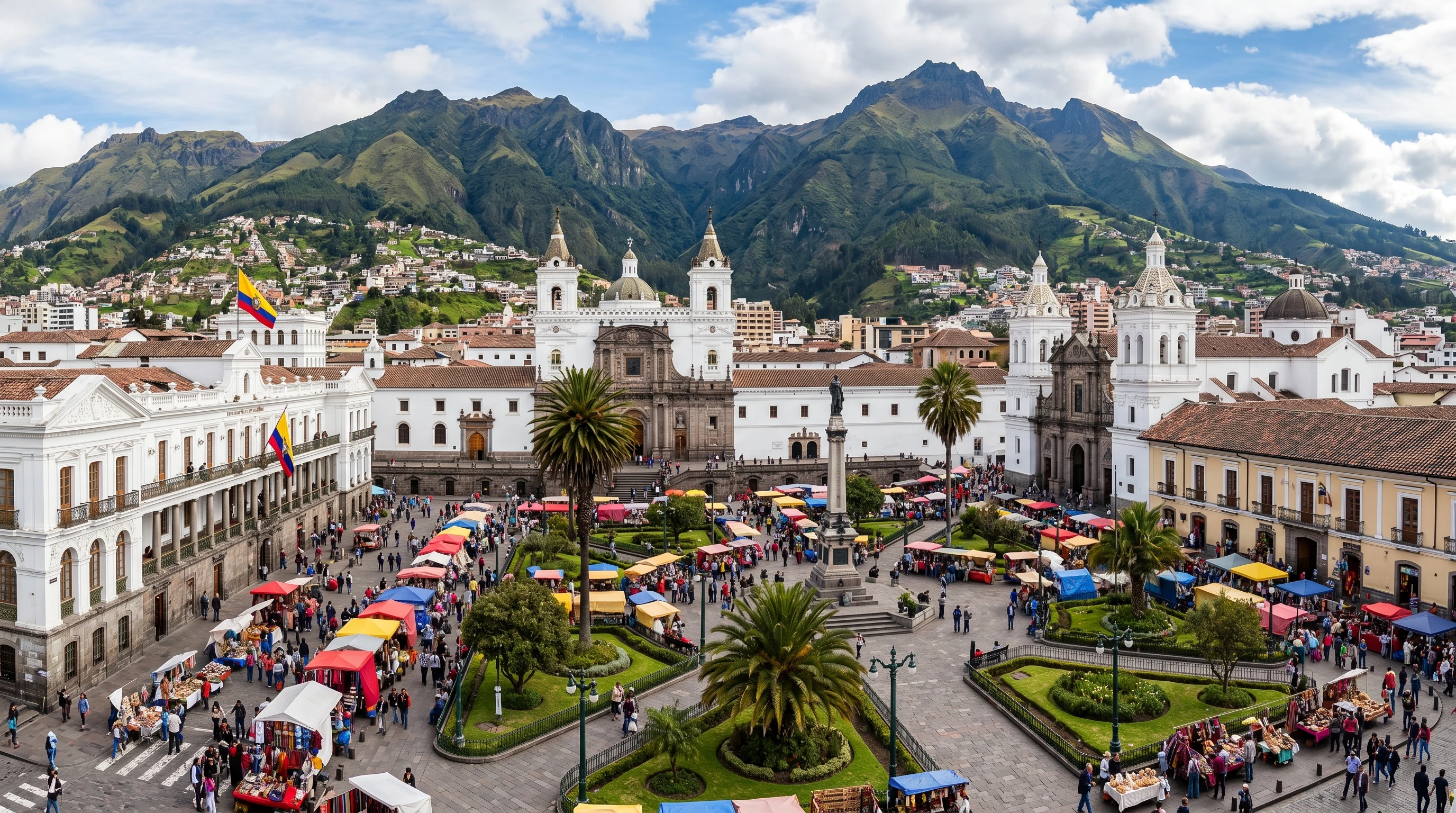
If you enjoy exploring cities that blend old world charm with breathtaking scenery, I’m inviting you to check out Quito, Ecuador and its surrounding gems. My travel camera is packed with memories from colonial plazas, ancient churches, and panoramic spots that give you a true taste of the Andes. Through these personal experiences, I’ve put together a photo guide that highlights my favorite places in and around this vibrant capital. Each location is filled with colorful history, unique culture, and plenty of photogenic corners you might want to see for yourself. Quito offers a dynamic mix of ancient traditions and modern vibrancy, and for any traveler passionate about history, architecture, or just capturing eye-catching scenes, this city delivers on every front.
Beyond these highlights, you’ll also stumble upon cafés buzzing with locals, markets draped in bright textiles, and alleyways alive with street art at every turn. I took hundreds of photos and it is really difficult to choose just 10 for this article. You can also visit my articles; “Top Destinations For Families in Latin America”, “Worlds’ Oldest Chocolate Trees in the World” (a bit redundant I guess), and “Cultural Experiences For Digital Nomads in South America” for more photos from the region.
1. Quito’s Plaza Grande – The Heartbeat of the City
Standing in the center of Quito at Plaza Grande, sometimes called Plaza de la Independencia, I always feel the city’s energy in full force. The square is surrounded by key landmarks like the Presidential Palace, the Metropolitan Cathedral, and the Archbishop’s Palace. Each building tells its own story of Ecuador’s colonial past and political present. It’s a spot where families gather, students relax, and street musicians add their soundtrack to the bustle of daily life. I love arriving early in the morning when the sun highlights the stonework, then returning at sunset to watch locals and visitors gather under the shadow of tall palms. This is where Quito’s soul comes alive, right in the open air. The architecture displays a fusion of Spanish baroque and Andean influences, making every facade a canvas of cultural exchange. As you stroll past fountains and sculpted gardens, you can almost hear the echoes of historic proclamations and modern debates, all layered within this living urban square.
One time we visited this plaza, there was a row of food and drink vendors lined up all along one side of the plaza. They were lined up on the opposite side of the plaza from the Presidential Palace. Another time we visited, a motorcycle police show of force was initiated. The police rode by where we were standing then rode in a straight file all along the front of the Presidential Palace. Then they parked their motorcycles and stood in a line for military style drills. In Quito, you will never be bored. There is always something happening.
Photo Tips:
- Capture the changing light on the facades as morning turns to evening.
- Street vendors with baskets of fruit or colorful balloons add real local character.
- Try a wide shot to frame the gardens and people mingling.
- Experiment with reflections in puddles after rain for unique perspectives.
2. La Ronda – Quito’s Bohemian Lane
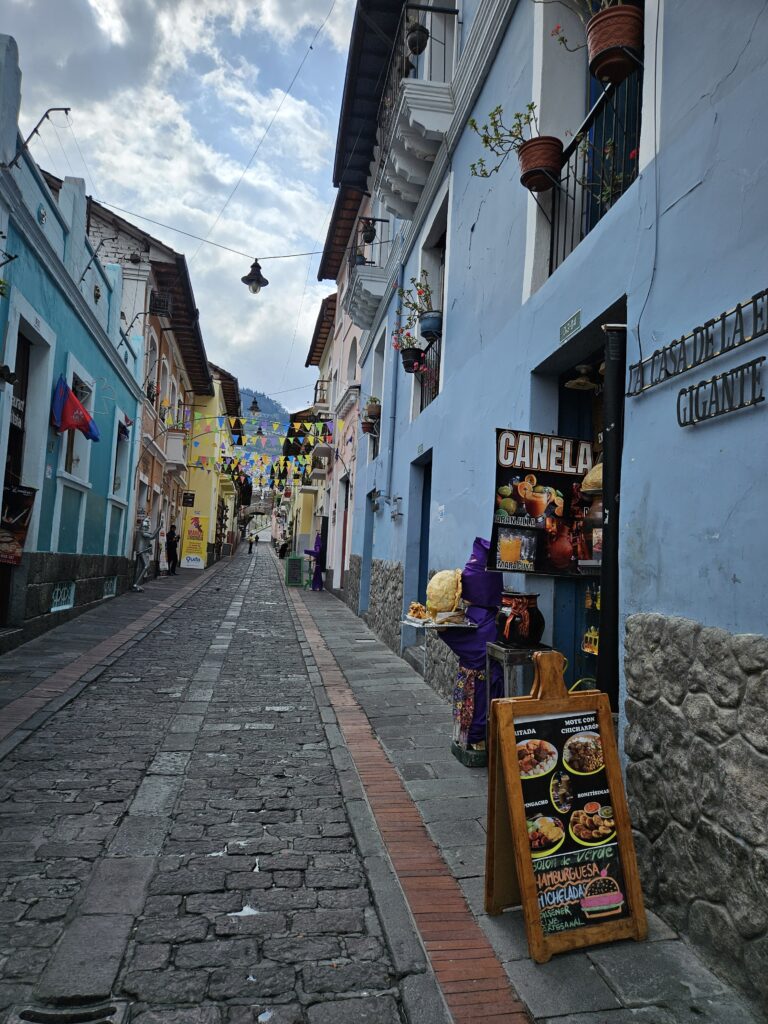
La Ronda is one of those places where every stone seems to echo with history. This narrow, cobbled street snakes through Old Town and is known for its lively atmosphere and artisan shops. At night, lanterns glow above balconies, and there’s a warm hum of conversation from open doors spilling music and laughter. I often stroll here to sample canelazo, a warm spiced drink, or snap photos of painted doors and craftsmen at work. The street has been restored, but its feeling remains deeply authentic. If you enjoy seeing creativity up close, La Ronda makes it easy. It’s an ideal place to meet local artists, watch impromptu poetry readings, or just enjoy a tranquil moment beneath the hanging lanterns.
We ate in a couple of restaurants here. We tried Cuy for the first time at one of the restaurants and we tried canelazo along with the fruit it is made with at the other restaurant. We also found a great shop where we bought some unique chocolate bars.
The restaurant where we ate the Cuy is Restorant Balcón Rodeño. It is run by a husband and wife teem. They are quite informal but very friendly. The restaurant where we drank the canelazo with fruit is Restorant Los Geranios. It is a lovely restaurant with very professional service.
Photo Tips:
- Focus on the intricate ironwork and window boxes filled with flowers.
- Capture musicians or dancers when festivals are underway.
- Details like handpainted tiles or carved wood signs show La Ronda’s charm.
- Low light creates a cozy mood for evening shots—try longer exposures for glowing effects.
3. Basilica del Voto Nacional – Gothic Marvel with an Andean Twist
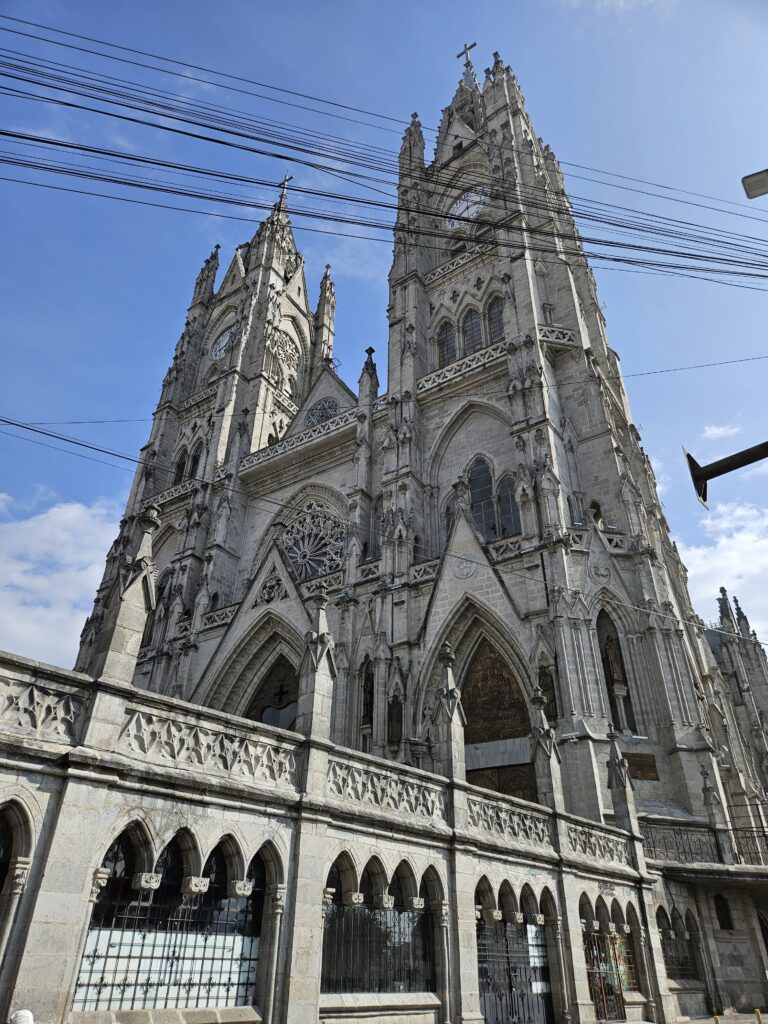
Few sights in Quito are as striking as the Basilica del Voto Nacional. Its Gothic design rises over the city, but what catches my eye are the native Andean animals carved into its stonework, replacing traditional gargoyles. When I climb the towers, I get a sweeping view over tiled rooftops leading to green volcanoes in the distance. Inside, stained glass windows cast colorful light across the pews, making it quiet and reflective even when the city hums outside. It’s my favorite spot to get a perspective on both the city’s architecture and its spiritual side. The basilica’s construction is an ongoing story, with local folklore stating that the world will end once its final stone is laid—a legend that adds to the mystique and allure of this iconic landmark.
We spent time in a cafe that is up near the belfry of one of the towers. We ate some traditional ecuadorian snacks, some ice cream and a few traditional drinks. Ecuadorian coffee, hot chocolate, and beer are also available at this cafe. It is called the Tower Cafe. I have a photo of Farida and Reno in the cafe with a great view of Panecillo Hill through the window. It is in one of my other articles here. Click on this link to see it.
Photo Tips:
- The climb to the clock towers is worth it for panoramic shots.
- Zoom in on the stone iguanas, armadillos, and turtles for something unusual.
- Dusk shots capture the cathedral illuminated against a twilight sky.
- Use a telephoto lens to isolate ornate details and patterns in the facade.
4. Plaza San Francisco – Layers of History
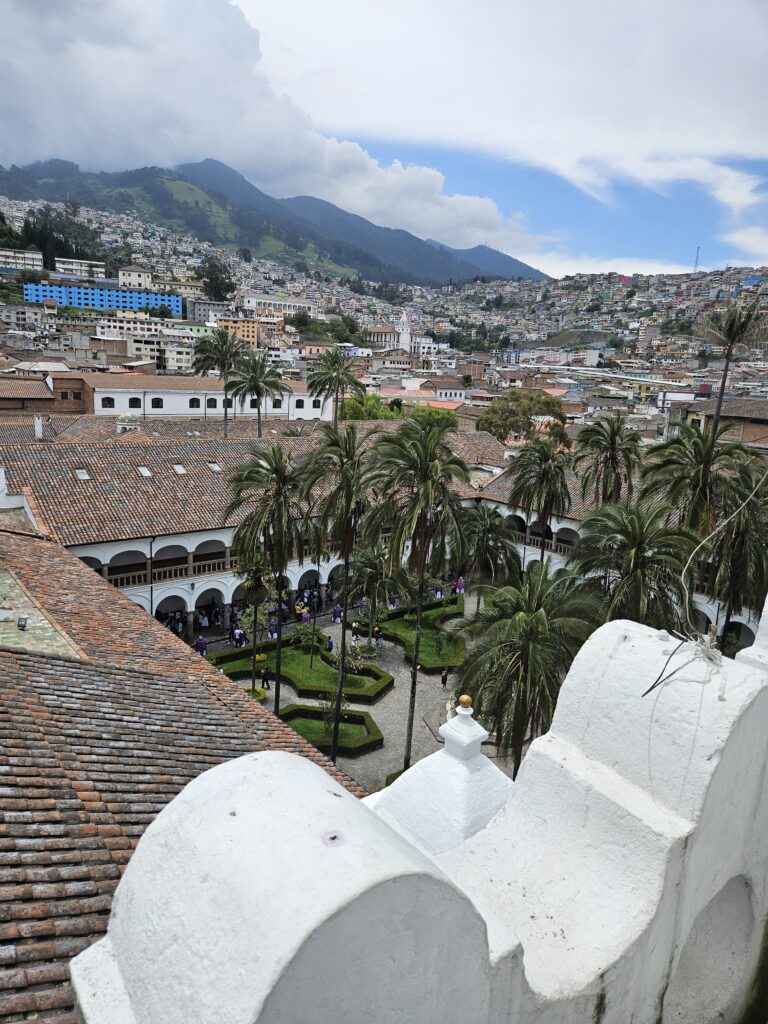
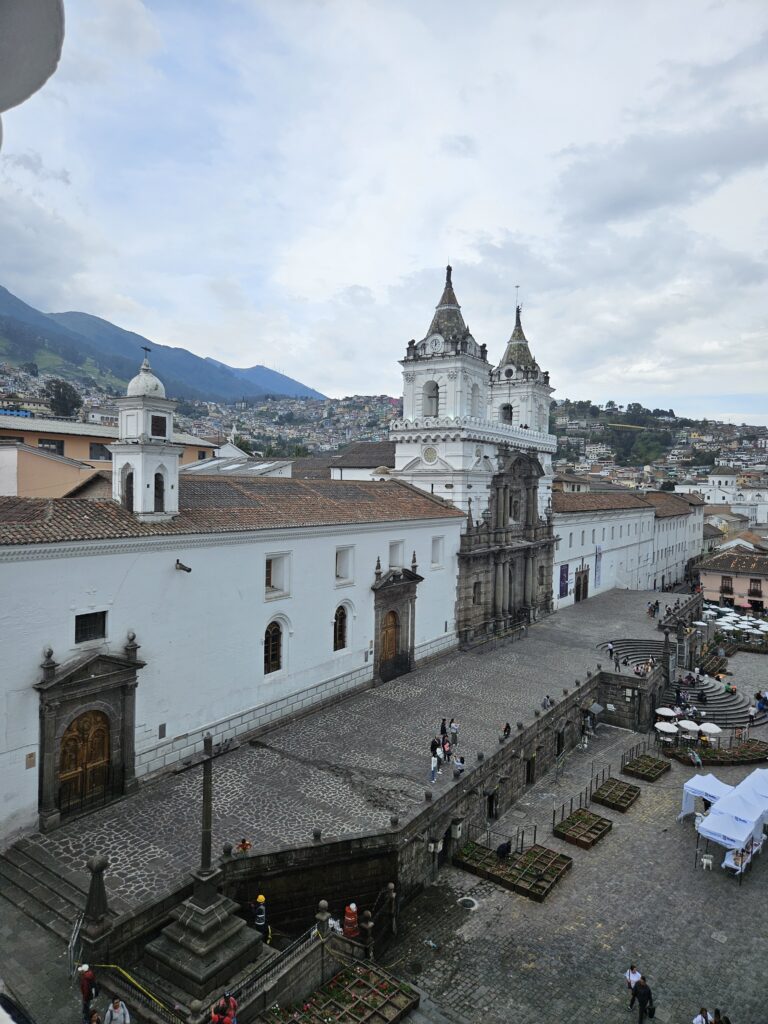
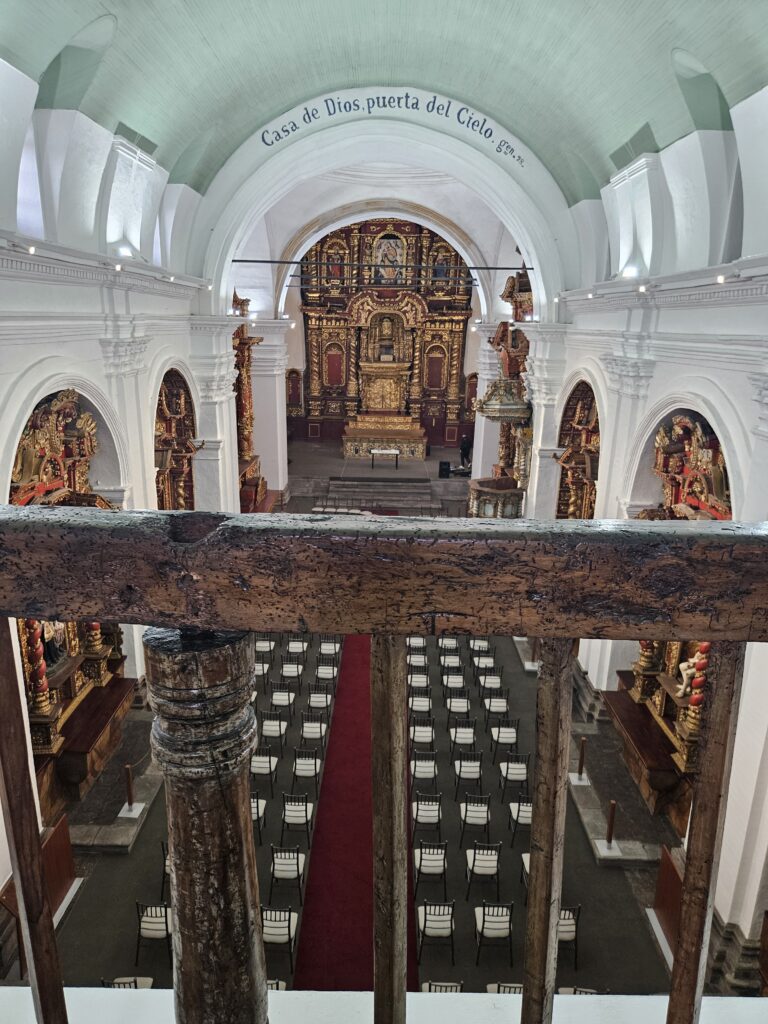
Looking down into the inner courtyard of Iglesia Católico de San Francisco.
Plaza San Francisco feels like stepping back in time. The grand San Francisco Church anchors the plaza, and its white facade faces the rising slopes of Pichincha Volcano. Cobblestones worn smooth by centuries of footsteps lead to cafes and small handicraft shops along the edge. The church itself has an ornate altar shimmering with gold leaf and a peaceful courtyard hidden from the busy square. I like to watch people pause here to feed pigeons or listen to local guides retelling stories of conquistadors and indigenous resistance. It’s a spot layered with centuries of faith and resilience. The surrounding archways house local chocolate shops and pottery workshops, making this plaza a lively microcosm of Quito’s evolving identity.
Photo Tips:
- Frame the church with mountains in the background during golden hour.
- Photograph street life—vendors, kids with kites, and couples enjoying helado (ice cream).
- Look for hidden details in church carvings or ancient doors nearby.
- Sunset creates dramatic shadows on the cobblestones—perfect for atmospheric photos.
5. El Panecillo – Quito’s Best Viewpoint
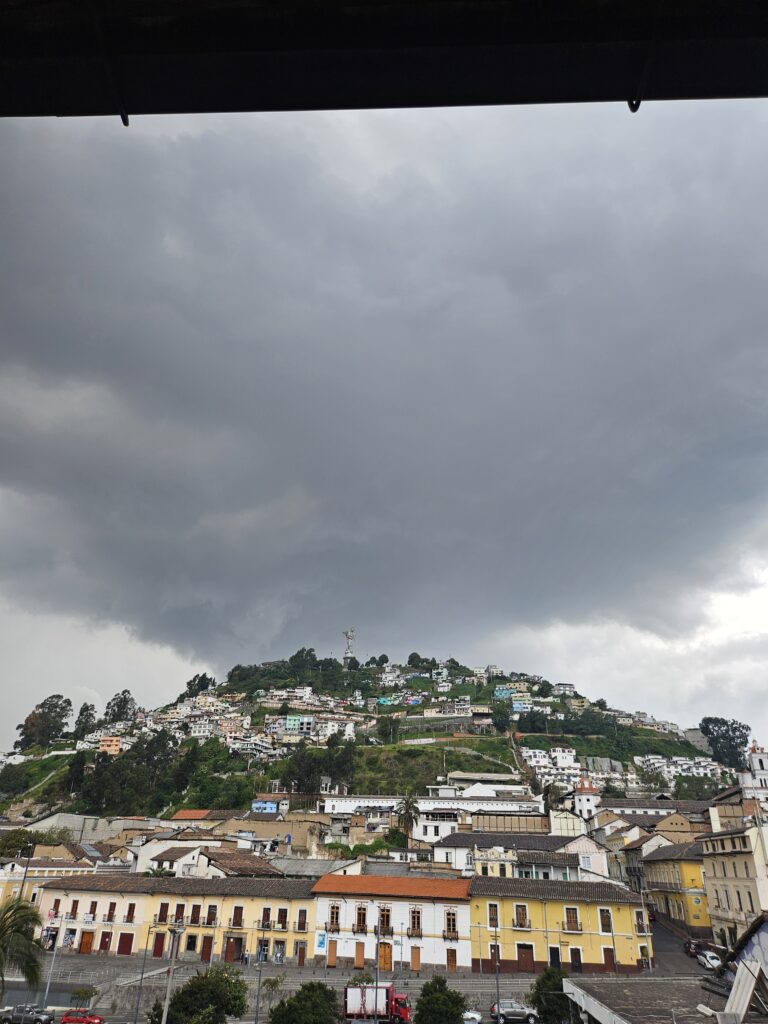
No visit to Quito feels complete for me without climbing El Panecillo, the rounded hill crowned by the statue of the Virgin of Quito. The panoramic view from the summit puts the entire historic center in perspective, wrapped by rolling Andean hills on all sides. The statue itself is unique—a winged Madonna standing atop a globe, visible from almost anywhere in the city. Sitting up here, I often spot families flying kites, teens taking selfies, and artists sketching the city’s jagged skyline. This is where I pause to appreciate how the city has adapted to its geography and where I always snap some of my favorite skyline photos. A morning hike up the hill, whether on foot or by taxi, rewards visitors with fresh air and a real sense of Quito’s mountainous embrace.
Photo Tips:
- Shoot wide landscapes that include the Basilica’s spires and the old city below.
- Clouds moving across the hills add drama to your images.
- Pick midmorning or late afternoon for the best light and fewest crowds.
- Try panoramic shots to capture the sweep of the city curving along the valley.
6. Plaza Santo Domingo – Evening Magic and Colorful Markets
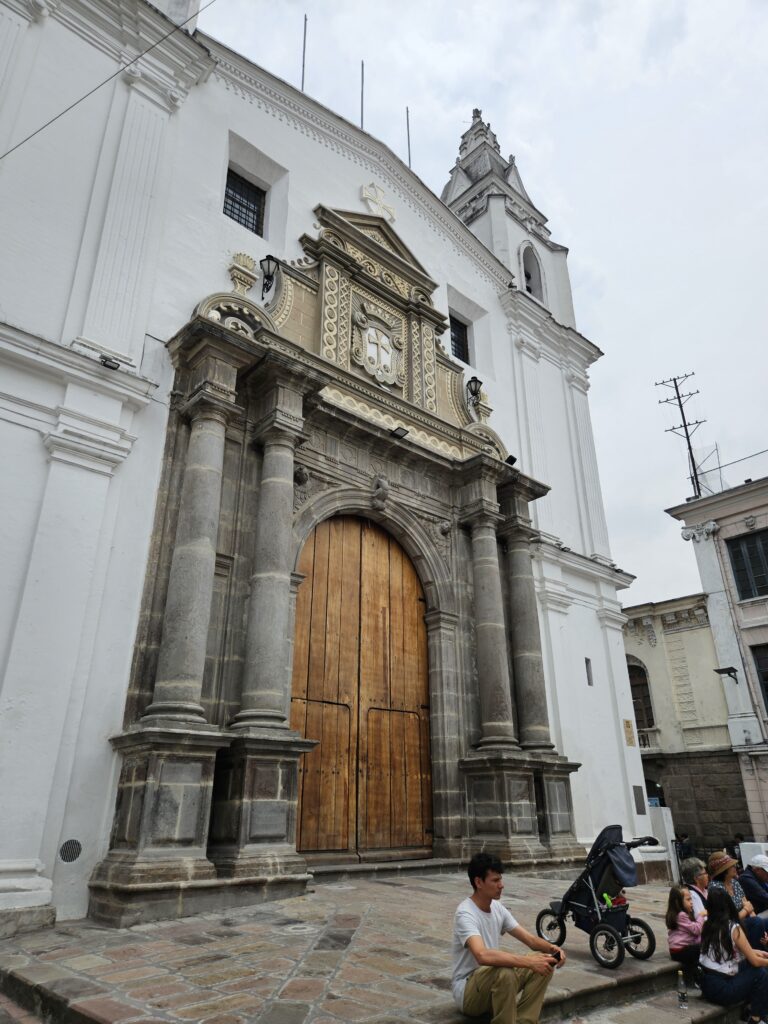
Plaza Santo Domingo is another square steeped in both everyday life and centuries of tradition. I’m drawn to this plaza at dusk, when vendors light small lamps and music begins to drift from nearby cafes. The Santo Domingo Church’s Baroque facade is impressive, especially against a deep blue sky. On weekends, craft markets pop up in the plaza, and I find everything from woven scarves to handcarved toys and Andean sweets. It’s a perfect space to sit on a bench, take in the scene, and watch the city wind down for the night. Children run along the fountain’s edge, elders chat about daily news, and street performers sometimes entertain into the evening, making the atmosphere inclusive and festive.
Photo Tips:
- Evenings bring out the warm glow of streetlights, so play with night photography settings.
- Market stalls in the square are colorful and make for eye-catching images.
- Behind the plaza, narrow streets lead to murals and hidden patios worth photographing.
- If you visit in the morning, catch the market vendors arranging their displays for a behind-the-scenes look at daily commerce.
7. Mitad del Mundo – Crossing Hemispheres
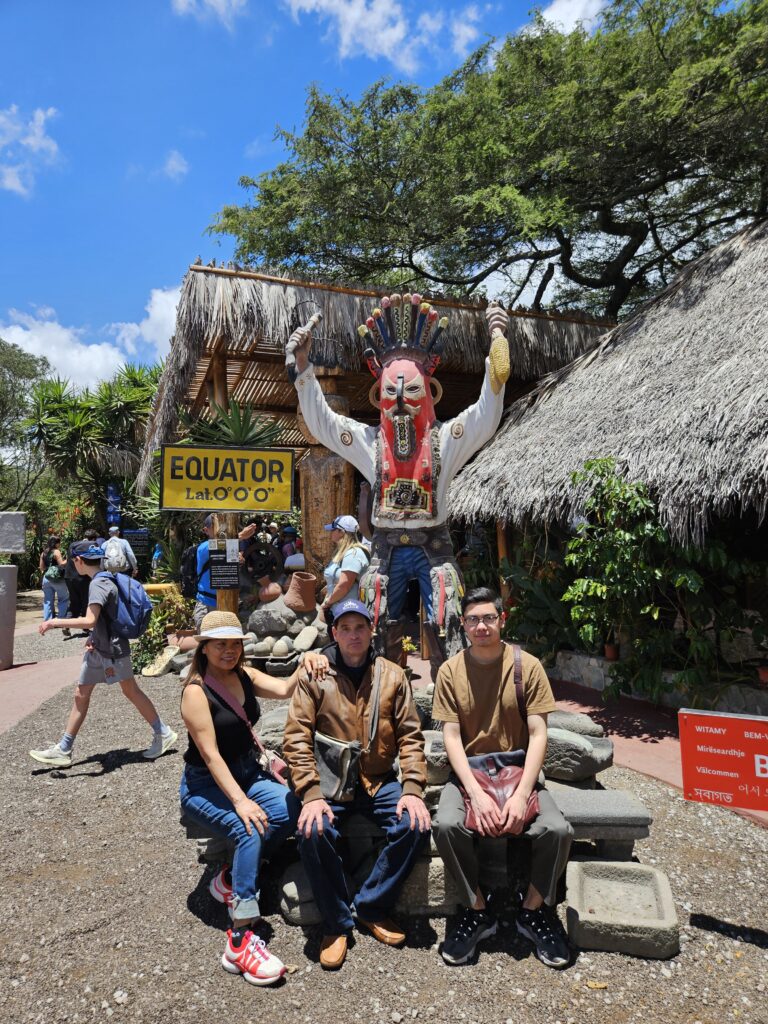
A short drive from Quito takes me to Mitad del Mundo, the famed monument marking the equator’s line. I find it symbolic to stand with one foot in the Northern Hemisphere and the other in the Southern. The complex includes a museum, artisan shops, and panoramic terraces. While the monument itself draws most visitors, I always wander to nearby Intiñan Museum for hands-on science displays and traditional Andean sun dials. There’s science, folklore, and lots of room for playful photos documenting the “middle of the world.” A mix of quirky experiments—like balancing eggs and water demonstrations—keep the experience fun for all ages, and the market offers unexpected treasures from Ecuador’s many regions.
Photo Tips:
- Climb the monument for a wide shot of the valley and distant volcanoes.
- Capture friends or family posing with feet straddling the painted equator line.
- Look for murals and indigenous art throughout the park.
- Bright daylight can make for sharp, high-contrast images, but softer light just before sunset adds a golden touch to the monument.
8. Plaza del Teatro – Artistic Pulse of Quito
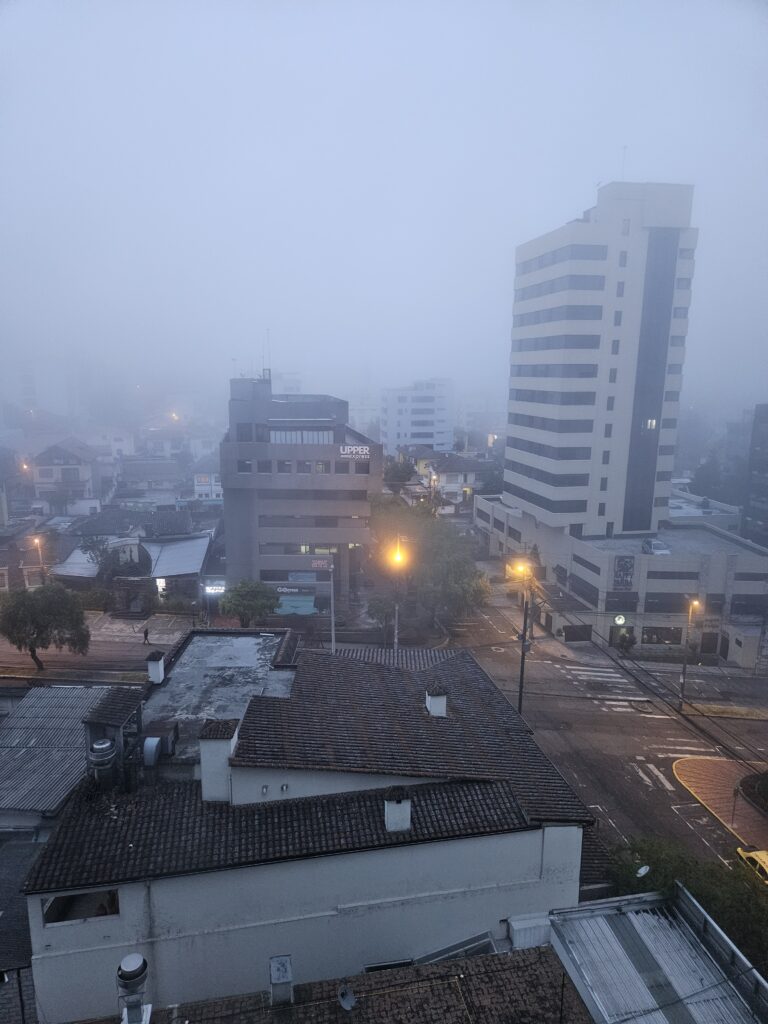
Plaza del Teatro may not be as famous as others, but it always brings out my creative side. The neoclassical Teatro Sucre dominates the plaza and is the main stage for music, dance, and cultural events in Quito. There’s an electric buzz here during festivals, with performers, food carts, and audiences flowing between the square and the theater’s grand steps. I come here when I want to feel the city’s contemporary culture and to photograph vibrant murals and live street performances. The plaza changes character throughout the day, making every visit a little bit different. In quieter moments, the elegant facades and tree-lined walkways invite a slower pace, perfect for people watching or capturing candid moments of daily life.
Photo Tips:
- Photograph performers in action or the theater’s ornate balconies.
- Wide shots show both the busy street life and the elegance of old architecture.
- Themed festivals bring extra color and life for photos.
- Shadow patterns on the theater steps at sunrise or sunset create striking compositions.
9. Plaza San Blas – Local Flavor and Artistry
Plaza San Blas sits slightly outside the busiest tourist routes, which is why I find it refreshing and genuine. The modest San Blas Church is the heart of the plaza, with a peaceful park and benches filled with locals chatting or students sketching. Murals decorate nearby walls, celebrating Quito’s indigenous and mestizo roots. Some of my favorite evenings finish in San Blas, when the light softens and the plaza hosts dance classes, art workshops, or small fairs. It’s a space to connect with everyday life in Quito and to enjoy the city’s grassroots energy away from crowds. Friendly vendors sell homemade snacks, musicians gather for open-air jam sessions, and the neighborhood’s mix of tradition and youthful spirit is obvious everywhere you look.
Photo Tips:
- Focus on community moments—artists, families, and coffee shops.
- Capture afternoon shadows and mural details.
- Try shooting during local events for energetic, candid photos.
- Early morning shots catch the plaza waking up as the streets fill with morning chatter.
10. Keep Exploring – Beyond Quito and Into Ecuador
While these ten places are some of my favorites for photos in and around Quito, there’s so much more to experience across Ecuador. From the multicultural neighborhoods of Quito to the cloud forests, snowcapped volcanoes, and vibrant markets just an hour away, new sights are always just around the corner. I always encourage travelers to dig deeper, ask locals about their favorite spots, or head out on day trips beyond the city. If you’re interested in natural wonders, day tours from Quito can take you to Cotopaxi Volcano, Mindo cloud forests, or Otavalo’s legendary artisan market. Explore the city’s culinary scene by sampling locro de papa (potato soup) or street-side empanadas. For more inspiration and practical tips for making the most of any trip to Ecuador, you can check out my stories and guides on roamreverie.com. Each adventure brings new stories, and I hope yours will too. Quito is just a starting point to stumble upon more of Ecuador’s magic, whether you prefer mountain hikes, Amazon excursions, or simply more time in the heart of the capital’s bustling plazas.