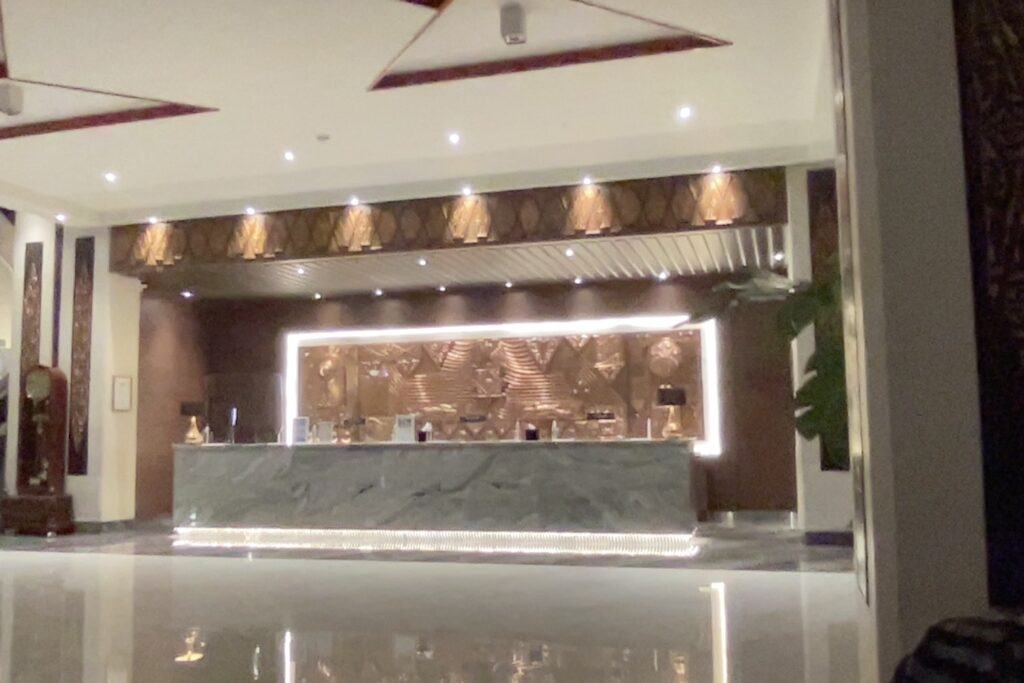
This photo was taken in the lobby of Niagara Hotel in Parapat North Sumatra. This is an all inclusive resort. It is not right on the lake and there is no golf course but they do have a lot here. It is located on a hill high above Parapat and Lake Toba and the view is extra-phenomenal. Room prices range from 570,000 rupiah to something like 5,000,000 rupiah (which pays for a bungalow). This looks like a whole lot of money but 570,000 rupiah is only USA $35.25 and 5,000,000 rupiah is only USA $308.00 so no worries. These rates are current to July 2025. Concerns about travel will include how to get there, where to stay, where to eat, how much will we pay, and what will we do?
Travelers are facing new realities due to climate change. The impact of extreme weather events throws a wrench in trip plans around the world. Think about hurricanes in the Caribbean or wildfires in parts of California and Australia. Not only do these events pose safety risks, but they also lead to longer journeys as flights get delayed or rerouted, and sometimes, entire areas become no-go zones, at least temporarily.
Sustainable travel has become more necessary these last few years. And some cities are now charging fees to enter their most vulnerable cities. Venice Italy is an example of a city that charges an entrance fee for those who are entering the city for only the day. The fee was 5 euros for those who cannot show proof that they had accommodations booked in the city. That was during the trial period for this fee. Now it is the same if you book your entrance fee 4 days in advance. If you book later than that, you will pay a 10 euro fee. So, that is one method that cities are charging entrance fees.
With environmental concerns taking center stage, travelers are shifting their patterns. Some people are choosing destinations known for eco-friendly operations or less environmental risk. This is leading to a rise in sustainable tourism and a decrease in the carbon-heavy, long-haul flights. It’s not uncommon now to hear folks chatting about their carbon footprints over a cup of coffee, which seemed to be the farthest from a traveler’s mind not so long ago.
Hotels, airlines, and other travel industry players are not just sitting still. Many are revamping to be greener, aligning with broader environmental goals. It’s worth keeping an eye out for those businesses prioritizing sustainability, like eco-certifications or green initiatives. Supporting these companies assures your travels tread lighter on our planet.
Such concerns had never crossed my mind a few years ago but, now I have been booking small group walking tours with individuals who live in the neighborhoods we are exploring. Sarah Funk in NYC and Claudine Hemingway in Paris are perfect examples of such.
Tourists themselves are stepping into action, favoring experiences that sustain rather than exploit. This shift couldn’t be more crucial as travel continues to impact the planet. Adventure travelers are opting for eco-tours, staying in eco-lodges, and using local products wherever possible. It’s a small shift but begins with awareness and ends with impactful action.
Navigating Health and Safety Protocols in a Post-Pandemic World
Getting back to globetrotting isn’t as simple as it used to be. With the pandemic fresh in minds, health and safety protocols are top-of-mind for many travelers. International travel now comes with a set of rules and hoops to jump through. From mandatory quarantine periods to health screenings and vaccinations, the checklist before your trip might feel like a mission briefing. I use the government site put up by U.S. State Department to read any up to date advisories.
Digital health passports are gaining ground. They streamline the process by keeping proof of health requirements handy and accessible. Biometrics and contactless processes help speed up airport lines, making it easier to glide through check-ins and security without hassle. Becoming familiar with these digital tools might just save you lots of time and stress at the airport. IATA Travel Center also is a good source of information concerning current visa entry requirements.
Expectations on safety are getting higher across the board. From airline cabins to hotel rooms, rigorous sanitation protocols have become the norm. Travelers aren’t compromising on these standards anymore. It seems commonplace now for folks to scope out a place based on its commitment to health protocols before clicking ‘book’ on those tickets. I have always felt safe in planes, hotels, tourist locations, and restaurants these last few years. I have never felt illness anywhere I have visited.
The impact of ongoing health concerns extends to how travel plans are made in the first place. Flexibility with bookings is no longer a perk but a necessity. Refund policies and travel insurance that cover health-related disruptions are subjects that should be high on a traveler’s agenda. While planning, look for these options to protect your adventure—or investment—against unforeseen hiccups.
I rarely buy travel insurance but if I am going to Southeast Asia for three weeks, it seems essential ( as one example). Some trustworthy travel insurance companies are:
!) SafetyWing.
2) IMG Global Medical Group.
3) World Nomads Adventure Travelers Insurance
4) Allianz Travel Insurance.
5) GeoBlue.
Economic Challenges Facing the Travel Industry
Travel in 2025 faces a world where economic factors heavily influence every aspect, from the prices you pay to the choices you make. With fluctuating airline tickets and hotel rates, keeping track of costs can feel like navigating a labyrinth. Dynamic pricing means those cheap fares and rooms can vanish faster than you expect, so being proactive is key.
I have been disappointed a few times after I paid a very nice discount price on plane tickets for my wife and myself but then had to pay full price for a ticket, just a few days later, when my son decides to join us on the trip. Plane ticket prices can even change two or three times in just one day! Airlines use algorithms to adjust prices. They consider how many seats have not yet been sold, how close departure date is, how many people are searching or have booked the route, and the prices of competing airlines. They can also detect repeated searches by individuals and they may use that info for their advantage. Clear your browser while doing repeated searches.
Staying savvy about your budget is essential when the costs of travel can change with the blink of an eye. Keeping an eye out for last-minute deals or booking well in advance can tip the scales in your favor. Travel apps and alerts can serve as reliable allies, notifying you of discounts and deals that fit your plans and wallet. It is best to book tickets one to three months before planned departure. I use skyscanner to find current discount prices but there are also Google Flights, Hopper, and a few others that are quite helpful. I have used Expedia a couple of times.
Geopolitical events are another piece of the puzzle that can affect travel costs. Political unrest or economic sanctions can reshape your travel plans and expenses practically overnight. Being informed about current events and potential hotspots will save not only money but also offer that ever-important peace of mind. When I was in Istanbul, there was a coup attempt. But the airport was closed down for only one day (if I remember correctly). So, although there was potential for my departure to be delayed, it did not have any effect on our flight. I guess I got lucky that time.
Despite these challenges, there are still silver linings, like investment opportunities in the evolving travel sector. Whether it’s buying into travel stocks or supporting burgeoning local businesses tied to tourism, there’s a way to make money work for you even as the industry transforms. Economic hurdles might seem overwhelming, but with the right approach, they can become opportunities to explore travel in exciting and financially secure ways. As a burgeoning digital nomad, these concerns are important to me. So, with that said, we must consider technology:
Technological Advancements and Their Implications on Travel
Travel tech in 2025 is turning imagination into reality, pushing boundaries with innovations that are changing how we move. Touchless experiences are becoming a staple, reducing queues and waiting time at airports and hotels. It’s smart tech smoothing out the bumps, making travel more convenient for everyone.
Virtual reality is paving a new path for experiential travel, offering glimpses into destinations before setting foot there. It’s like taking a spin around your dream spot from the comfort of your living room couch, giving a whole new dimension to the term ‘armchair traveler.’
AI-driven personal travel assistants are emerging as indispensable tools. They take the hassle out of planning by optimizing routes, suggesting hidden gems, and adjusting itineraries in real-time. It’s like having a local guide in your pocket ready to enrich every leg of the journey. AI is advancing at break neck speed and I am learning to embrace it. All travelers should.
Smart transportation systems are reshaping urban mobility, with innovations like driverless cars and efficiency-boosting transit apps creating seamless trips across cityscapes. These advancements underscore a focus on connectivity and ease, enhancing exploration in both familiar and new surroundings. I sure have not tried any driverless cars before and I am not sure I want to. But then again, it would be another adventure to experience.
Cultural and Social Shifts in the Modern Traveler’s Mindset
Today’s travelers see the world through a fresh lens, with cultural and social shifts redefining what globetrotting means. The rise of remote work has led to the emergence of digital nomads, who blend business and leisure in seamless itineraries. With a laptop and internet connection, every place becomes a potential office, fostering a new way to experience the world. As a budding digital nomad myself, I am finding the career a bit daunting but I press forward while including a bit of affiliate marketing in the mix. I am still at novice status but my website as a whole will record my progress.
This also coincides with a growing interest in off-the-beaten-path destinations. More travelers seek culturally immersive journeys, preferring authentic interactions over typical touristy snapshots. They’re trading crowded hubs for lesser-known locales, driven by curiosity and a desire for genuine experiences. In my case I love horseback riding with guides who speak of the land and climbing volcanoes with only my family.
There’s also a noticeable focus on mental health and wellness during travel planning. People are realizing the need to recharge and unwind, leading to an increase in trips centered around meditation retreats, wellness spas, and nature escapes. Travel isn’t just an escape anymore; it’s a chance to align with inner needs.
Social media continues to wield influence over travel choices. Instagram-worthy spots and viral destinations are still in play, but there’s a shift towards showcasing experiences rather than mere photo ops. Travelers are being more mindful about the narratives they share, aiming for deeper stories rather than curated highlights. I do go on my early morning photo walks so I have a few photos for Instagram and some videos for YouTube but I am most in bliss with a horse or a volcano (or a horse ride ON a volcano, as we had in Ecuador).
I WILL KEEP UPDATING THIS ARTICLE AS NEEDED:
Update #1 TSA will start banning cordless hair dryers because they have lithium batteries and are fire risks.
“NOT ALL THOSE WHO WANDER ARE LOST” —- J. R. R. TOLKEN.

The above photo was taken on the nature trail at Queen Elizabeth II Botanical Gardens on Grand Cayman. Check out the big fat Blue Iguana. They are quite rare.
Here is a FAQ section that can address some of the concerns I mentioned in this article and other pressing issues:
General travel safety
Q: How safe is it to travel to another country?
A: Safety levels vary by destination, neighborhood, and current events, but most popular countries are generally safe for visitors who stay aware, follow local advice, and avoid high‑risk areas. Travelers’ main safety concerns usually involve petty crime, scams, traffic, and rare political unrest rather than extreme violence.
Q: How can I reduce the risk of crime or scams while abroad?
A: Use common‑sense precautions such as keeping valuables out of sight, using hotel safes, avoiding isolated areas at night, and researching common local scams before you arrive. Sticking to reputable transportation, licensed guides, and well‑reviewed accommodations also reduces risk.
Health and medical concerns
Q: What health risks should I consider before traveling to another country?
A: Concerns often include food and water safety, infectious diseases, air quality, and access to reliable medical care. Many travelers also worry about managing existing conditions, getting necessary medications, and having adequate travel health insurance in case of emergencies.
Q: Do I need vaccines or special medications for my trip?
A: Requirements depend on the country, length of stay, and activities, so travelers should check official health guidance and consult a doctor or travel clinic well before departure. This is especially important for destinations where yellow fever, malaria, or other region‑specific illnesses are present.
Cultural and legal differences
Q: What if I accidentally break a local law or offend someone culturally?
A: Many travelers worry about unfamiliar laws around alcohol, dress codes, photography, or public behavior, as these can be stricter than at home. Taking time to learn basic local rules, customs, and etiquette significantly lowers the risk of legal trouble or misunderstandings.
Q: Are there extra risks for women, LGBTQ+ travelers, or minority travelers?
A: Some countries have different cultural attitudes or laws that can affect women, LGBTQ+ people, and racial or religious minorities. Checking destination‑specific guidance, local norms, and any restrictions in advance helps travelers decide where they feel comfortable and how to adapt their plans.
Money and logistics
Q: How much should I worry about money issues like currency, cards, and hidden costs?
A: Common concerns include unexpected fees, card blocks, cash theft, and underestimating the local cost of living. Using a mix of payment methods, notifying your bank about travel dates, and researching typical daily budgets for your destination can prevent most money surprises.
Q: What if my passport is lost or my documents are stolen?
A: Losing key documents is one of the biggest fears travelers have because it affects border crossings and returns. Keeping digital and paper copies, storing originals securely, and knowing where your embassy or consulate is located makes replacing documents faster and less stressful. I once lost my passport in New Delhi India. Back then, we had no Google Maps or any kind of internet. All I had was a Travel Guidebook on India and the maps in that book to lead me to the consulate where I was able to get a new passport. I had a new passport within days. How much easier it is today!
Transport and navigation
Q: Is public transportation safe in other countries?
A: Public transport ranges from extremely efficient and secure to overcrowded and poorly regulated, which is why travelers often feel uneasy about using it. Reading recent traveler reviews and official guidance for your specific city or region helps you decide when to use trains, buses, or taxis versus rideshare or private transfers.
Q: What if I get lost or can’t communicate in the local language?
A: Many people worry about language barriers, directions, and reading signs in unfamiliar scripts. Offline maps, translation apps, and learning a few key phrases (like “help,” “hospital,” and “hotel”) provide a safety net if you feel disoriented.
Political instability and emergencies
Q: How do I know if a country is too politically unstable to visit?
A: Travelers often fear protests, terrorism, or sudden unrest, particularly in countries they know mainly from headlines. Checking up‑to‑date government travel advisories and local news before booking and again before departure helps you gauge risk and adjust plans if the situation changes. When we were in Turkey, we never expected any political uprisings to occur. We thought Turkey was a very stable country. Yet, there was a coup attempt against their president while we were there. Still it did not affect our safety and our flight the next day was not canceled.
Q: What should I do if an emergency or natural disaster happens while I’m abroad?
A: People worry about being far from home if there is an earthquake, storm, or security incident. Registering with your embassy if possible, knowing the local emergency numbers, and having a basic contingency plan (alternative routes, backup cash, and key contacts) can make responding to an emergency more manageable.
Practical comfort and trip enjoyment
Q: What if I struggle with culture shock or homesickness?
A: Culture shock, unfamiliar food, and different social norms are common concerns, especially for first‑time travelers or long trips. Planning rest days, staying in touch with friends and family, and easing into new experiences at your own pace usually helps.
Q: Will language, food, and different habits ruin my trip?
A: Many people worry they won’t understand menus, find suitable food, or adapt to local schedules and habits. With some destination research, flexibility, and openness to trying new things, most travelers find these differences become highlights rather than obstacles. If a menu is in a different language that you do not know, just point to an item and show the server what you are pointing to. (actually, that is just a joke). What I do is I study the languages’ words for various food items and meals and write them down so I can use that in the restaurants I eat at. I can even recognize the Chinese characters for meat, vegetables, fruit, chicken, fish, Peking Duck (Kao3 Ya1), and drinks.
Now that you read this article, you may be tempted to book a reservation to go someplace and for a place to stay once you get there, so here is the link to Booking . Com so you can do just that:
http://www.awin1.com/awclick.php?mid=6776&idhttps://=2ee50e8b
What a beautifully detailed and timely piece, Michael. Your observations resonate deeply—especially the part about how travel is shifting from escapism to intentional exploration. I’ve also found myself more conscious of my choices, from booking with eco-certified hotels to supporting local guides. Your mention of Sarah Funk and Claudine Hemingway was a great reminder that authentic, small-group tours often provide richer cultural experiences than typical sightseeing.
As someone who’s just starting out in the digital nomad lifestyle, I really appreciated your thoughts on travel tech and economic challenges. The fast-changing pricing algorithms you described are spot on—I’ve been caught off guard more than once by a “great deal” that disappeared in hours. And yes, I now always clear my browser cache!
It’s refreshing to see an article that not only highlights the challenges travelers face in 2025—from climate change to geopolitics—but also offers realistic tips and hopeful perspectives. You’ve captured the evolving spirit of modern travel perfectly. Thanks for the thoughtful insights!
Thank you very much for your fast and encouraging comment. I really appreciate the positive reaction to my various points and you made my day. I want to do every thing I can to actually be helpful. Thank You. MAC.
Thank you for a well written article on concerns about travel. I have never traveled far from my hometown, so most of this information is new to me. The reason I have never traveled even though I would love to is my anxiety, I fear something bad happening to me and I will become stranded.
Thank you for the education on traveling concerns
Jeff
And thank you for the very nice and honest comment. Yes, there are LOTS of concerns about travel and many people do not travel because of that. I was raised traveling (at least 8 different schools as a child) so travel comes natural to me. Well, maybe you can add a couple hundred miles to your traveling distance someday ????. Anyway, thank you for the nice comment. MAC.
This post brilliantly outlines the anxieties every thoughtful traveler is facing right now. It’s no longer just about optimizing a cheap flight; it’s about navigating a global landscape defined by geopolitical flux, climate concerns, and the relentless pressure of mass tourism.
You’ve hit on the core “pressing concerns,” and I think the collective blogger response needs to be about proactive strategy—turning these anxieties into actionable travel decisions.
Hello Leah, thank you very much for this insightful comment. I am moving more towards more actionable travel decisions for my travel planning. I never have before but it is time for me to travel responsibly for now on. Thanks again for the great comments. MAC.