
I remember my first years of travel to other countries. I never once thought about searching for travel advisory updates. The only issue I had to consider was whether I would need prevention against malaria, hepatitis, or yellow fever. But now, I am constantly on the lookout for political tensions and social upheavals in countries I am interested in visiting next.
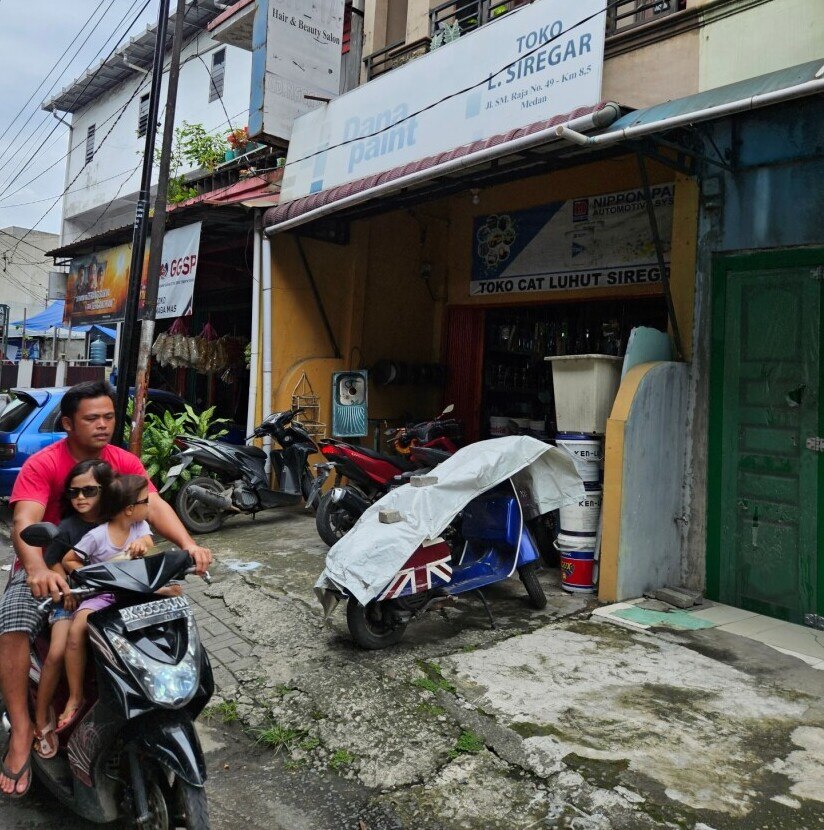
This photo was taken in front of the house we live in while visiting Faridas’ family in Medan Indonesia. Toko L. Siregar means Shop of the Siregar family. The home we stay in is directly above the shop. The building has three stories so the home itself has two.
Travel advisories are like the guardian angels of your travel plans. They provide the crucial information you need about the safety and well-being of your chosen destination. Knowing what’s going on in different parts of the world is indispensable, whether you’re planning a vacation or traveling for business.
Key government bodies such as the US Department of State and the UK Foreign & Commonwealth Office are the gold standard for travel advisories. These agencies keep a vigilant eye on international developments and regularly update their advice based on political conditions, health risks, and security threats. When they issue a caution, travelers are wise to take notice, as these advisories can significantly impact your travel itinerary and personal safety.
Subscribing to government alerts is one of the smartest moves a traveler can make. These alerts land directly in your inbox or phone, ensuring you’re always in the loop without having to search for updates actively. Choose to receive updates via email or through official apps. This proactive step can help you make informed decisions, steering clear of potential dangers and avoiding unnecessary risks. I also have the CIA World Fact Book website bookmarked in my Google travel bookmarks file just for a quick look at any country in the world. It is VERY informative and trustworthy.
The real beauty of these government advisories lies in their transparency. They often provide detailed explanations of the reasons behind their advice—be it a natural disaster warning, political unrest, or an outbreak of disease. Understanding the ‘why’ behind a travel warning enriches your travel experience by broadening your worldly knowledge, prepping you on what precautions to take, and setting realistic expectations.
Whether traveling to familiar destinations or venturing into the unknown, relying on these authoritative sources for guidance is crucial. They are your first port of call for authentic travel safety information, setting you up for a journey that prioritizes your safety and enjoyment above all else.
Top Online Platforms for Destination Safety: Know Before You Go
Navigating the vast ocean of online travel platforms can seem daunting, but finding the right sources for reliable travel updates is essential. Platforms like the CDC Travel Health Notices provide critical health advisories, guiding travelers on potential health risks in their destinations. With the recent COVID-19 pandemic and its ongoing effects, such health-centric sources have become invaluable.
Travel websites also excel at delivering detailed, actionable insights tailored to various destinations. These platforms often combine current events, user feedback, and expert analysis to offer comprehensive views. Ensuring the credibility of these websites is important, as not all sources are created equal. Trusted websites will often cross-reference their information with government advisories.
Despite the abundance of options, distinguishing between credible sites and misinformation is crucial. Ensure the platform’s recommendations align with those by recognized authorities. Moreover, the ease of navigating these websites adds to their effectiveness. A user-friendly interface allows quick access to the information you need, from entry requirements to local laws and customs.
Traveler forums and community-driven sites offer a different perspective by sharing firsthand accounts and personal experiences. They paint a more relatable picture of on-ground realities that sometimes official sources can’t capture fully. While such insights can be incredibly useful, cross-verifying the information with more formal advisories is a prudent approach.
When comparing online platforms with other advisory sources, the digital world offers immediacy that few can rival. While government alerts detail facts, online platforms can add context and personal anecdotes, enhancing your understanding of a destination’s current climate. Leveraging a combination of these resources maximizes your chances of a safe and enjoyable trip.
Travel Apps: Your On-the-Go Travel Advisory Assistants
In today’s fast-paced world, real-time updates on travel safety are at your fingertips, thanks to a range of sophisticated travel apps. Apps like SafeTravel, TripIt, and Kayak are game-changers in the realm of travel safety. They pull in the latest travel advisories, offering alerts and updates precisely when you need them, no matter where you are. I do use these and the US Department of State websites but I do not have any of these apps in my Best Travel Apps field on my Android.
These apps utilize modern technology, integrating AI and data analytics to sift through massive amounts of information. This results in tailored alerts about security concerns, health threats, and even natural disasters in specific areas. The ease of having this data just a tap away cannot be overstated, offering peace of mind to travelers on the go.
Before choosing an app, inspecting user reviews can provide a clearer picture of its reliability and effectiveness. Many apps boast a range of features from simple alerts to more comprehensive travel planning tools. Understanding what you need—basic alerts or a full-fledged travel assistant—will guide your choice. Keep in mind, some of the more advanced features might come with a price tag, but the peace of mind they offer can be invaluable.
Speaking of costs, free apps are enticing, but they may come with limitations. Evaluating the pros and cons of free versus paid versions can make all the difference in the quality of your travel experience. Free apps offer basic functionality, while paid versions often provide enhanced accuracy and detail, which seasoned travelers might find beneficial.
When choosing a travel app, consider how recent technological updates might affect its performance and usefulness. Apps are frequently improved with updates that can enhance user experience, expand on safety features, or offer new navigation tools.
Ultimately, the power of travel apps lies in their ability to transform complex data into digestible, actionable insights, keeping you informed and prepared throughout your journey.
Destination Highlights: Is It Safe to Travel to Mexico, Asia, and Beyond?
Safety concerns are often at the forefront of travel planning, especially in popular destinations like Mexico and various parts of Asia. Keeping abreast with the latest safety updates ensures not just peace of mind but also a rich and smooth travel experience.
Mexico, with its vibrant culture and beautiful landscapes, remains a favorite despite safety queries. The situation can vary significantly depending on the region. Coastal areas often have different advisory levels compared to inland territories. Consulting specific travel advisories is crucial to differentiate between locations and adjust plans accordingly.
In Asia, the landscape is equally diverse. From bustling cityscapes to tranquil countrysides, each area may have unique safety considerations. Political climates, health alerts, and even seasonal concerns like monsoons or typhoons can affect overall safety. By staying updated with regional advisories, travelers can make informed decisions.
Geopolitical factors can dramatically alter the travel advisory landscape. Sudden shifts can lead to changes in entry requirements or increased security for travelers. Recognizing these potential changes allows for flexible planning and ensures travelers remain safe and informed while abroad.
In deciding which destinations to explore, assessing both the risks and rewards is wise. Take into account the type of travel experience you seek and tailor your preparations to align with current advisories. Travel safety isn’t just about understanding risks; it’s also about being prepared with the right knowledge and tools to navigate them.
Here is a Frequently Asked Questions section about Travel Advisory Updates for readers interested in what others have been asking:
1. What is a travel advisory?
A travel advisory is an official notice issued by a government or health authority that outlines safety, security, or health risks in a specific destination. It typically includes a risk level (such as “Exercise Normal Precautions” or “Do Not Travel”) along with practical guidance on how to reduce those risks, such as avoiding certain regions or following specific health precautions
2. Where can I find official travel advisory updates?
Travelers should start with their own government’s foreign affairs or state department website, which publishes country-by-country advisories and risk levels. For example, many governments provide an interactive map, searchable country pages, and email or SMS alert services to keep citizens informed about changing conditions.
3. How often are travel advisories updated?
Advisories are updated regularly and whenever conditions change significantly, such as during political unrest, natural disasters, major crime surges, or new health outbreaks. Some destinations may remain at the same advisory level for months, while others can change quickly if a crisis develops or improves. I often get updates popping up on my android. For instance; the second week of January 2026 had updates popping up on my android about various countries banning tourists from USA from visiting those countries. I guess our government is banning tourist from those countries so, tit for tat, those countries are banning us from visiting them.
4. Which health organizations should I check for travel-related health alerts?
For health-specific updates, travelers should check major public health bodies such as national disease control centers and the World Health Organization. These organizations publish destination-specific guidance on outbreaks, vaccination recommendations, and health-related travel notices that may not appear in general security advisories.
5. Are airline and travel apps reliable for advisory updates?
Airlines, booking platforms, and dedicated travel-safety apps can be useful for real-time notifications about flight disruptions, entry requirements, or sudden incidents affecting your route. However, they should be used as a supplement rather than a replacement for official government and health authority advisories, since app data may focus more on operations t
6. Should I trust travel blogs, forums, and social media for safety information?
Travel blogs, forums, and social media can provide ground-level context, recent experiences, and nuanced details that official advisories may not cover. That said, they are opinion-based and can be outdated or biased, so it is wise to cross-check any claims against official sources before making safety decisions.
7. How can I get travel advisory alerts sent directly to me?
Many governments offer free enrollment programs or email subscription lists that deliver advisory changes and emergency alerts directly to your inbox or phone. Some travel-safety and mapping apps also allow you to set up push notifications for specific countries or regions, so you receive updates while you are on the move.
8. Do travel advisories affect my travel insurance coverage?
Travel advisories can influence whether certain events are covered, especially if you travel to a destination under a high-level warning issued before you depart. Travelers should review policy wording carefully or contact their insurer directly to confirm how advisories, government evacuations, or border closures might impact trip cancellation and medical coverage.
9. What is the difference between a travel “alert” and a “warning”?
An alert usually highlights short-term or event-specific risks, such as an election period, a storm, or a temporary security incident. A warning or high-level advisory generally reflects more sustained or severe risks—such as ongoing conflict, widespread crime, or systemic instability—and may recommend against all but essential travel, or all travel entirely.
10. How far in advance should I start monitoring advisories?
Ideally, travelers begin monitoring advisories as soon as they start planning a trip and continue until they return home. Checking again just before departure and periodically during the trip helps you spot last-minute changes, such as new entry rules, strikes, health alerts, or localized unrest that could affect your itinerary.
11. What should I do if an advisory changes while I’m already abroad?
Basically you are SOL. (LOL) That was a joke. If the advisory level is raised while you are in the country, first read the updated guidance carefully to understand the specific risks. Then consider contacting your embassy or consulate, your airline, and your travel insurer to discuss options such as changing your route, relocating within the country, or returning home earlier than planned. This happened to me when I was in Istanbul because there was a coup against the government. Luckily, things settled down by the time our flight out was scheduled so we were not affected.
12. Why do different countries’ advisories sometimes conflict?
Governments assess risk using their own intelligence, political relationships, and citizen-specific concerns, so their assessments and wording may differ for the same destination. Comparing advisories from multiple countries, along with independent health and security organizations, gives a broader perspective and helps you make more informed personal decisions.
Well, that is it for now. Oh, and I do have another website that explains how I created this website and that website. You can click on the following link if you are interested in seeing: https://www.affiliatemarketingmac.com
Oh my gosh, that looks really bad. You’re right though. It’s important to stay updated on the news when planning a travel. I remember when the pandemic hit, my family and I were about to go to Berlin to visit my sister. all packed and ready to go, we decided to say.
Or like right now this summer of 2025; the immigration chaos. As citizens, being aware when and when we can’t travel and where we might not be able to return home. Ie: The banned countries.
I know! Travel is just too complicated these days. Airports can be really messy and I have missed flights because of security taking too long with everyones luggage checks. It is disheartening. I press on though. Anyway, thank you for the comment. I wish you and your family all the best with your future travels.MAC.
I never considered travel advisories before reading your article, there are some good resources you have shared in this article travelers should know and make a point to use.
Travel apps is a very good resource to know about, I am not familiar with apps, so I never thought about researching them before reading your article.
Being aware of any dangers in other countries is a must before going there, you have done an awesome job with the best travel advisory updates
Jeff
Hey, Jeff Brown, thank you for the great comment. I started looking at the travel advisories a few years ago because of the crazy political situations and natural disasters. Thank you again. MAC.